← Back to the homepage
BIGGER PICTURE 99 AI stories

NASA parts shaped like bones.
Burnt scrolls read unopened.

Explore all 99 applications
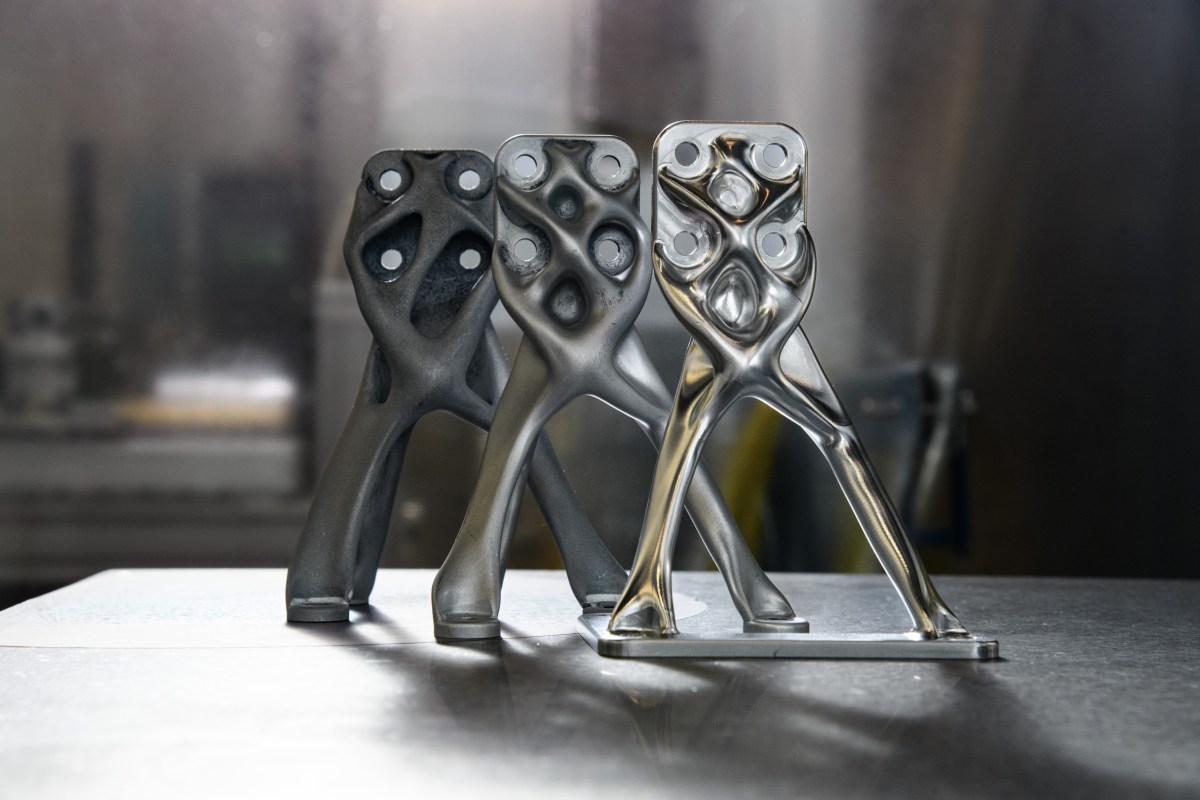
Three metal telescope supports with branching, curved struts and bolt holes on a workbench.
NASA / Henry DennisNASA media guidelinesWhy this shape?
How this collection was selected

We selected 99 distinct applications with a traceable benefit for people or a demonstrated step towards one. Each links to an original study, a report by an involved institution, or an explicitly labelled provider report. The order starts with particularly tangible examples; it is not a ranking.

“In use” describes use in the documented project, not independent proof of effectiveness or a guarantee of current operation. Study evaluations and research are labelled separately. Better predictions, higher detection rates and saved working time do not automatically mean lives saved or a net social benefit. Each case explains its specific limit. This selection is not a statistical comparison with incidents in the register.

Sources reviewed: 14 November 2026

How did they do it?

Every example freely accessible

1–12 of 13 matches · 99 applications in total

Three metal telescope supports with branching, curved struts and bolt holes on a workbench.Original photograph
NASA / Henry DennisNASA media guidelines
Scientific discoveryResearch

Why NASA’s AI-designed parts look like bones

See the parts, materials & results
Result & evidence

NASA engineers use AI-assisted generative design to shape customised instrument supports. Lighter structures can leave more mass available for scientific equipment, while faster prototyping helps teams test and refine their engineering ideas.

Documented result

NASA reports components with up to two-thirds less weight and prototype design, analysis and fabrication possible in as little as a week.

NASA Goddard Space Flight Center
Greenbelt, Maryland, United States 2023

Examples reported by the engineering team; human review and qualification testing remain essential for flight hardware.

Reviewed 2026-11-14
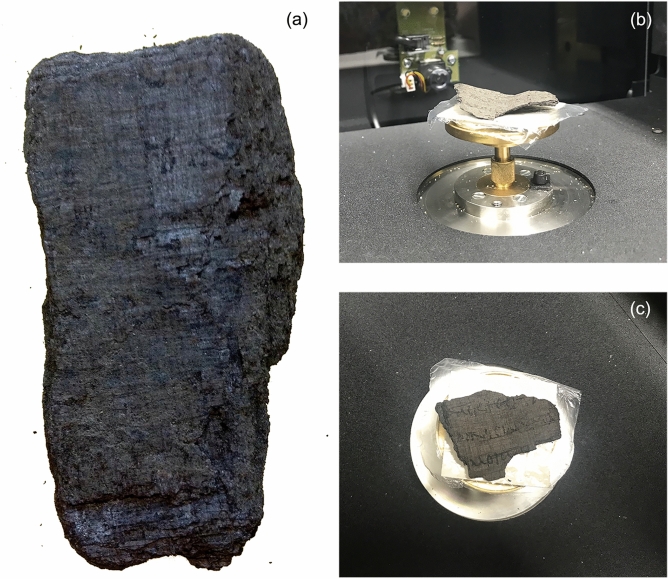
Three photographs show two carbonised Herculaneum papyrus fragments: a close view of a layered fragment and two views of another fragment on a laboratory mount.Original photograph
Sara Stabile et al., Scientific Reports (2021)CC BY 4.0
Scientific discoveryResearch

A burnt scroll speaks again—without being opened

Discover the story
Result & evidence

Machine learning detected ink patterns in X-ray scans of carbonised Herculaneum papyri. Scholars could recover previously inaccessible writing while leaving the fragile rolled manuscripts physically intact, preserving both the artefacts and their contents.

Documented result

The 2023 challenge’s winning method revealed more than 2,000 characters across 15 text columns, reviewed by expert papyrologists.

Vesuvius Challenge; University of Kentucky; Diamond Light Source
Herculaneum, Italy; Oxfordshire, United Kingdom 2024

The milestone covered a small part of one scroll; expert reading is required and the whole library was not deciphered.

Reviewed 2026-11-14
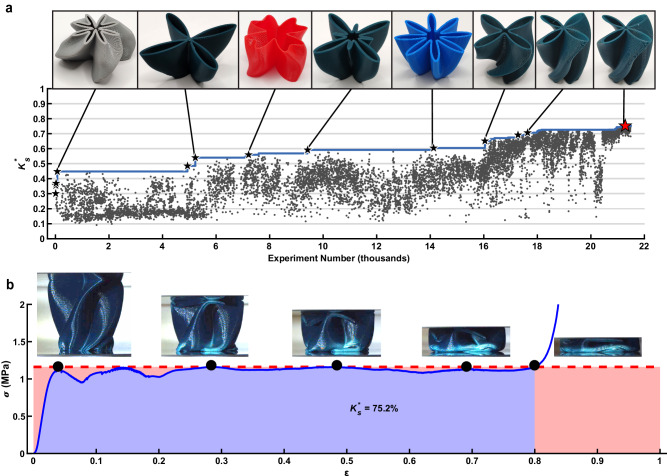
Research figure with tested printed shapes, campaign results and photographs of the Palm structure being compressed.Source illustration
Kelsey L. Snapp et al., Nature Communications (2024)CC BY 4.0
Scientific discoveryResearch

The robot that crushed 25,000 shapes to find a better cushion

Discover the story
Result & evidence

A robot repeatedly printed and compressed polymer shapes, helping researchers discover geometries that absorb energy before forces rise to damaging levels—a route to better protective structures.

Documented result

More than 25,000 physical tests produced a structure with 75.2% energy-absorbing efficiency under the study’s compression metric.

Boston University KABlab
Boston, Massachusetts, United States 2024

Laboratory compression efficiency is not an injury-reduction percentage. Protective products need application-specific testing; helmet padding used a different geometry.

Reviewed 2026-11-14
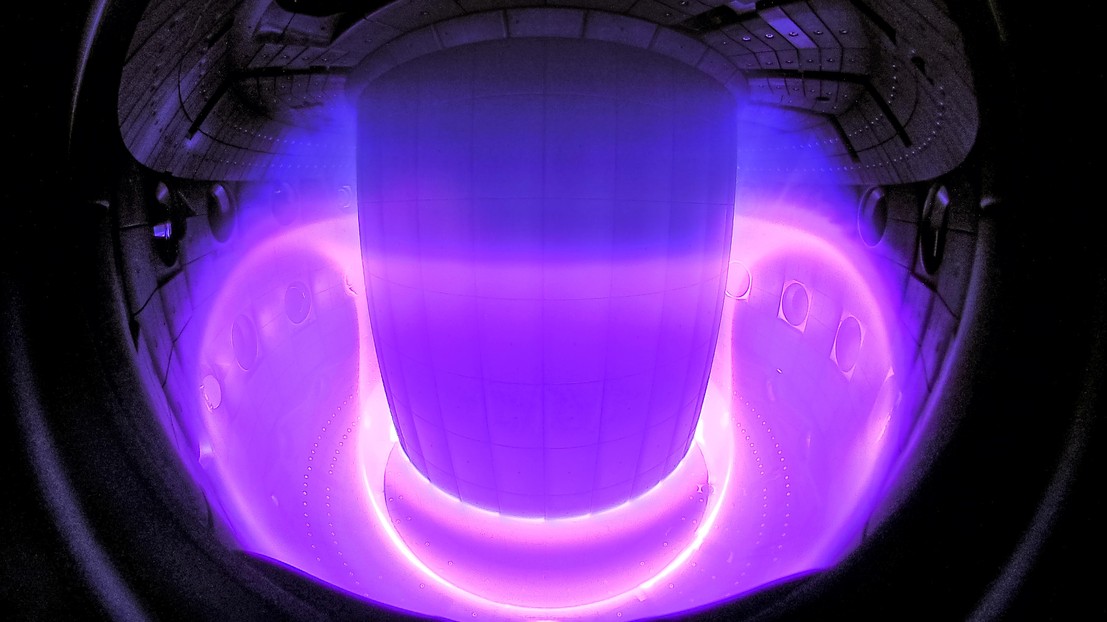
Purple plasma glows inside the TCV tokamak vessel.Original photograph
2022 EPFL / Curdin Wüthrich – SPCCC BY-SA 4.0
Energy & climateResearch

How an AI learned to hold two plasmas in one vessel

Discover the story
Result & evidence

Reinforcement learning controls magnetic coils in a real tokamak, enabling scientists to create and maintain complex plasma configurations as they investigate a possible future source of low-carbon energy.

Documented result

At EPFL’s TCV facility, a simulator-trained controller maintained multiple plasma shapes, including two separate plasmas simultaneously in one vessel.

EPFL Swiss Plasma Center; Google DeepMind
Lausanne, Switzerland 2022

A plasma-control research result is not commercial fusion electricity or a demonstrated reduction in today’s energy bills.

Reviewed 2026-11-14
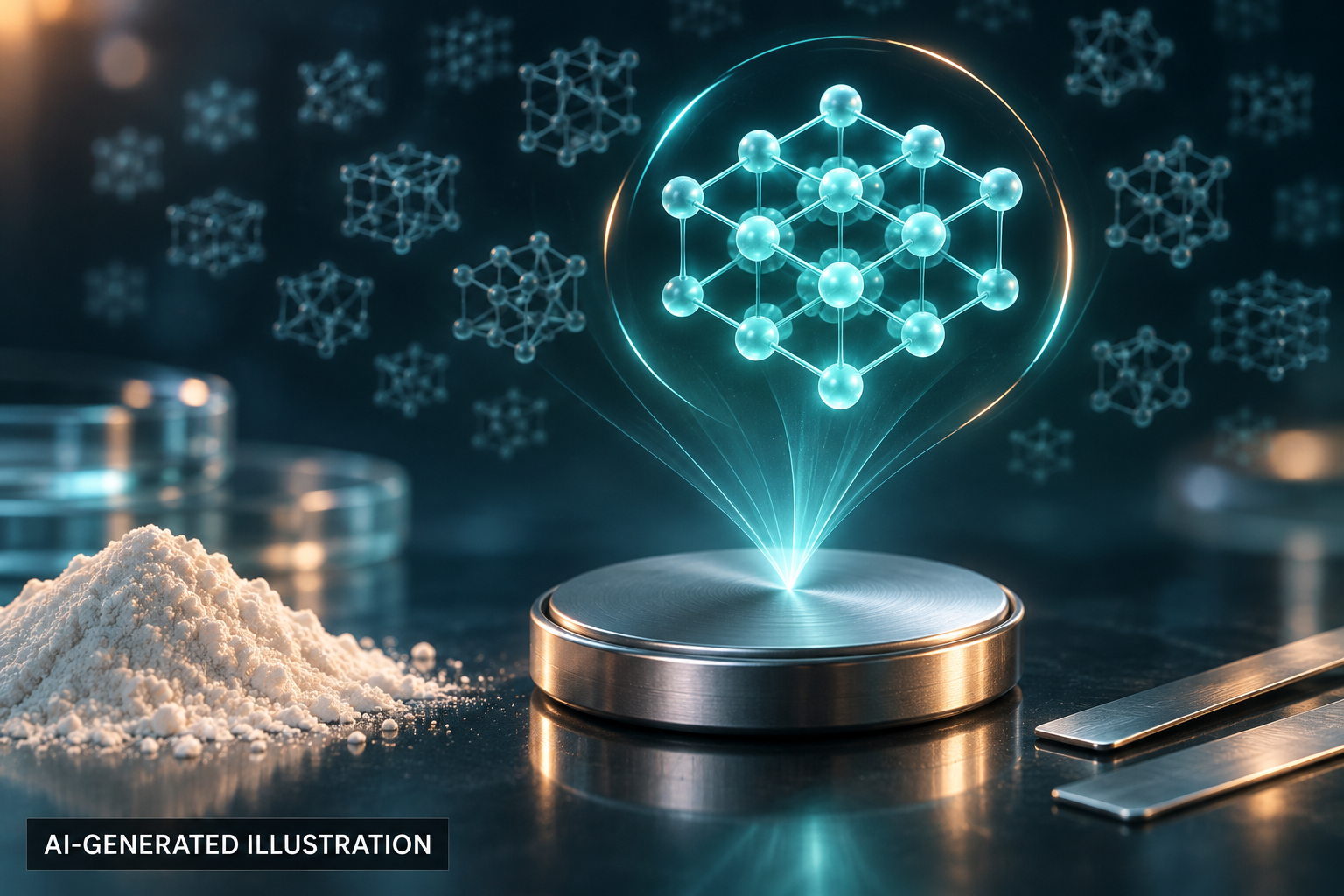
AI-generated illustration: A field of candidate crystal structures narrowing toward a physical battery test.
A crystal that existed only in a model became part of a working battery.
Scientific discoveryResearch

Millions of imagined crystals, one real battery

Discover the story
Result & evidence

AI screening helped researchers choose a promising solid-electrolyte material for experimental testing. The useful step was connecting a large computational search to a functioning laboratory battery, speeding exploration of possible alternatives.

Documented result

PNNL reports less than nine months from receiving the computational candidates to synthesising, testing and producing a functioning battery.

Pacific Northwest National Laboratory; Microsoft
Richland, Washington, United States 2024

A laboratory proof of concept; PNNL says further optimisation is needed to match published performance benchmarks.

Reviewed 2026-11-14
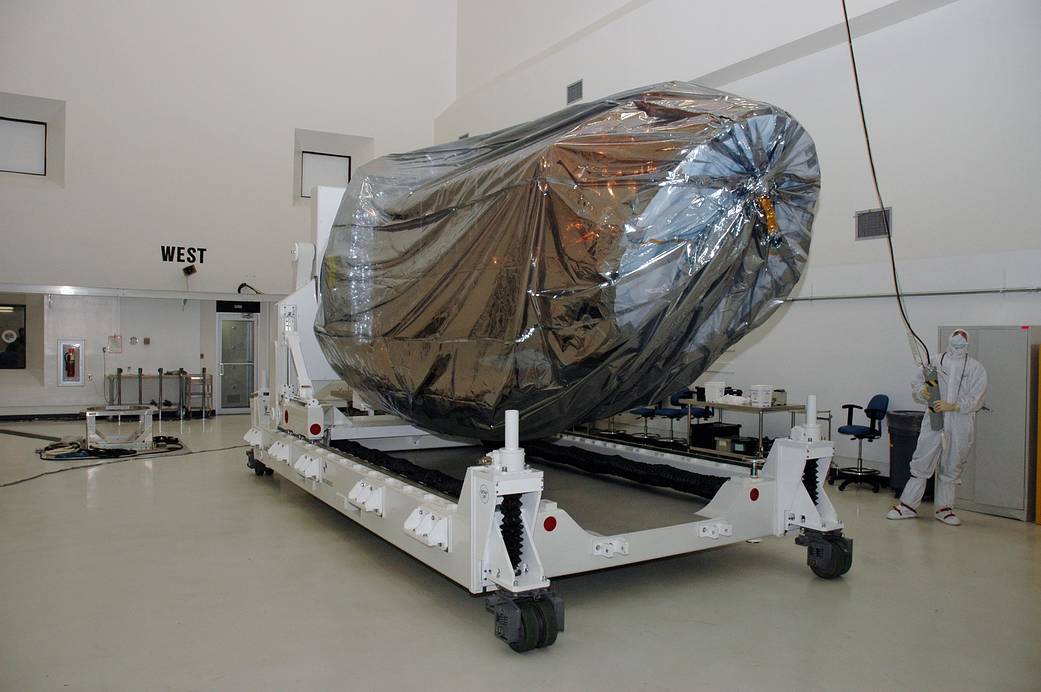
The covered Kepler spacecraft rests on a wheeled support in a clean room, with a technician beside it.Original photograph
NASA / Chris RhodesNASA media-use guidelines
Scientific discoveryResearch

301 planets were waiting in an archive

Discover the story
Result & evidence

ExoMiner helps astronomers separate planetary signals from misleading patterns in telescope observations. It makes existing scientific data more useful and reduces the burden of checking large candidate lists one object at a time.

Documented result

NASA reported 301 newly validated exoplanets from previously detected Kepler candidates using the ExoMiner deep-learning method.

NASA Ames Research Center; ExoMiner research team
United States 2021

A gain in scientific knowledge; validation of candidates is not a direct improvement in everyday welfare.

Reviewed 2026-11-14
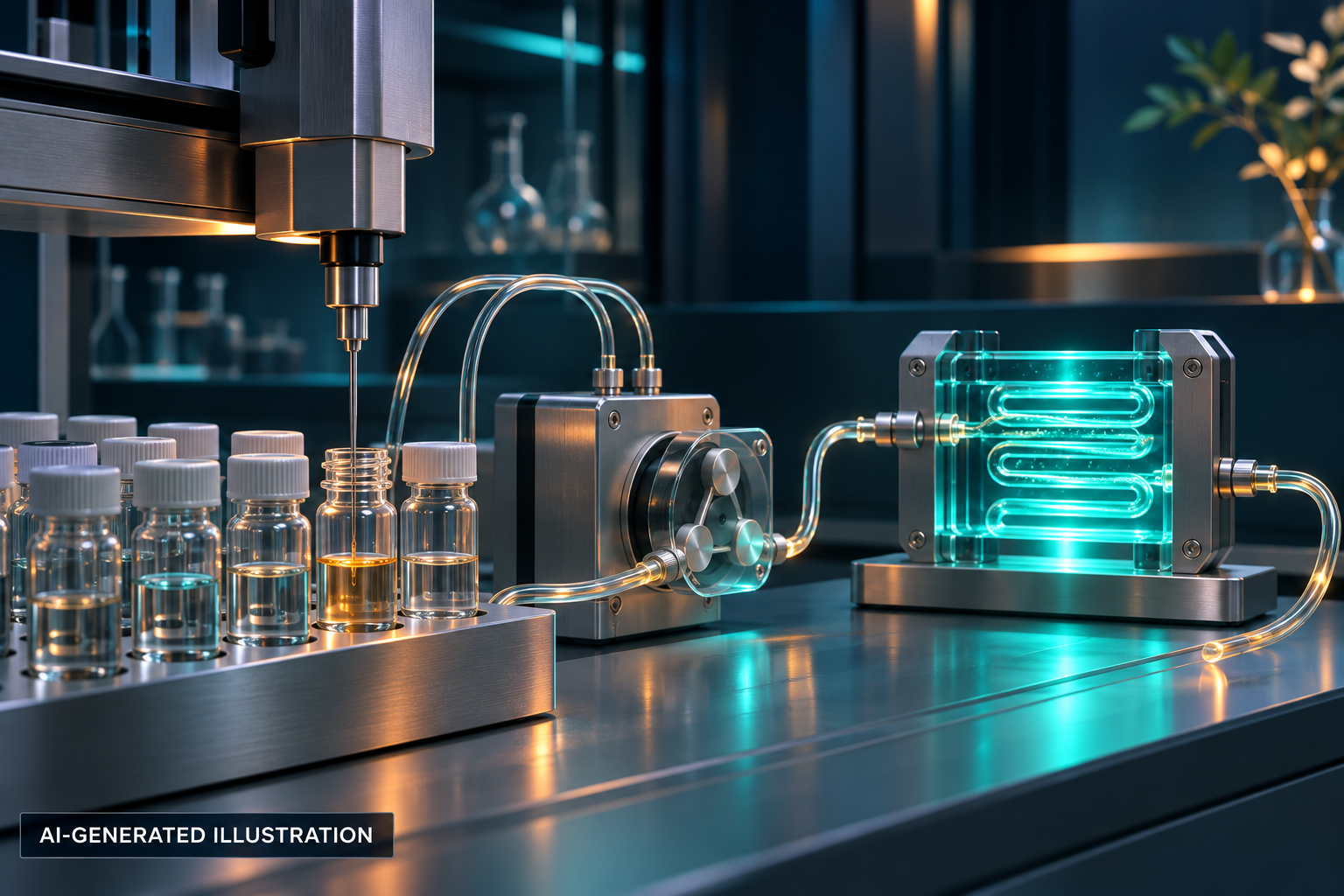
AI-generated illustration: A conceptual flow-chemistry apparatus linking small-volume reactions to optimisation.
Tiny reactions, measured light: a laboratory that chooses its next experiment.
Scientific discoveryResearch

A robot chemist discovered when less light works better

Discover the story
Result & evidence

RoboChem links an AI experiment planner to a small automated chemistry system. Researchers receive tested reaction conditions and scale-up settings, reducing repetitive optimisation work when developing ways to make useful molecules.

Documented result

In reproducing experiments from four selected papers, RoboChem achieved better yields in about 80% of cases and similar yields in the rest.

University of Amsterdam; Noël Research Group
Amsterdam, Netherlands 2024

Demonstrated in selected flow-photochemistry reactions; not proof of faster development for every chemical product.

Reviewed 2026-11-14
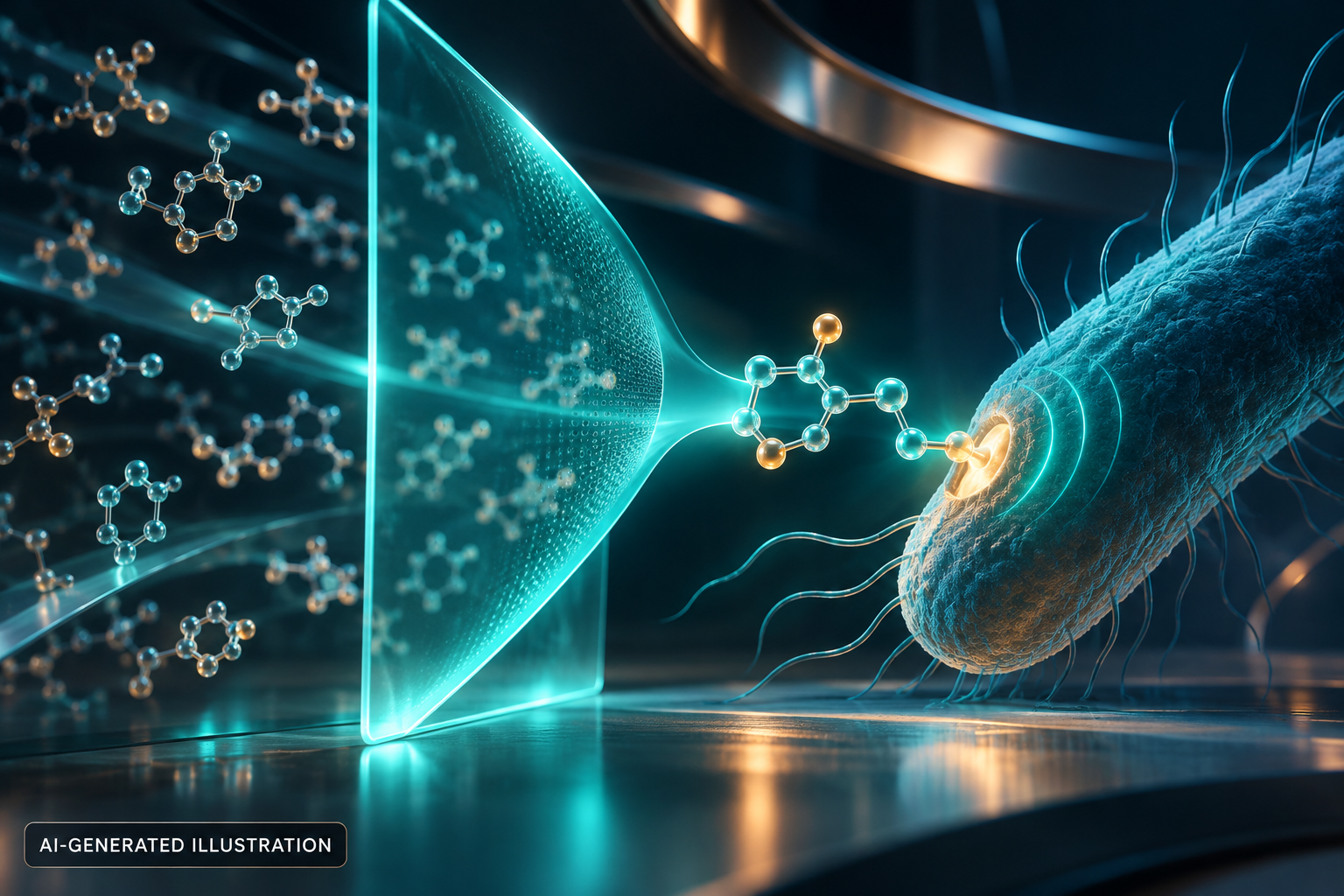
AI-generated illustration: Computational screening narrows a molecular search to an antibacterial candidate.
Could an old diabetes candidate help attack a stubborn hospital bacterium?
Better careResearch

The promising antibiotic was hiding in a different medicine search

Discover the story
Result & evidence

Machine learning helped researchers identify abaucin, a compound targeting Acinetobacter baumannii, adding a focused experimental lead to efforts against infections that can resist existing antibiotics.

Documented result

Laboratory testing confirmed antibacterial activity, and abaucin controlled an Acinetobacter baumannii infection in a mouse wound model.

McMaster University; Massachusetts Institute of Technology
Canada and United States 2023

The reported benefit is preclinical discovery; this study did not establish safety or effectiveness in human patients.

Reviewed 2026-11-14
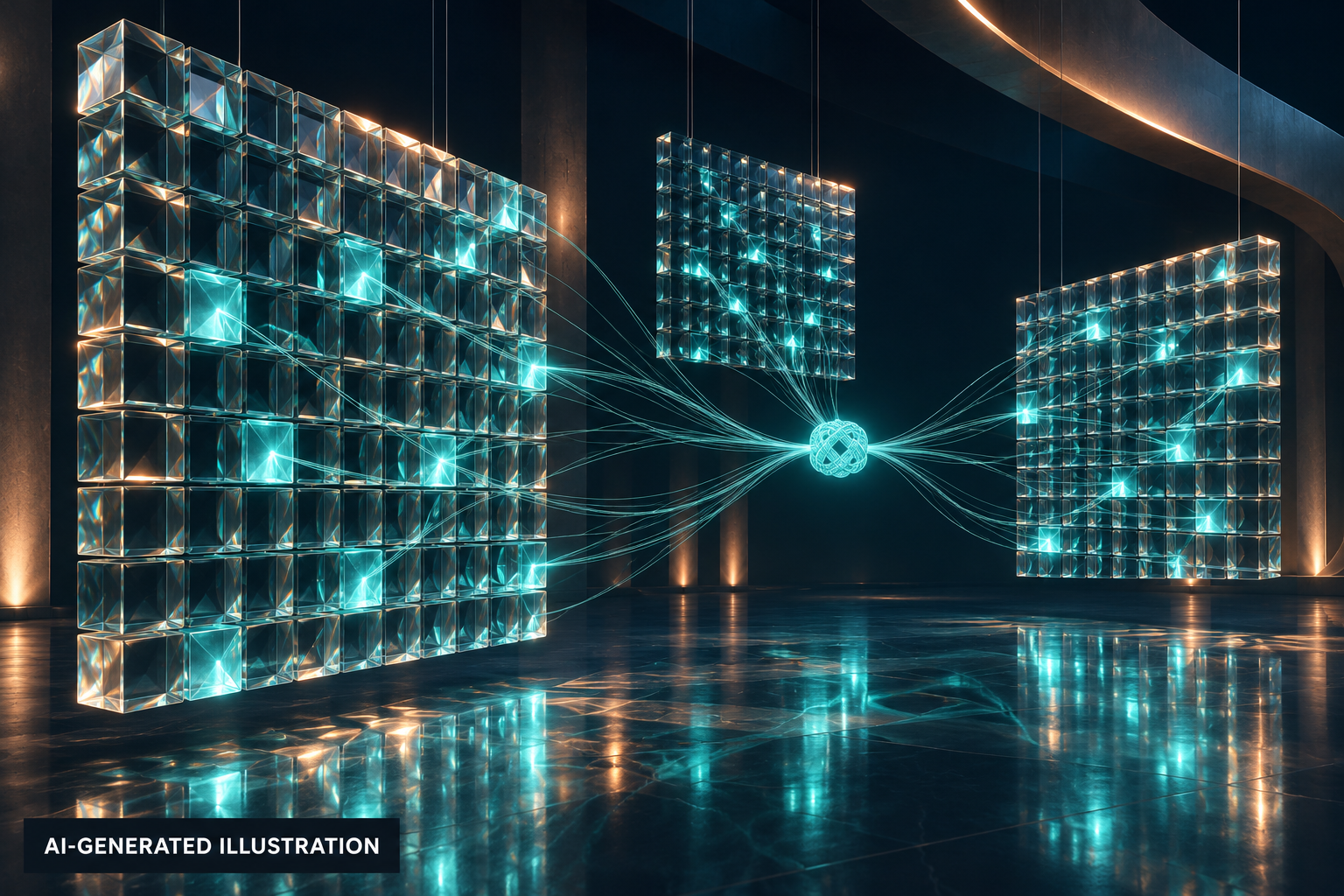
AI-generated illustration: Matrix-like grids connected by a more compact computation network.
The same answer in 76 multiplications instead of 80. How?
Scientific discoveryResearch

Teaching AI to invent a shorter way to multiply

Discover the story
Result & evidence

AlphaTensor searches for efficient matrix-multiplication algorithms, a building block of simulations and data processing. Researchers can discover valid alternatives adapted to particular hardware, improving the computation underneath many scientific tools.

Documented result

Hardware-adapted algorithms multiplied large matrices 10–20% faster than the commonly used comparison algorithms on the same tested hardware.

Google DeepMind
Global 2022

Hardware- and matrix-specific performance; broad application speedups or societal savings were not measured.

Reviewed 2026-11-14
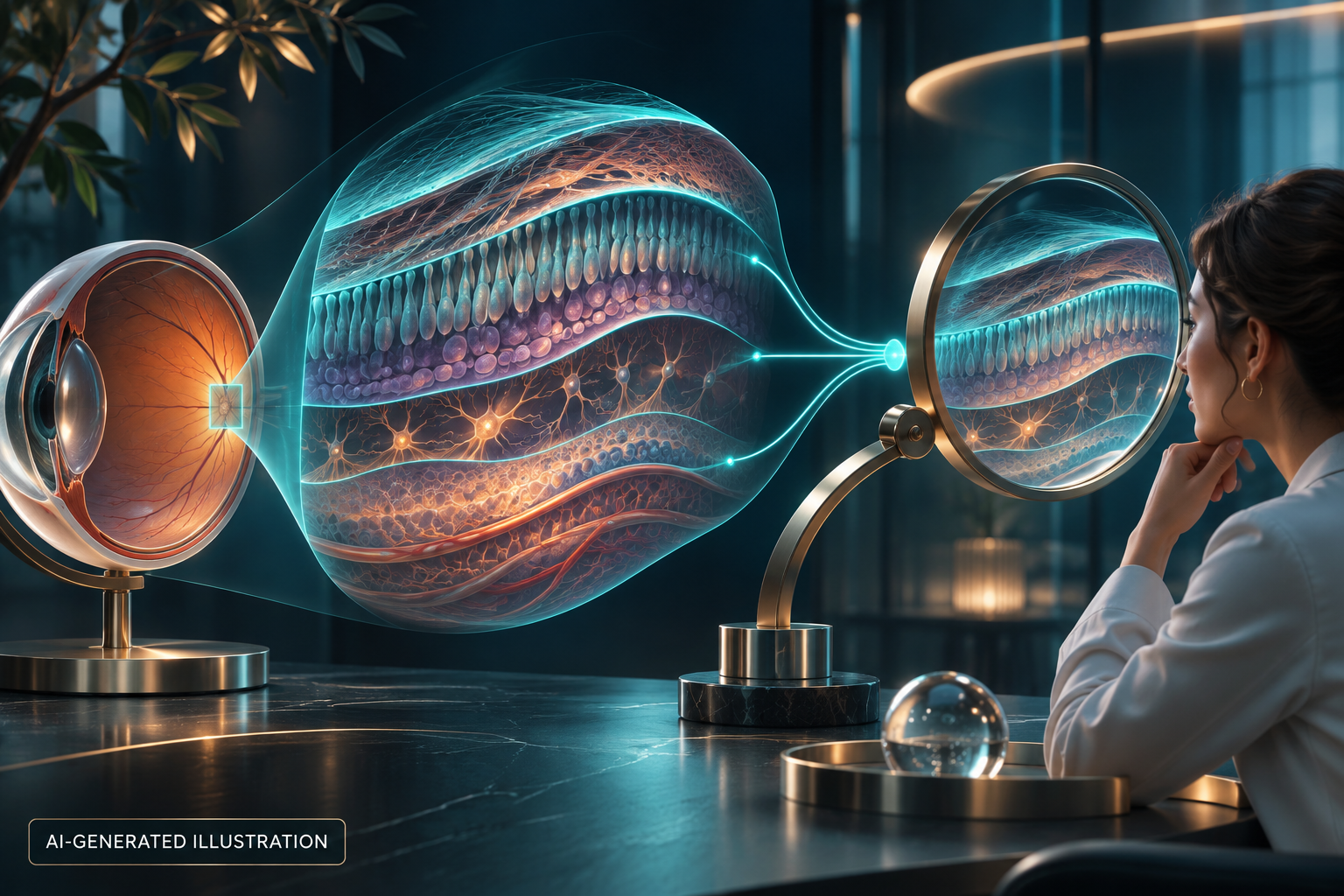
AI-generated illustration: Retinal layers provide clues for prioritising specialist review.
The scan is only the beginning. How urgently should someone see a specialist?
Earlier diagnosisResearch

One retinal scan, more than 50 eye diseases to consider

Discover the story
Result & evidence

Moorfields researchers trained AI to interpret retinal scans and recommend referral urgency, creating a way to help eye clinics identify patients who need specialist attention most quickly.

Documented result

In the scan evaluation, referral recommendations were correct more than 94% of the time across over 50 eye diseases, matching expert performance.

Moorfields Eye Hospital; UCL; DeepMind
London, United Kingdom 2018

This was retrospective scan research; it did not demonstrate shorter real-world waiting times or prevention of sight loss.

Reviewed 2026-11-14
Whakaari / White Island seen from Ohope Beach in November 2017. This photograph shows the volcano studied, not an AI warning or the 2019 eruption.Original photograph
Krzysztof Golik / Wikimedia CommonsCC BY-SA 4.0
Disaster preparednessResearch

Listening for a volcano’s change of rhythm

Discover the story
Result & evidence

Researchers trained machine learning on continuous seismic recordings to identify patterns preceding explosive eruptions, demonstrating a route to more frequent volcanic risk updates for authorities responsible for access and public safety.

Documented result

Retrospective tests detected precursors to four of five Whakaari eruptions; the 2019 event would have triggered an alert 16 hours earlier.

University of Auckland
Whakaari / White Island, New Zealand 2022

Retrospective warning potential; the 18-month live evaluation had no eruptions and three false alerts, so life-saving effectiveness was not measured.

Reviewed 2026-11-14
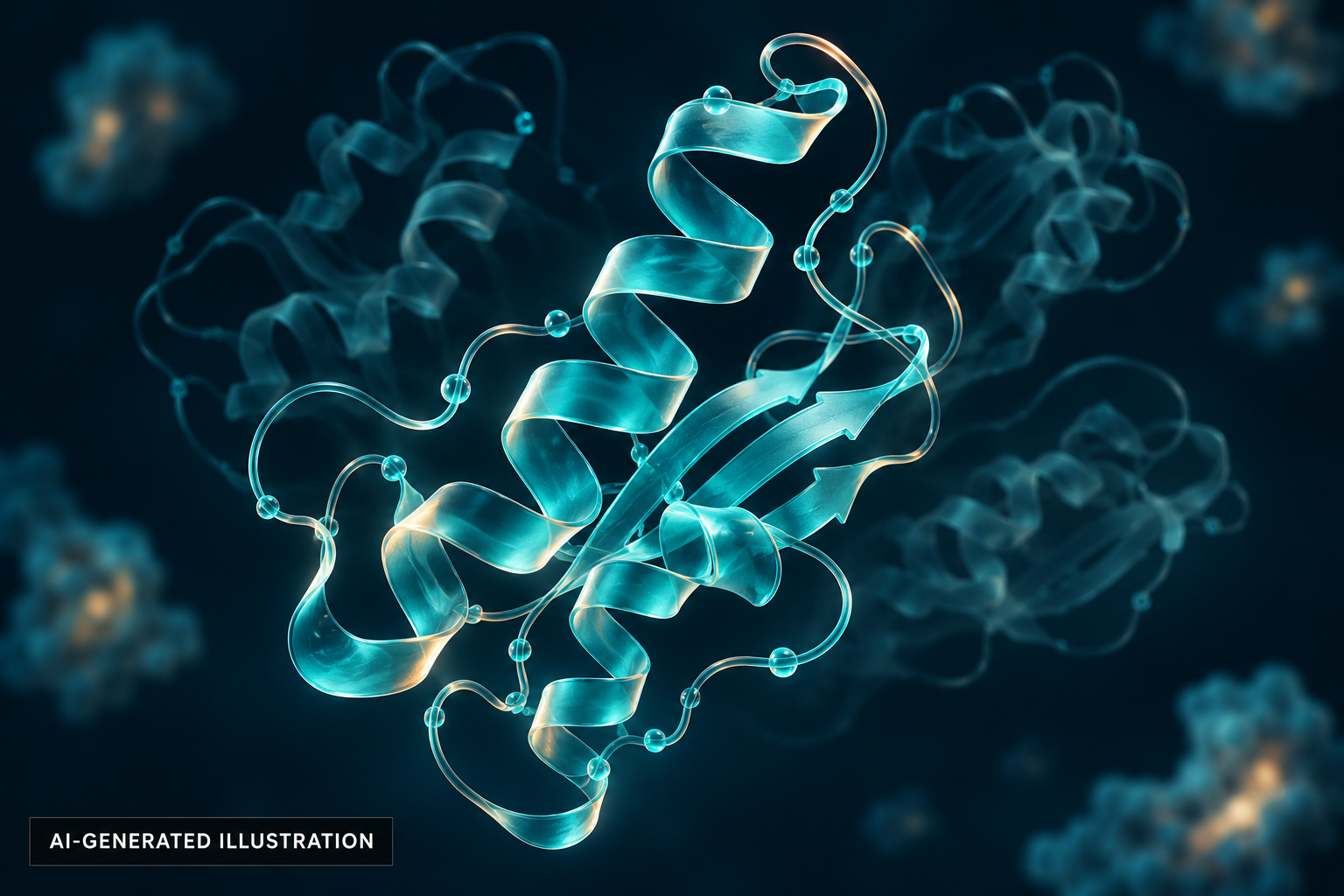
AI-generated illustration: Several possible molecular conformations with one rare form highlighted.
What if the unusual one percent holds the clue the average erases?
Scientific discoveryResearch

The one-percent protein assembly that an average could hide

Discover the story
Result & evidence

CryoDRGN reconstructs a range of three-dimensional protein shapes from noisy electron-microscope images. Researchers can study structural variation that a single averaged image obscures, improving the tools used to understand biological mechanisms.

Documented result

The research demonstrated reconstruction of three-dimensional protein complexes and continuous structural variation from both simulated and real cryo-EM images.

MIT; cryoDRGN research team
Cambridge, Massachusetts, United States 2021

A structural-biology research method; reconstruction quality depends on the data and is not a demonstrated patient outcome.

Reviewed 2026-11-14
A bigger picture of AI starts with concrete evidence.Back to filters ↑