BIGGER PICTURE Disaster preparedness
Listening for a volcano’s change of rhythm
Researchers used continuous seismic records to search for eruption precursors at Whakaari. The most useful follow-up tested what could fool the system in real time.
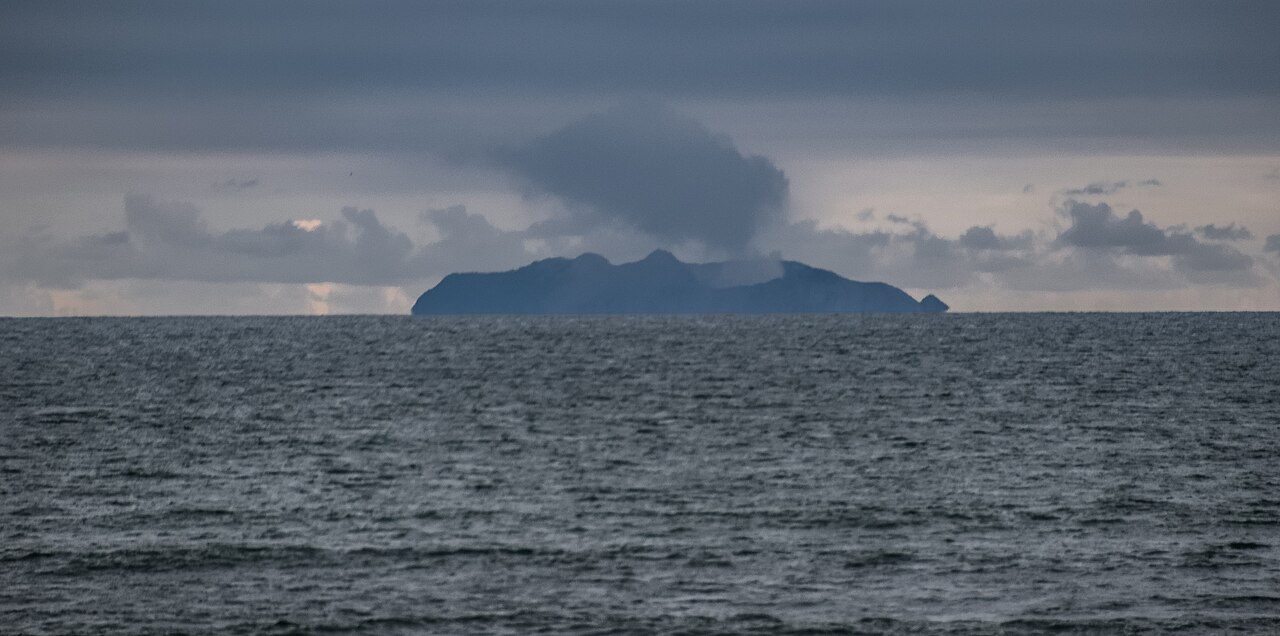 Original photograph
- Historical test
- Four of five eruptions identified in the 2020 study
- Prospective evaluation
- 18 months during 2020–2021
- Important finding
- Three false alerts traced to regional earthquakes
How the idea works
Read continuous tremor
Seismic sensors record changing ground motion.
Find precursor patterns
Learned time-series patterns produce an eruption score.
Test and calibrate warnings
Real-time results expose noise and inform probability estimates.
The ground carries more than one kind of signal
Whakaari’s sudden steam-driven explosions make short-term forecasting difficult. Researchers at the University of Auckland examined years of seismic records for patterns preceding eruptions. The question was whether continuous tremor measurements contained useful warning information that an algorithm could recognize repeatedly, rather than relying only on occasional assessments of the volcano’s general state.
A promising result came from looking backward
The 2020 work identified precursors in four of five historical eruptions. The university reported that the December 2019 event could have received 16 hours’ warning under the tested system. That is a retrospective result: the warning was not issued then. It suggests useful information existed in the record, not that future eruptions can be predicted with a guaranteed lead time.
The real-time test found a different problem
A follow-up study ran the forecaster from February 2020 to August 2021, updating it every ten minutes from recent seismic data. No eruption occurred, but three false alerts did. Regional earthquakes had contaminated the tremor signal. Researchers developed filtering and normalization changes that would have prevented those particular false positives in the reanalysis.
Sources: [3]
Learning what fools a warning is progress
The 2022 paper also distinguishes a model’s numerical score from a calibrated eruption probability. That matters when people must act on a warning. This remains evaluated research, not proof of lives saved or a substitute for official volcanic guidance. Its inspiring contribution is a measurable path from hidden signals to testing, error diagnosis and a more interpretable decision aid.
Sources: [3]
The original sources
- University of AucklandEruption alert system would have given 16 hours’ warning at Whakaari
- Nature CommunicationsAutomatic precursor recognition and real-time forecasting of sudden explosive volcanic eruptions at Whakaari, New Zealand
- Dempsey et al., Bulletin of Volcanology; author-hosted published PDFEvaluation of short-term probabilistic eruption forecasting at Whakaari, New Zealand