BIGGER PICTURE Earlier diagnosis
One retinal scan, more than 50 eye diseases to consider
A detailed retinal scan is useful only if it leads to the right next step. Moorfields and DeepMind built a system that connects features in the image with the urgency of referral.
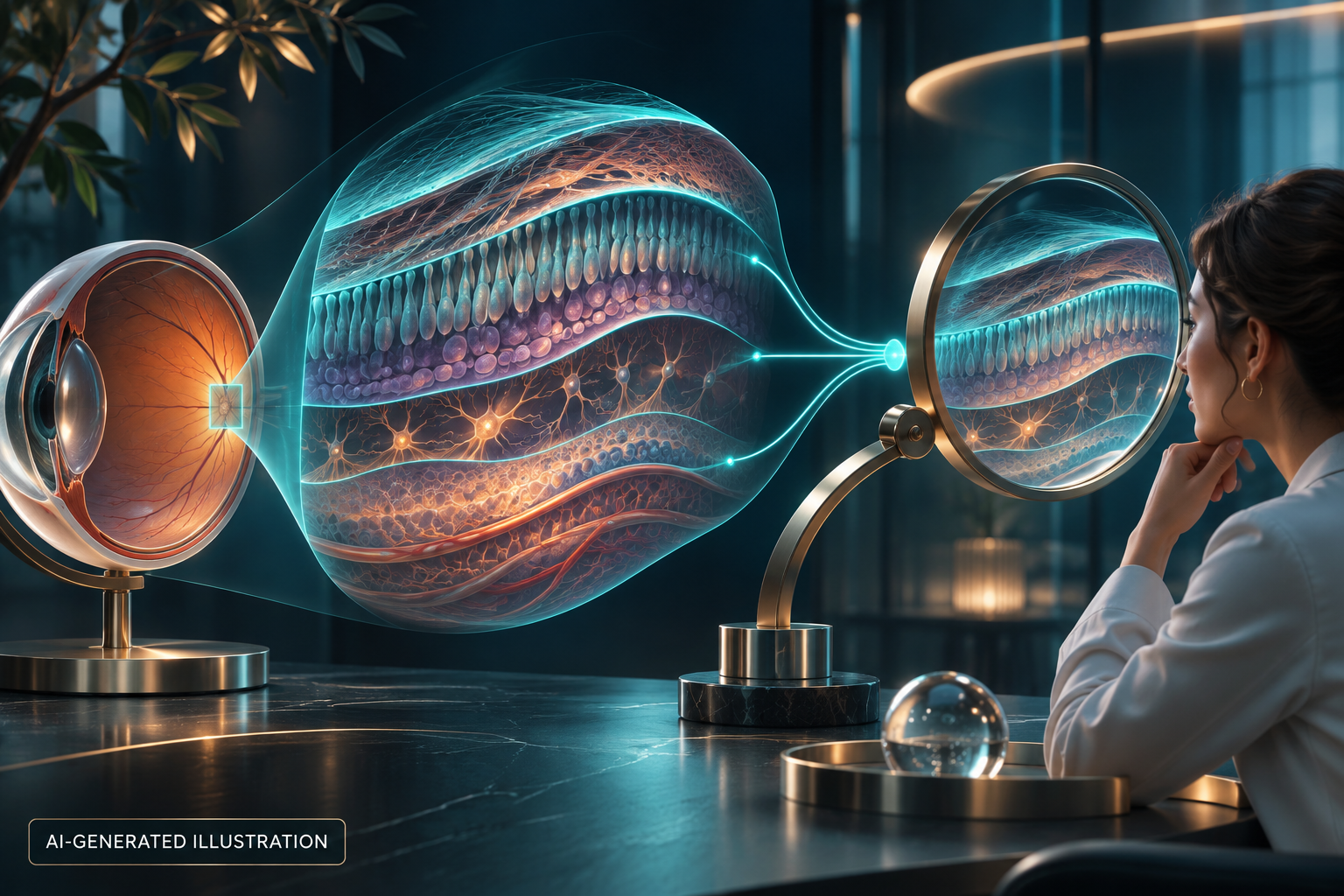
- Conditions covered
- More than 50
- Referral agreement
- More than 94% in the 2018 evaluation
- Visible reasoning aids
- Marked image features and confidence
How the idea works
Read retinal layers
OCT images reveal structural features within the retina.
Identify relevant changes
The first model marks features associated with disease.
Recommend urgency
A second stage proposes referral priority for clinical review.
The queue matters as much as the image
An optical coherence tomography scan shows detailed layers of the retina. Interpreting many such scans takes scarce specialist time. The research team focused on a decision with an immediate operational meaning: how urgently should this person reach the appropriate eye-care service?
Sources: [1]
Separate what is visible from what should happen
Two neural-network stages linked image interpretation and referral. The system learned to identify ten features associated with eye disease, then recommended a route based on the most urgent finding. This structure also allowed adaptation to different scanner types rather than tying everything to one machine.
Show the clinician something to inspect
The output included marked features and confidence estimates, giving eye specialists information to scrutinise. In the 2018 research evaluation, referral recommendations for more than fifty conditions were correct in over 94% of cases, matching expert performance on the comparison scans.
The distance from a scan to faster care
These were research results using previously collected scans. They did not demonstrate a measured reduction in blindness or waiting times in routine care. The enduring idea is nevertheless practical: connect automated interpretation to a reviewable next action, so scarce clinical attention can be directed where urgency is greatest.
The original sources
- University College LondonArtificial intelligence equal to experts in detecting eye diseases
- Moorfields Eye HospitalGoogle DeepMind research updates