BIGGER PICTURE Earlier diagnosis
A few seconds of eardrum video make a difficult distinction visible
A restless child gives a clinician only a brief view inside the ear. Pittsburgh researchers turned that fleeting view into a short video that an AI model can examine for specific signs of infection.
- Research collection
- 1,151 videos from 635 children
- Sensitivity
- 93.8% on test data
- Specificity
- 93.5% on test data
How the idea works
Record the eardrum
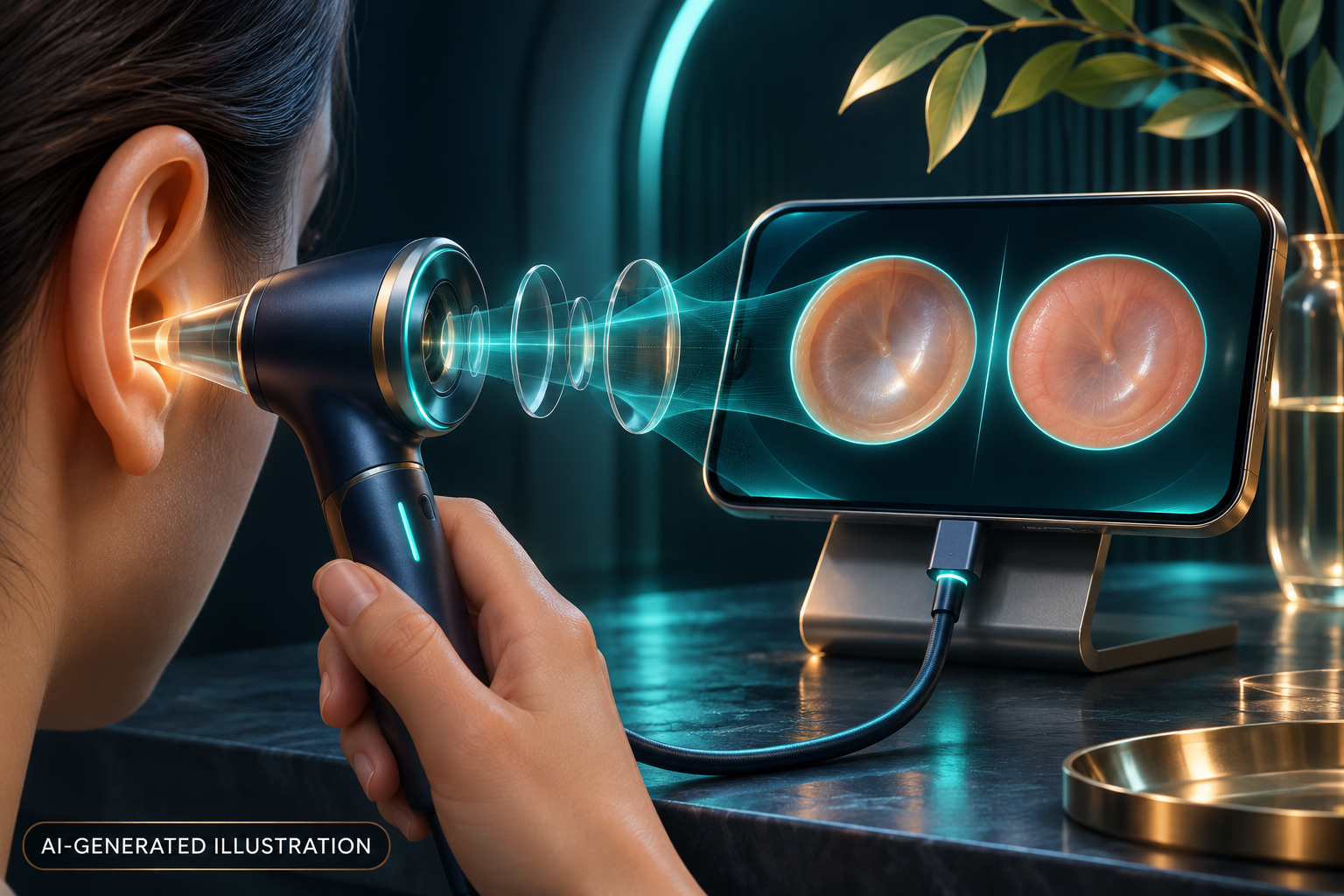
A smartphone-connected otoscope captures a short video.
Combine visual clues
The model examines colour, shape and appearance across frames.
Review the classification
The clinician can compare the proposed result with recorded evidence.
Fluid behind the eardrum is not always the same diagnosis
Acute middle-ear infection can be confused with fluid behind the eardrum without the same acute infection. UPMC’s researchers highlight a useful visual distinction: a bulging eardrum. Getting this distinction right could help clinicians choose appropriate treatment instead of treating every similar-looking ear alike.
Sources: [2]
Let several frames contribute different clues
An otoscope connected to a smartphone records a short clip. The model uses a sequence of images, allowing one frame to contribute colour information and another to show translucency or shape. Its demonstration returns a classification and confidence level alongside the captured images.
Sources: [1]
Compare with expert interpretation
Researchers assembled 1,151 videos from 635 children, with expert diagnoses as reference. On test data, the main neural-network model reached 93.8% sensitivity and 93.5% specificity. These measure detection of acute infection and correct rejection of non-infection, respectively; neither means that every individual result is correct.
Sources: [1]
The original sources
- JAMA PediatricsDevelopment and Validation of an Automated Classifier to Diagnose Acute Otitis Media in Children
- UPMC / University of PittsburghNew AI Smartphone Tool Accurately Diagnoses Ear Infections