BIGGER PICTURE Accessibility & independence
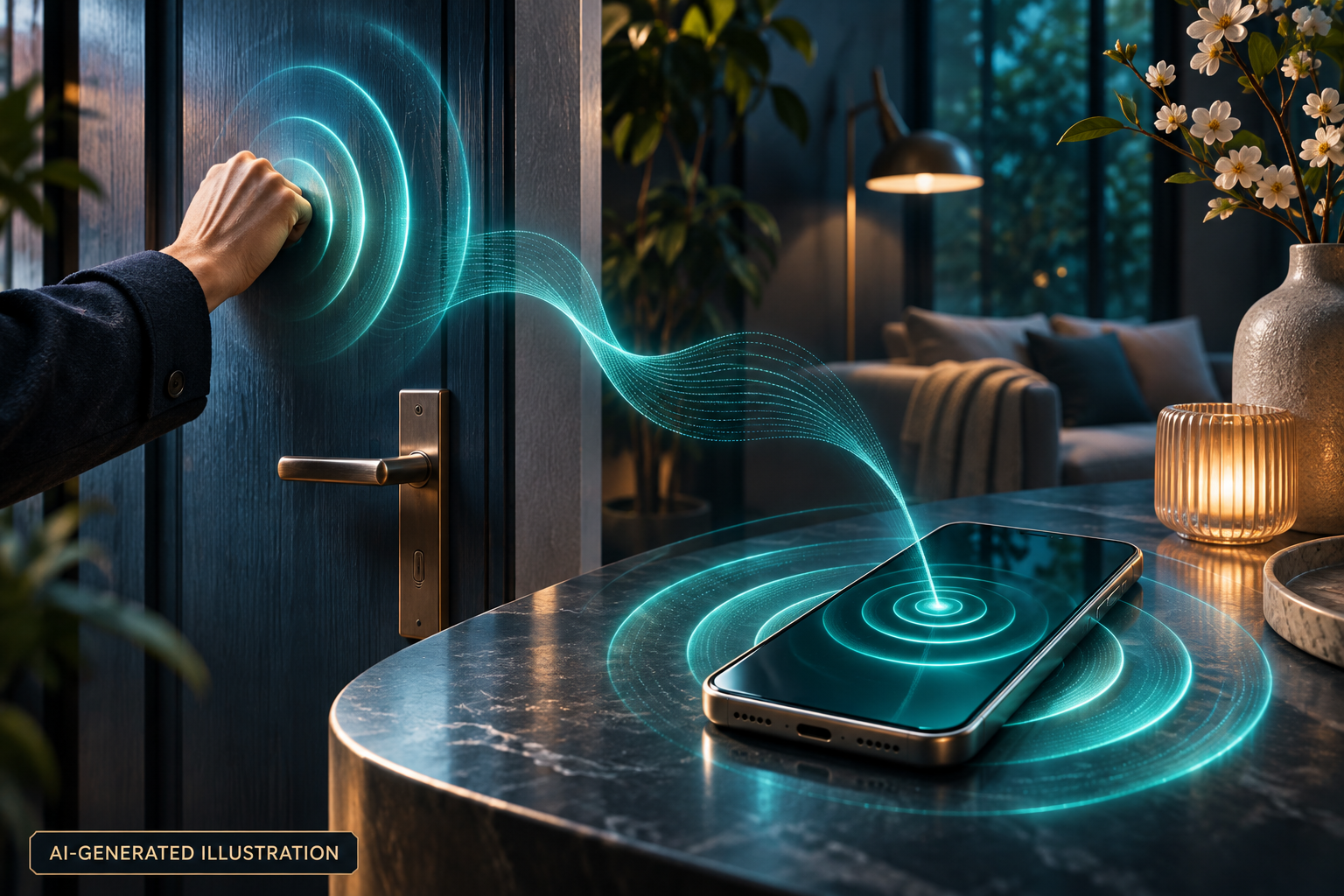
A knock at the door becomes a vibration in your pocket
A home constantly communicates through sound: an appliance beeps, water runs, someone knocks. Android Sound Notifications translates selected sounds into signals that deaf and hard-of-hearing people can see or feel.
- Processing
- On the device
- Alternative signals
- Text, vibration or camera flash
- User choice
- Choose which sounds trigger alerts
How the idea works
Recognise a sound pattern
The local model classifies audio from the phone microphone.
Check personal selections
Only selected sound categories prompt notifications.
Make the event perceptible
Text, vibration or light conveys that something happened.
The problem is the channel, not the event
A door knock can carry useful information without containing any words. Sound Notifications therefore recognises sound categories rather than transcribing speech. Its launch examples included running water, appliance beeps and knocking: ordinary events that can otherwise pass unnoticed when hearing is limited.
Sources: [1]
Listen locally, notify differently
The machine-learning model runs offline using the phone microphone. Google’s documentation says the captured audio stays on the device. When a selected sound is detected, the phone can produce a visible notification, vibration or flash, converting an auditory event into another sensory channel.
People decide what deserves interruption
Users select the sound types and notification method. The feature can also work with a compatible watch for vibration at the wrist. This makes attention more configurable: the goal is not to describe every noise, but to surface the kinds of events a person wants to notice.
Room acoustics still matter
The help page recommends an unobstructed phone in the room and limiting competing loud sounds. This is a deployed accessibility feature, not a trial proving fewer accidents. The credible benefit is an additional awareness channel; recognising an alarm sound does not turn the phone into a certified safety alarm.
Sources: [2]
The original sources
- GoogleImportant household sounds become more accessible
- Google Android Accessibility HelpSound Notifications: Get notified about important sounds around you