BIGGER PICTURE Better care
The promising antibiotic was hiding in a different medicine search
A molecule once investigated for diabetes emerged from an entirely different search. Machine learning helped researchers find its antibacterial potential; targeted experiments then revealed an unusual way to attack a resistant hospital bacterium.
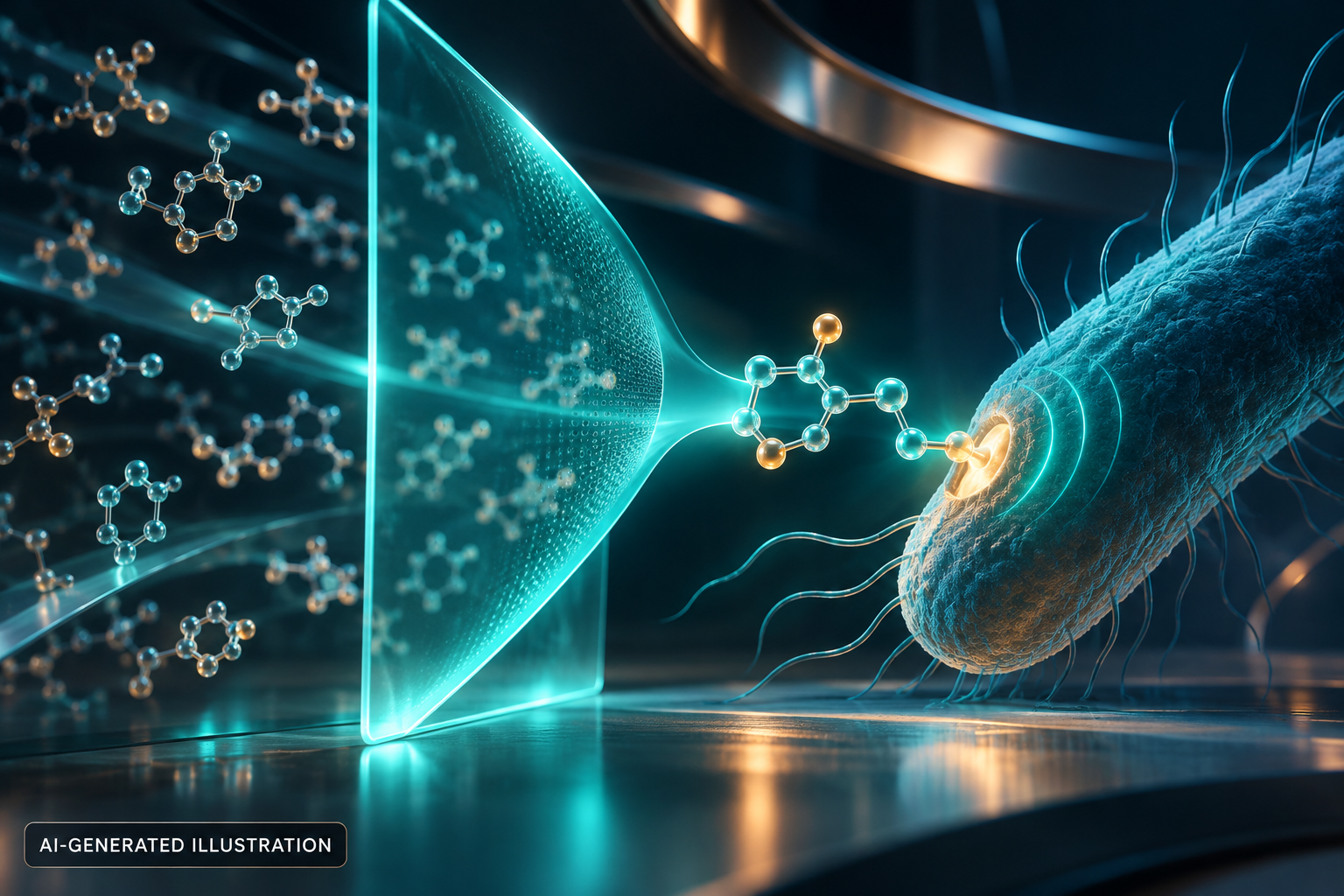
- Search library
- 6,680 previously unseen compounds
- Laboratory shortlist
- 240 candidates tested
- Evidence stage
- Bacterial cultures and a mouse wound model
How the idea works
Learn bacterial inhibition
Measured bacterial growth links molecular structure to activity.
Prioritise unfamiliar chemistry
Models and structural filters select a small testable shortlist.
Check the mechanism in biology
Culture, resistance and animal experiments test the candidate.
One particularly difficult hospital bacterium
Acinetobacter baumannii can resist multiple antibiotics. The MIT–McMaster team first tested thousands of molecules against the bacterium to create training data. Chemical structures were paired with a practical label: did the compound inhibit bacterial growth in the laboratory?
Sources: [1]
Look beyond familiar antibiotic shapes
The trained models scored a separate library of 6,680 compounds. Researchers selected 240 with promising predictions and structures different from known active examples. Laboratory testing yielded nine antibacterial hits. One had previously been investigated for a different purpose, as a potential diabetes medicine.
Disrupt the bacterium’s internal delivery system
Further experiments linked abaucin’s activity to lipoprotein transport involving the protein LolE. These molecules must reach the bacterial envelope. The compound showed unusually narrow activity against A. baumannii, rather than broadly attacking all the tested bacterial species.
From a molecular clue to a mouse wound
Abaucin controlled infection in a mouse wound model and worked against resistant isolates in laboratory tests. Those are meaningful experimental results, but not evidence of benefit in human patients. Its larger lesson is how prediction and selective experiments can uncover a new use for overlooked chemistry.
The original sources
- Nature Chemical Biology / MIT author manuscriptDeep learning-guided discovery of an antibiotic targeting Acinetobacter baumannii
- MIT NewsUsing AI, scientists find a drug that could combat drug-resistant infections