BIGGER PICTURE Energy & climate
How an AI learned to hold two plasmas in one vessel
You cannot hold fusion plasma with an ordinary clamp. At EPFL, researchers trained a controller to shape it with magnetic fields—and then trusted it with a real experiment.
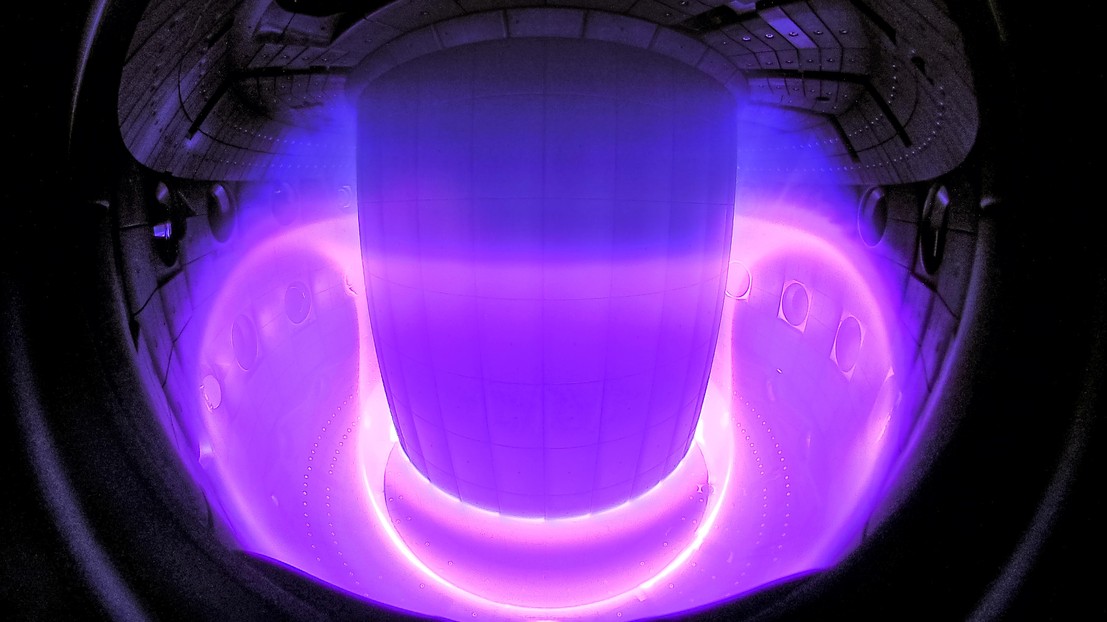 Original photograph
- Real experimental machine
- TCV · Lausanne
- Demonstrated configuration
- Two simultaneous plasmas
- What was demonstrated
- Magnetic control, 2022
How the idea works
Specify a plasma shape
Researchers define the configuration the experiment needs.
Practise coil adjustments
A simulated tokamak rewards settings that approach the target.
Control the real coils
The trained policy shapes plasma in TCV.
The invisible grip around the plasma
A tokamak confines extremely hot, electrically charged gas with magnetic fields. Coils around the vessel influence its position and shape. Letting it drift into the walls loses heat and can damage the machine. TCV, the variable-configuration tokamak in Lausanne, is particularly useful because researchers can explore different shapes rather than operating with just one fixed geometry.
Sources: [1]
Practise first in a simulated reactor
The controller learned through reinforcement learning: try coil settings in a physics simulation, evaluate how closely the resulting plasma matches a requested configuration, then improve the strategy. DeepMind describes the real control problem as adjusting voltages thousands of times per second. Training can be lengthy; the learned controller must make each operating decision quickly enough for the physical system.
Sources: [3]
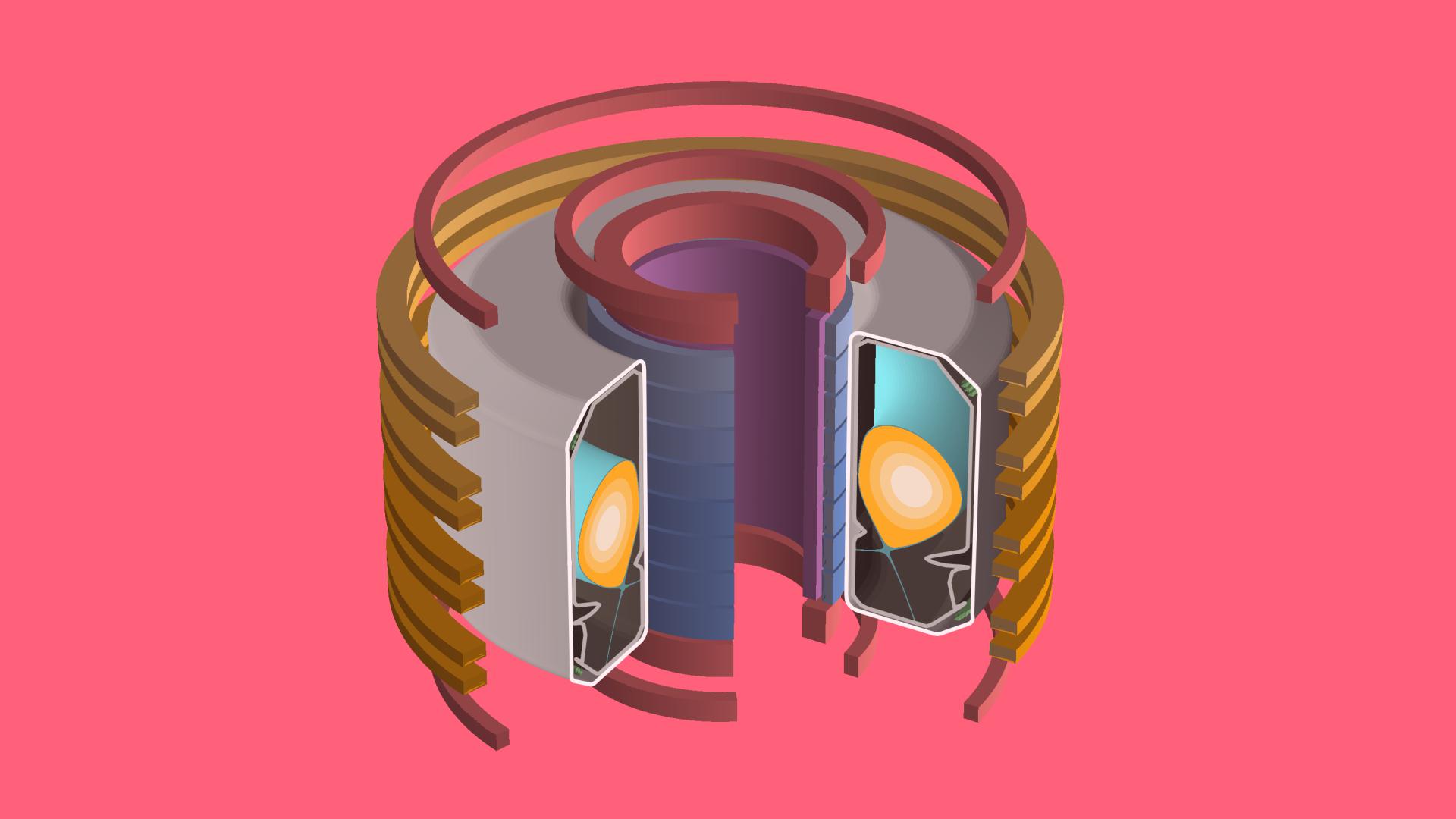 Source illustration
The surprising test: two separate plasmas
In the 2022 experiment, the trained system produced and maintained several configurations on the real TCV machine. One held two separate plasmas simultaneously inside the vessel. This is useful experimental flexibility: physicists can investigate how different configurations behave. The achievement was controlling the apparatus and its plasma, not generating electricity for a household or demonstrating a commercial fusion power station.
The useful bridge from practice to hardware
The broader lesson lies in the handover from simulated practice to real hardware. Researchers supplied physical models, target configurations and an experimental facility; learning supplied a control strategy. Better experimental tools may accelerate energy research, but they do not remove the remaining physics and engineering problems. The human benefit here is a research capability, with a long route to any electricity supply.