← Back to the homepage
BIGGER PICTURE 99 AI stories

NASA parts shaped like bones.
Burnt scrolls read unopened.

Explore all 99 applications
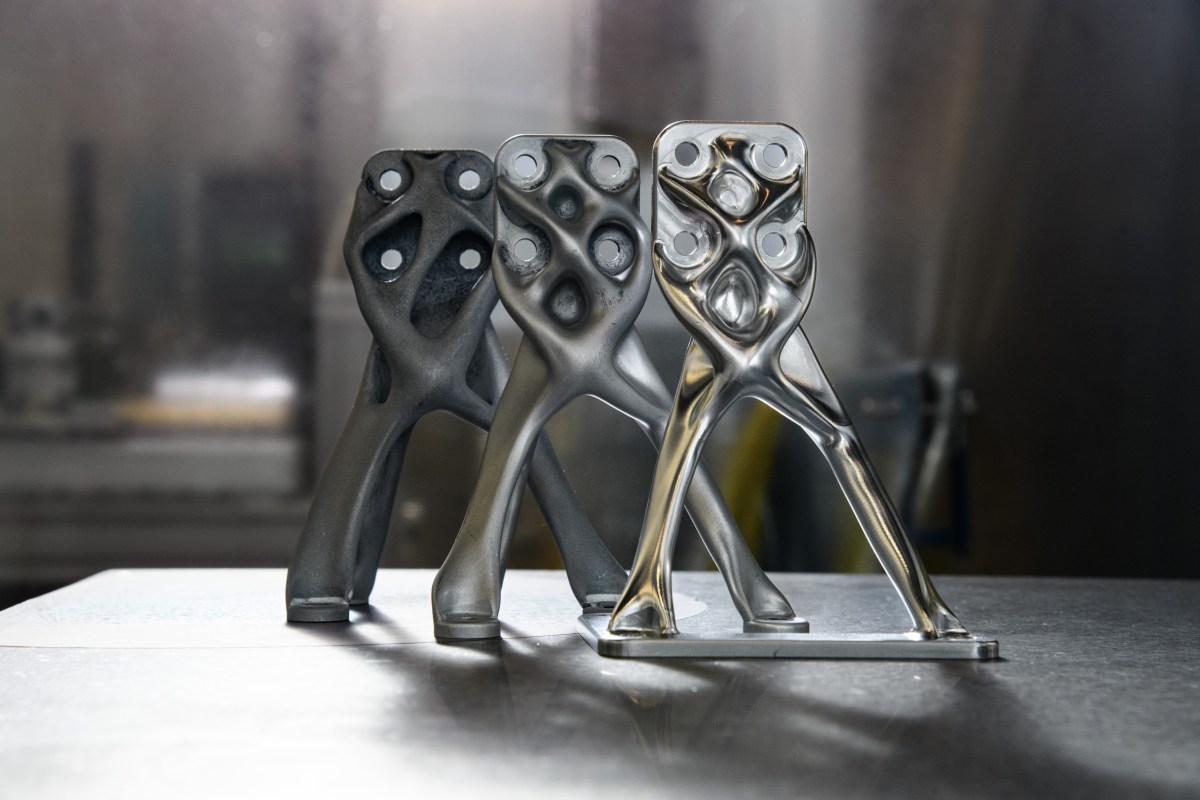
Three metal telescope supports with branching, curved struts and bolt holes on a workbench.
NASA / Henry DennisNASA media guidelinesWhy this shape?
How this collection was selected

We selected 99 distinct applications with a traceable benefit for people or a demonstrated step towards one. Each links to an original study, a report by an involved institution, or an explicitly labelled provider report. The order starts with particularly tangible examples; it is not a ranking.

“In use” describes use in the documented project, not independent proof of effectiveness or a guarantee of current operation. Study evaluations and research are labelled separately. Better predictions, higher detection rates and saved working time do not automatically mean lives saved or a net social benefit. Each case explains its specific limit. This selection is not a statistical comparison with incidents in the register.

Sources reviewed: 14 November 2026

How did they do it?

Every example freely accessible

1–12 of 39 matches · 99 applications in total

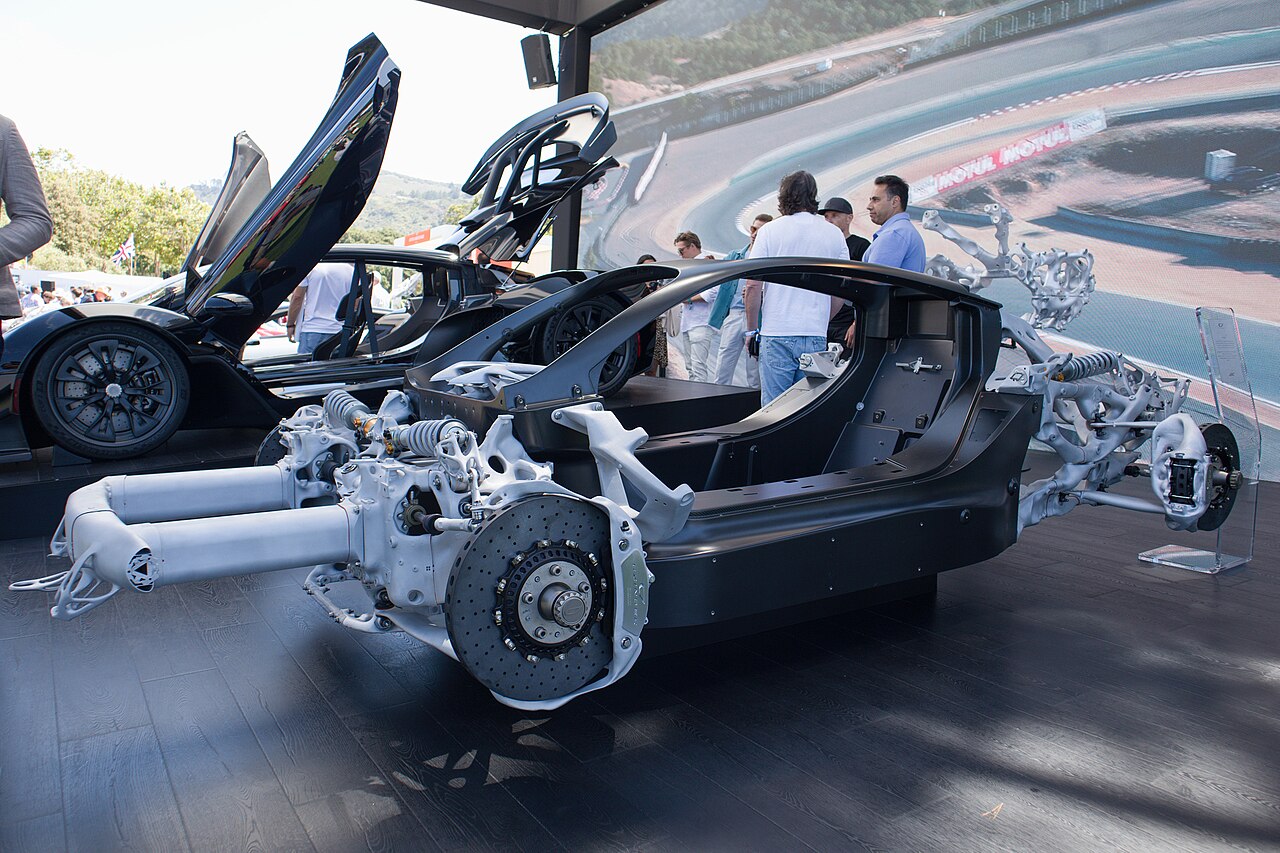
A Czinger 21C chassis without bodywork, showing branching silver structures around the suspension and a dark central passenger cell.Original photograph
Prova MO / Wikimedia CommonsCC BY-SA 4.0
Scientific discoveryIn use

The record-breaking hypercar with AI-shaped metal bones

Discover the story
Result & evidence

Czinger connects AI-assisted structural design to metal printing and robotic assembly. Its hollow, branching components show how engineers can pursue lighter structures that can actually be built.

Documented result

The 21C set Goodwood’s 2024 production hillclimb record at 48.82 seconds. Czinger separately claims about 25% less chassis weight versus its stated comparison architectures.

Czinger Vehicles / Divergent
California, United States; Goodwood, United Kingdom 2024

Goodwood confirms the historical 2024 time. The chassis-weight comparison is manufacturer-reported; neither result isolates AI’s contribution or establishes an environmental saving.

Reviewed 2026-11-14
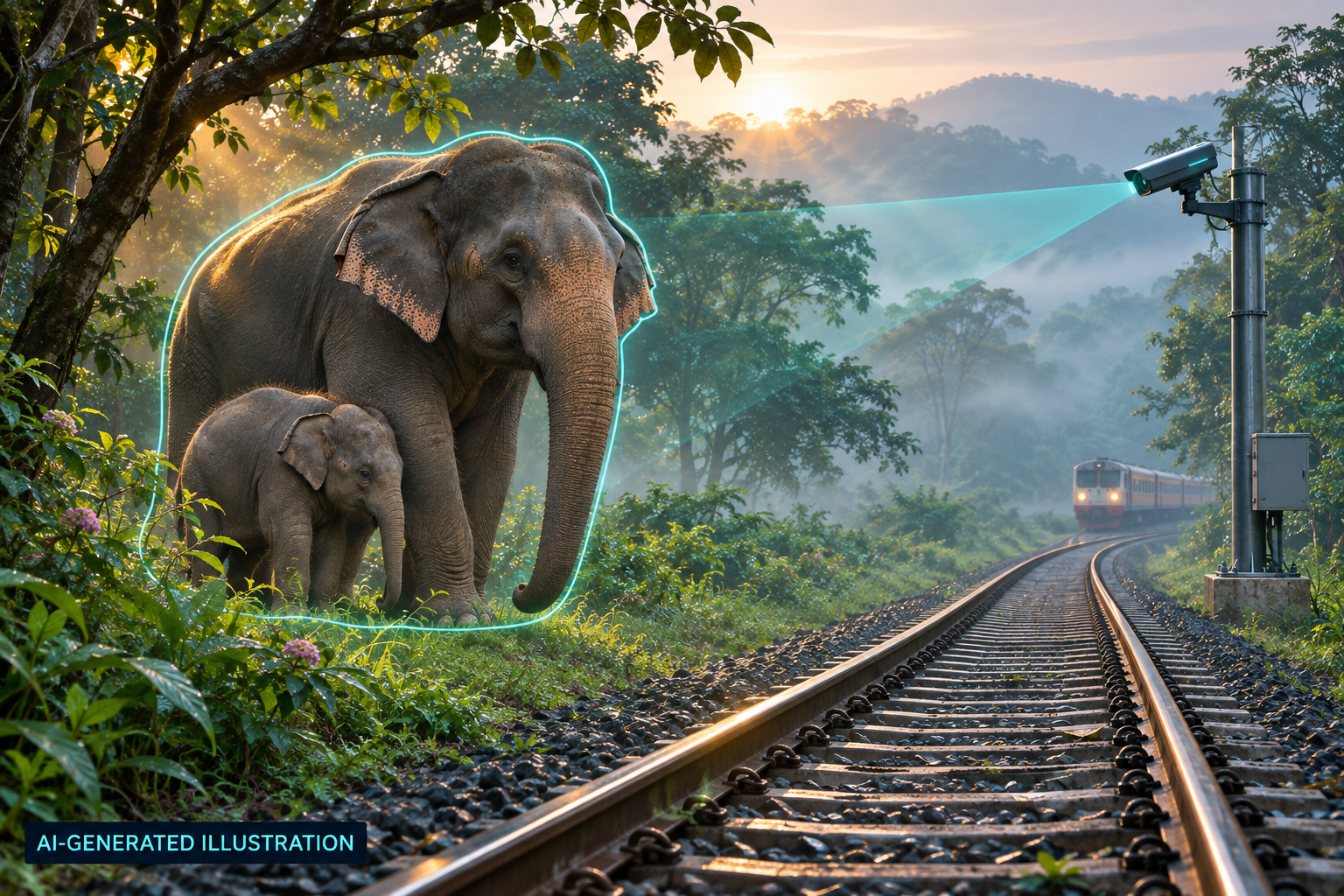
AI-generated illustration: Conceptual elephants beside a railway monitored by a camera tower.
The crucial moment comes before an elephant and a train share the track.
Nature & foodIn use

Elephants on the railway: the seven kilometres watched by AI

Discover the story
Result & evidence

AI surveillance detects elephants near a vulnerable railway corridor and sends alerts so teams can intervene, supporting safer coexistence between rail transport and wildlife moving through a fragmented landscape.

Documented result

India’s government reported 6,595 alerts and no recorded elephant train-collision deaths on the monitored stretch between December 2023 and January 2026.

Tamil Nadu Forest Department; Indian railway partners
Madukkarai, Tamil Nadu, India 2026

This is an observational report for seven kilometres; zero recorded deaths is not proof of universal or solely AI-caused prevention.

Reviewed 2026-11-14
AI-generated illustration: Concrete specimens linked to a search for stronger, lower-carbon recipes.
Stronger sooner, with less carbon. What changed in the recipe?
Scientific discoveryIn use

Concrete that gets strong sooner—with less carbon

Discover the story
Result & evidence

An iterative AI-and-laboratory process designed concrete that reached useful early strength with lower embodied carbon, then passed practical slab tests for a real construction site.

Documented result

Illinois reported 43% higher early strength and 35% lower carbon intensity than the industry baseline mix; a formulation was used at Rosemount.

University of Illinois Urbana-Champaign, Meta and Amrize
Rosemount, Minnesota, United States 2025

Site-specific comparison reported by the project partners; lower material carbon does not measure the data centre’s overall environmental impact.

Reviewed 2026-11-14
AI-generated illustration: A stationary phone and an illustrative enlarged motion sensor detect vibrations, with other phones forming a sensing network.
Earthquake or a hand picking up the phone? The sensor feels both.
Disaster preparednessIn use

A phone on a table became part of a seismic network

Discover the story
Result & evidence

MyShake uses a neural network to distinguish earthquake-like motion from everyday movement, letting ordinary phones contribute ground-shaking measurements that help researchers understand earthquakes beyond the reach of dedicated monitoring stations.

Documented result

In its first ten months in 2016, the public smartphone network captured 395 earthquakes with confirmed waveforms around the world.

University of California, Berkeley
Global 2016

This result demonstrates sensing. Current US public alerts use ShakeAlert; they must not be attributed solely to phone AI.

Reviewed 2026-11-14
AI-generated illustration: Conceptual cutaway of cameras and sorting equipment above a recycling belt.
What can still be rescued after everything lands in the same bin?
Energy & climateIn use

The recycling line that sorts the rubbish you didn’t separate

Discover the story
Result & evidence

AI-guided cameras and sorting equipment recover recyclable materials and organics from ordinary mixed rubbish, giving communities another way to conserve resources and reduce how much material goes to landfill.

Documented result

In January 2026 acceptance testing, the Portsmouth system diverted about 360 of over 500 tons of mixed waste, validated by two external firms.

Southeastern Public Service Authority; AMP
Portsmouth, Virginia, United States 2026

The three-day test included organics as well as recyclables; recovered proportions vary with the incoming waste stream.

Reviewed 2026-11-14
AI-generated illustration: Conceptual river landscape with translucent possible flood boundaries.
Can one river’s history help predict another river’s next flood?
Disaster preparednessIn use

How to forecast a river that has no measuring station

Discover the story
Result & evidence

AI forecasts river flooding where stream gauges are scarce, giving communities and aid organisations more time to prepare evacuations, protect supplies and plan support before water levels become dangerous.

Documented result

The 2024 study extended comparable forecast reliability from same-day nowcasts to about five days ahead on average.

Google Research
Global 2024

Forecast skill and warning coverage do not establish how many lives were saved; this concerns river floods.

Reviewed 2026-11-14
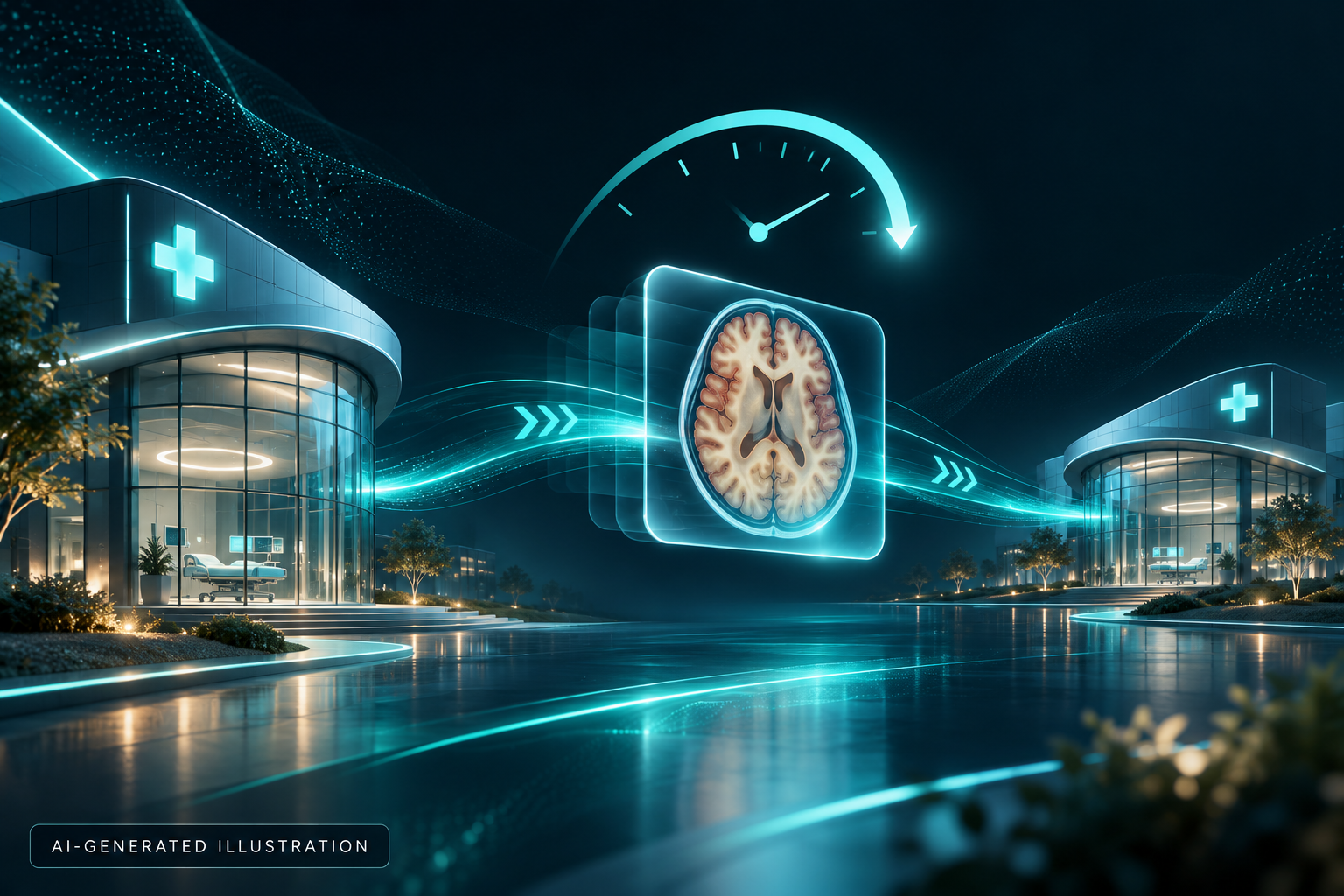
AI-generated illustration: A brain scan links two hospitals to explain faster stroke-care coordination.
Recognising the clot is only half the problem. Who can remove it?
Better careIn use

The scan that helps a stroke patient reach the right hospital

Discover the story
Result & evidence

Brainomix e-Stroke helped clinical teams interpret brain scans and share them across hospitals, supporting urgent decisions about moving patients to centres that can remove blood clots.

Documented result

At 26 evaluation hospitals, thrombectomy rates rose from 2.3% to 4.6%; comparison hospitals rose from 1.6% to 2.6%.

Brainomix; NHS stroke networks
England, United Kingdom 2025

The national study was observational; other changes in stroke care may also have contributed to increased thrombectomy access.

Reviewed 2026-11-14
AI-generated illustration: Mobile transfers connected to a conceptual network of rural households.
From satellite clues to a mobile payment: tracing a different route for emergency aid.
Public & everyday servicesIn use

When there was no up-to-date list of families needing help

Discover the story
Result & evidence

Novissi combined survey, satellite and phone data to identify people needing financial support. Machine learning helped extend cash transfers into rural Togo when comprehensive, current household income records were unavailable.

Documented result

J-PAL reports 138,500 vulnerable recipients enrolled through digital targeting, with improvements in food security and mental health from the transfers.

Government of Togo; GiveDirectly; J-PAL researchers
Togo 2026

AI supported selection; cash caused the welfare benefit. Targeting errors and exclusion of people without suitable data remain possible.

Reviewed 2026-11-14
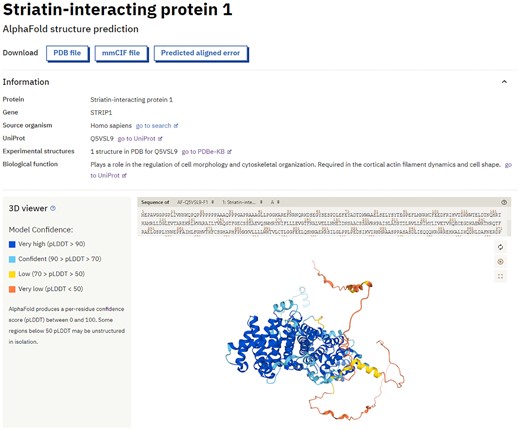
Published AlphaFold database view showing a predicted protein structure coloured by confidence.Source illustration
Mihaly Varadi et al., Nucleic Acids Research (2022)CC BY 4.0
Scientific discoveryIn use

A protein’s shape became something any lab could look up

Discover the story
Result & evidence

AlphaFold’s openly accessible structure predictions give researchers starting points for understanding proteins. Laboratories can explore biological questions without first determining every structure experimentally, expanding access to a resource useful across life sciences.

Documented result

The 2022 database expansion made predictions for over 200 million protein structures freely available through EMBL-EBI.

Google DeepMind; EMBL-EBI
Global 2022

Predicted structures have varying confidence and are not 200 million experimentally verified discoveries or treatments.

Reviewed 2026-11-14
ECMWF’s visual introducing its operational Artificial Intelligence Forecasting System in February 2025; an original source illustration.Source illustration
ECMWFCC BY 4.0
Disaster preparednessIn use

A weather forecast learned from decades of weather

Discover the story
Result & evidence

ECMWF’s operational AI forecasting system gives weather services an additional global forecast, helping specialists anticipate dangerous conditions and communicate timely information to people, transport operators and emergency teams.

Documented result

At its February 2025 operational launch, ECMWF reported tropical-cyclone track improvements of up to 20% on evaluated measures.

ECMWF
Global 2025

AIFS supplements physical models and observations; better forecast scores are not measured disaster-loss reductions.

Reviewed 2026-11-14
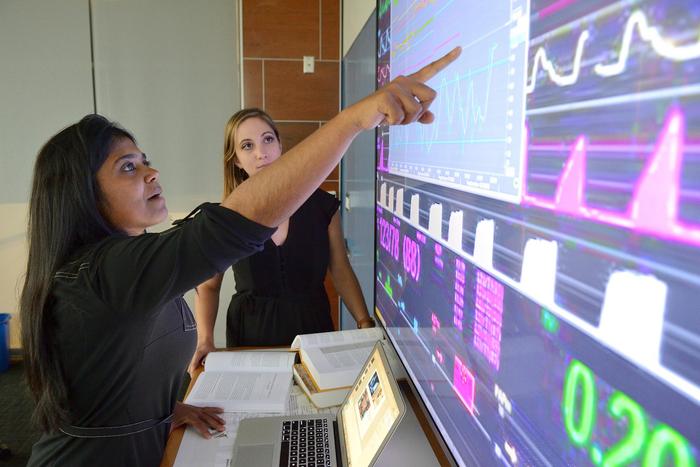
Suchi Saria points at waveforms on a wall-sized clinical-data display while another person watches.Original photograph
Will Kirk / Johns Hopkins UniversityEditorial reuse with attribution
Better careIn use

The hospital records that can raise a sepsis alarm

Discover the story
Result & evidence

TREWS continuously analyzed hospital records and alerted clinical teams to possible sepsis, supporting faster assessment and treatment of patients whose condition could deteriorate rapidly.

Documented result

In a five-hospital study, prompt clinician confirmation was associated with 3.3 percentage points lower adjusted in-hospital mortality among flagged sepsis patients.

Johns Hopkins University; Bayesian Health
United States 2022

This observational comparison cannot isolate AI's causal effect; prompt response may also reflect differences in clinical attention.

Reviewed 2026-11-14
AI-generated illustration: Conceptual view of a forest camera detecting a first wisp of smoke.
A thin wisp of smoke can trigger a check before anyone calls.
Disaster preparednessIn use

The cameras watching for a wildfire's first smoke

Discover the story
Result & evidence

AI watches camera feeds for smoke and alerts fire crews to suspicious changes, supporting earlier investigation of small fires across remote terrain where continuous human observation is difficult.

Documented result

California reported that its CAL FIRE and ALERTCalifornia partnership had detected 77 wildfires during the first months of operation in 2023.

CAL FIRE; UC San Diego; DigitalPath
California, United States 2023

Crews must confirm and respond to alerts; the report does not quantify avoided burned area or deaths.

Reviewed 2026-11-14
A bigger picture of AI starts with concrete evidence.Back to filters ↑