BIGGER PICTURE Scientific discovery
The record-breaking hypercar with AI-shaped metal bones
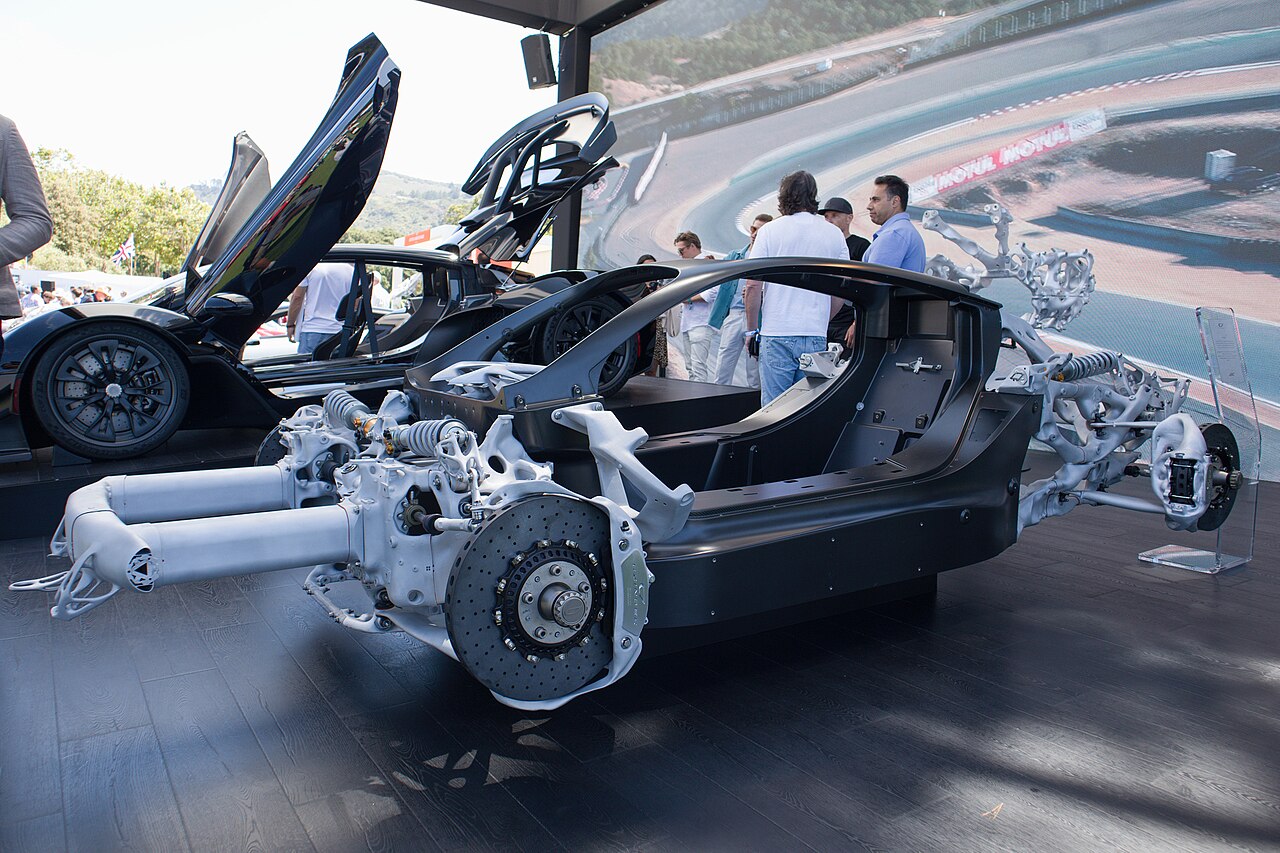
Under the Czinger 21C’s bodywork, the metal branches around its wheels look almost anatomical. These are engineered load paths, printed in metal—and part of a car that set Goodwood’s production hillclimb record in 2024.
 Original photograph
- Goodwood production record · 2024
- 48.82 seconds
- Chassis weight · manufacturer comparison
- About 25% less
- Main printed chassis material
- Aluminium-based alloy
How the idea works
Set performance and production constraints
Engineering software searches feasible structural designs.
Manufacture the metal components
Additive manufacturing realizes selected geometries.
Assemble and test the vehicle
Robotic joining is followed by real vehicle evaluation.
Why leave the suspension arm hollow?
A suspension arm carries forces between the wheel assembly and the chassis. Czinger’s 2021 production description singles out its hollow front upper control arm: internal structures carry the required loads while reducing material compared with a traditionally tooled version. This reduces mass that moves with the wheel.
The apparently organic shape has an engineering purpose. Designers specify the loads and constraints; the optimisation searches for a structure that can satisfy them.
Sources: [1]
Aluminium bones, built layer by layer
In its chassis walkthrough, Czinger identifies a proprietary aluminium-based alloy as the main material of the silver structure. Laser powder bed fusion builds the components; robots then bond them together. The company reports assembly accuracy of 0.1 millimetres.
Divergent connects this manufacturing process to AI-enabled engineering software. It considers both performance and the ability to manufacture a proposed shape, then assembles printed structures without design-specific fixtures.
 Original photograph
48.82 seconds on a real hill
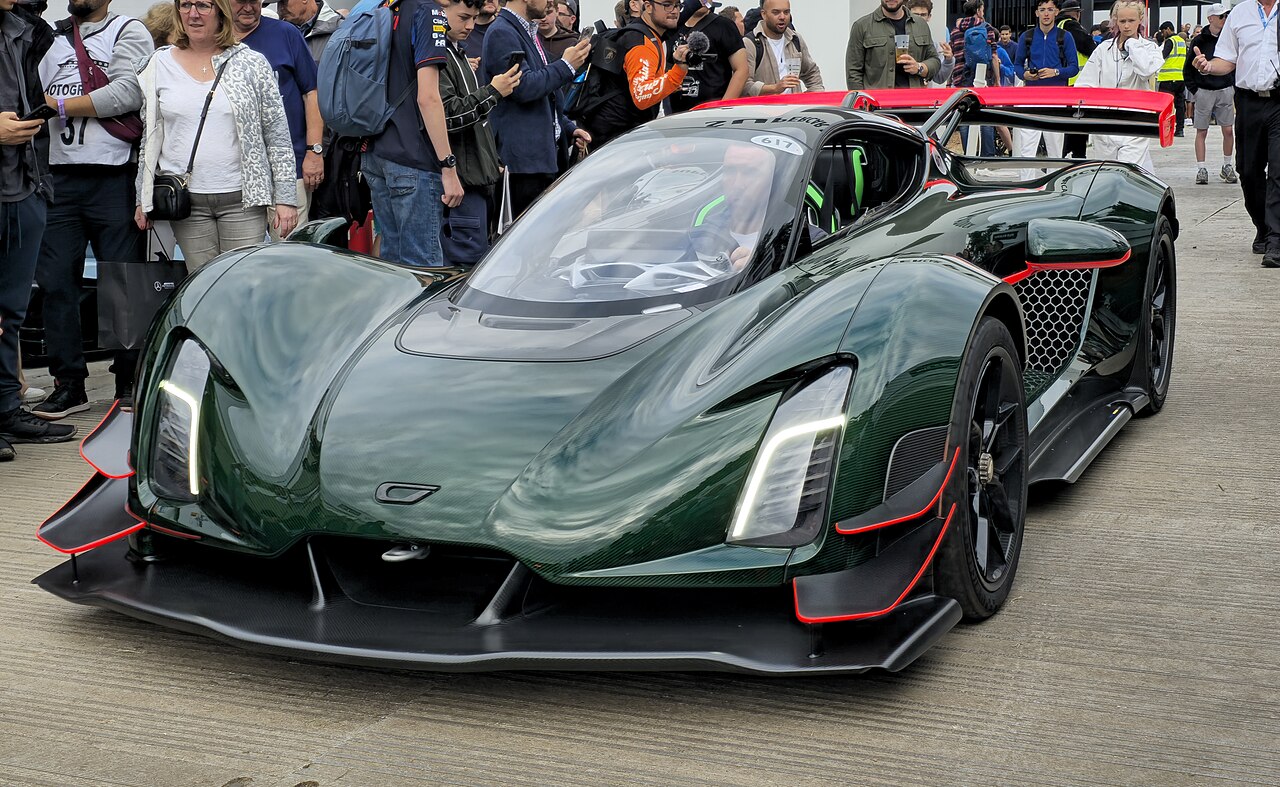
At the 2024 Festival of Speed, Chris Ward drove the 21C up Goodwood’s 1.16-mile hillclimb in 48.82 seconds. The event organiser confirms the production-car record. Its onboard footage makes the achievement tangible: a finished car, a driver and a demanding course.
That time measures the whole vehicle and driver. It cannot isolate how many seconds came from AI-assisted design.
Sources: [3]
What could other engineers borrow?
Czinger claims its chassis is about 25% lighter than contemporary thin-wall casting and composite architectures; this is a manufacturer comparison. The transferable idea is broader than speed: search for a shape and its production method together, then build and test it.
A physical manufacturing platform lets an unusual design leave the screen. Applying it to another product still requires that product’s own cost, durability and safety checks.
The original sources
- Czinger VehiclesCzinger unveils 21C production specification vehicle
- DivergentDivergent Adaptive Production System: design, manufacture, assemble
- GoodwoodOn-board the Czinger 21C’s record-breaking FOS assault
- Czinger Vehicles / Lukas CzingerCzinger 21C: Bio-Logic Chassis — manufacturer engineering walkthrough