← Back to the homepage
BIGGER PICTURE 99 AI stories

NASA parts shaped like bones.
Burnt scrolls read unopened.

Explore all 99 applications
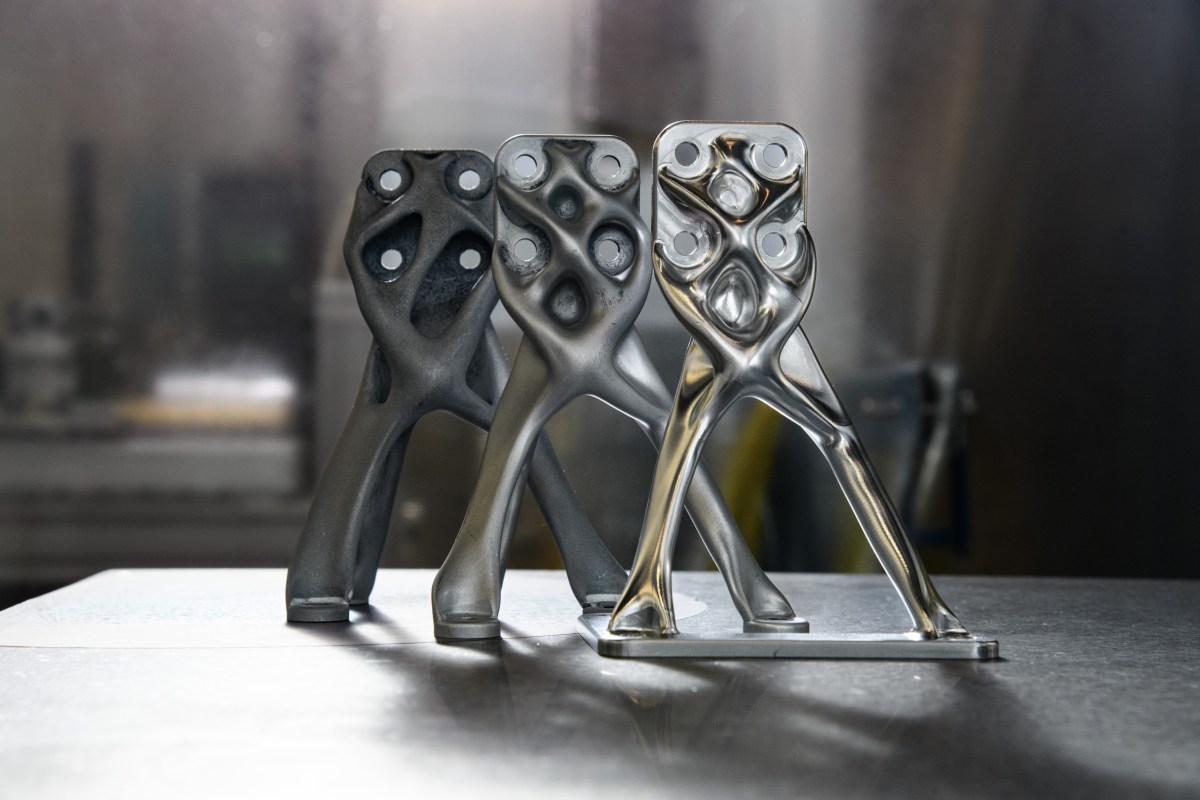
Three metal telescope supports with branching, curved struts and bolt holes on a workbench.
NASA / Henry DennisNASA media guidelinesWhy this shape?
How this collection was selected

We selected 99 distinct applications with a traceable benefit for people or a demonstrated step towards one. Each links to an original study, a report by an involved institution, or an explicitly labelled provider report. The order starts with particularly tangible examples; it is not a ranking.

“In use” describes use in the documented project, not independent proof of effectiveness or a guarantee of current operation. Study evaluations and research are labelled separately. Better predictions, higher detection rates and saved working time do not automatically mean lives saved or a net social benefit. Each case explains its specific limit. This selection is not a statistical comparison with incidents in the register.

Sources reviewed: 14 November 2026

How did they do it?

Every example freely accessible

37–48 of 99 matches · 99 applications in total

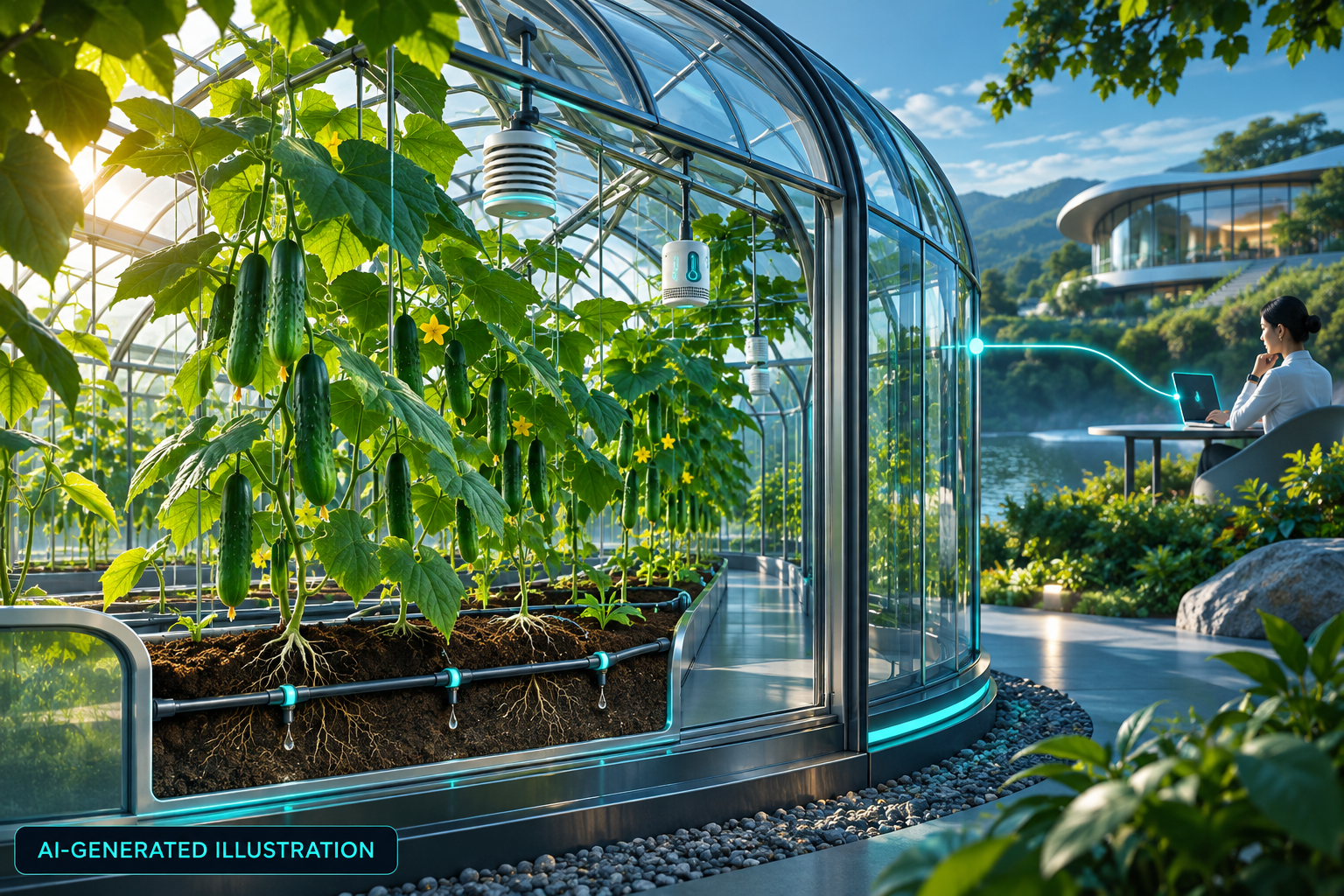
AI-generated illustration: Conceptual greenhouse cutaway with cucumber vines, sensors and irrigation.
Light, heat and water became decisions a growing team could send across an ocean.
Nature & foodTested in a study

Growing Dutch cucumbers from an office in Canada

Discover the story
Result & evidence

AI systems use greenhouse sensors to adjust climate and fertigation, demonstrating how growers can manage crop conditions remotely when farms expand and skilled crop-management staff are difficult to recruit.

Documented result

In Wageningen’s 2018 cucumber challenge, the winning AI-controlled compartment outperformed the grower-operated reference in production; the study was published in 2020.

Wageningen University & Research; Autonomous Greenhouse Challenge teams
Netherlands 2020

The winner used more lighting and sacrificed some resource efficiency; pest control still depended on people.

Reviewed 2026-11-14
AI-generated illustration: A conceptual cheque verification process separating suspicious duplicates.
A cheque leaves two records. A suspicious difference can become an investigator’s clue.
Public & everyday servicesIn use

Treasury says AI helped recover $1 billion lost to cheque fraud

Discover the story
Result & evidence

The US Treasury used machine learning to identify suspicious government cheques faster. Earlier investigation and recovery help protect public funds that support legitimate recipients and public services, rather than leaving losses undetected.

Documented result

Treasury attributed $1 billion in fiscal-2024 recoveries to faster cheque-fraud identification using machine learning.

US Department of the Treasury
United States 2024

Agency-reported recoveries; the broader $4 billion programme total cannot be attributed entirely to AI.

Reviewed 2026-11-14
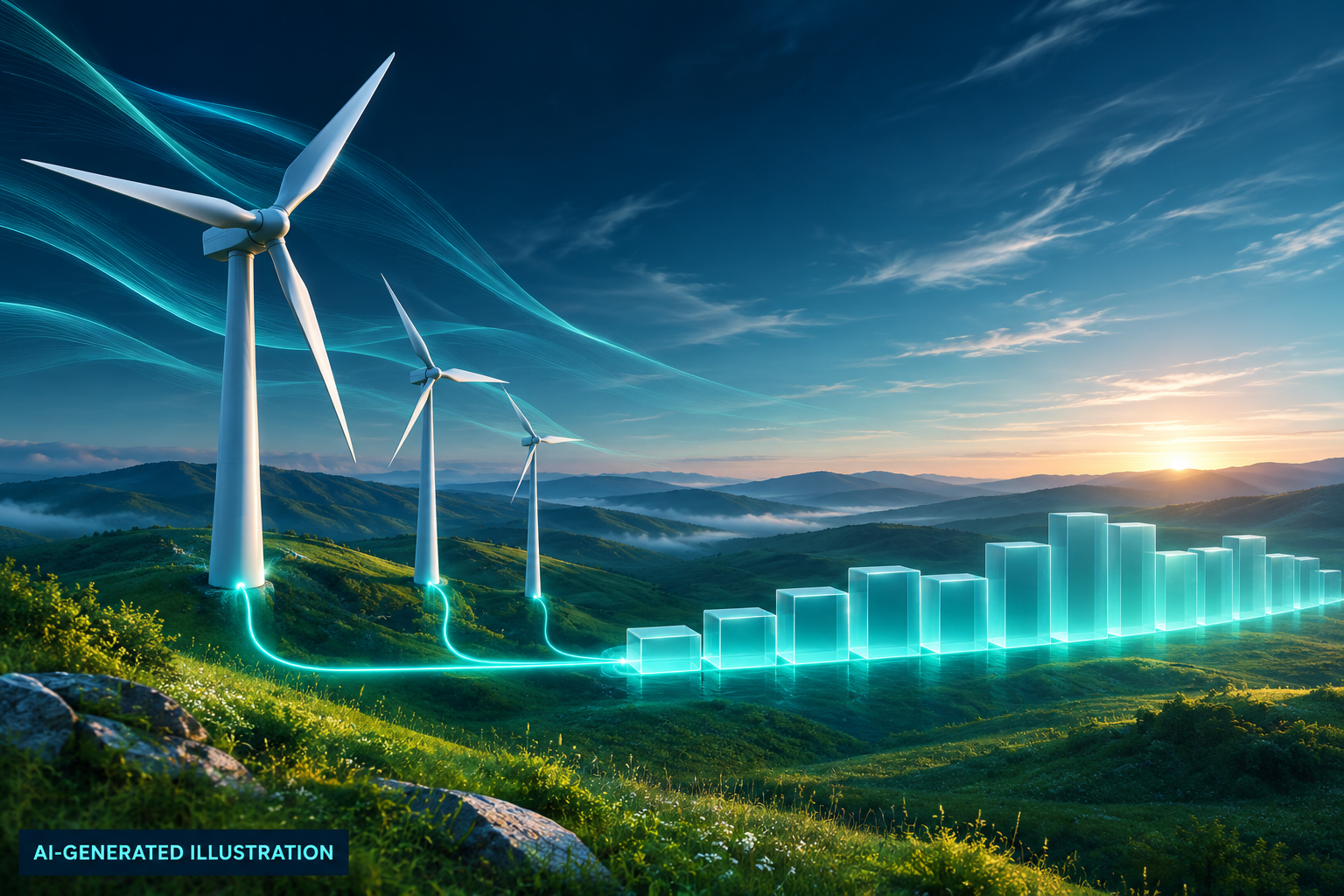
AI-generated illustration: Conceptual wind turbines connected to abstract future power-supply blocks.
The next day’s wind becomes a promise the power grid can plan around.
Energy & climateIn use

Making tomorrow’s wind power easier to promise

Discover the story
Result & evidence

A neural network forecasts wind-farm output 36 hours ahead and recommends delivery commitments, helping renewable electricity fit power-market schedules and making variable generation more useful to grid operators and its owners.

Documented result

On 700 MW of US wind capacity, Google reported roughly 20% more economic value than a baseline without time-based grid commitments.

Google; Google DeepMind
Central United States 2019

Higher economic value does not mean 20% more electricity or a measured 20% reduction in emissions.

Reviewed 2026-11-14
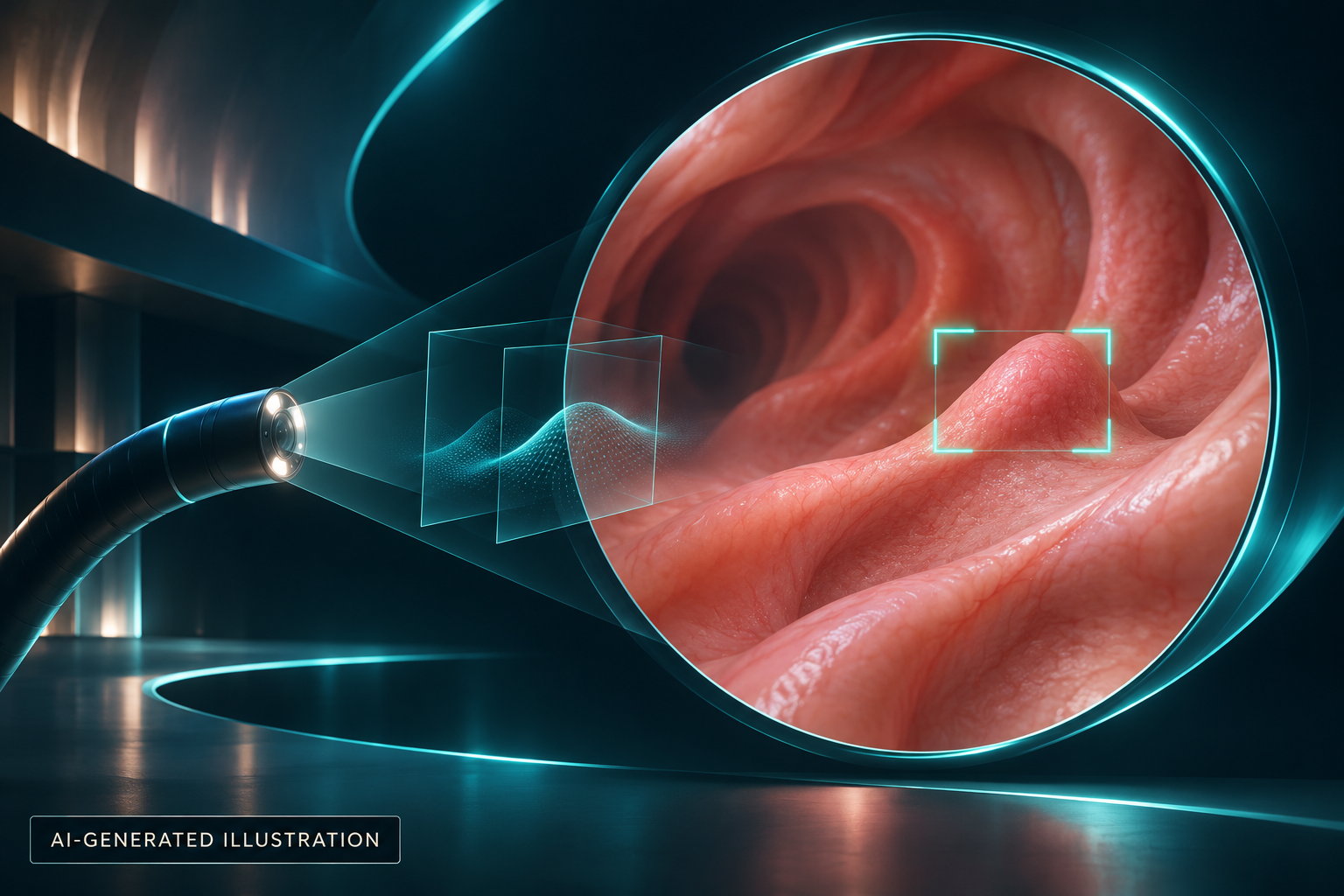
AI-generated illustration: A highlighted fold illustrates how computer assistance can draw an endoscopist’s attention.
A fleeting fold on a moving image can be the detail that matters.
Earlier diagnosisTested in a study

A green box that helped doctors spot more polyps

Discover the story
Result & evidence

During colonoscopy, GI Genius highlighted suspicious areas in real time, helping endoscopists find more adenomas that could then be assessed and removed during the same examination.

Documented result

In COLO-DETECT, 56.6% of AI-assisted examinations found an adenoma versus 48.4% with standard colonoscopy across 2,032 participants.

Newcastle University; South Tyneside and Sunderland NHS Foundation Trust
England, United Kingdom 2024

The trial found more adenomas, but not more advanced adenomas or cancers; cancer prevention was not directly measured.

Reviewed 2026-11-14
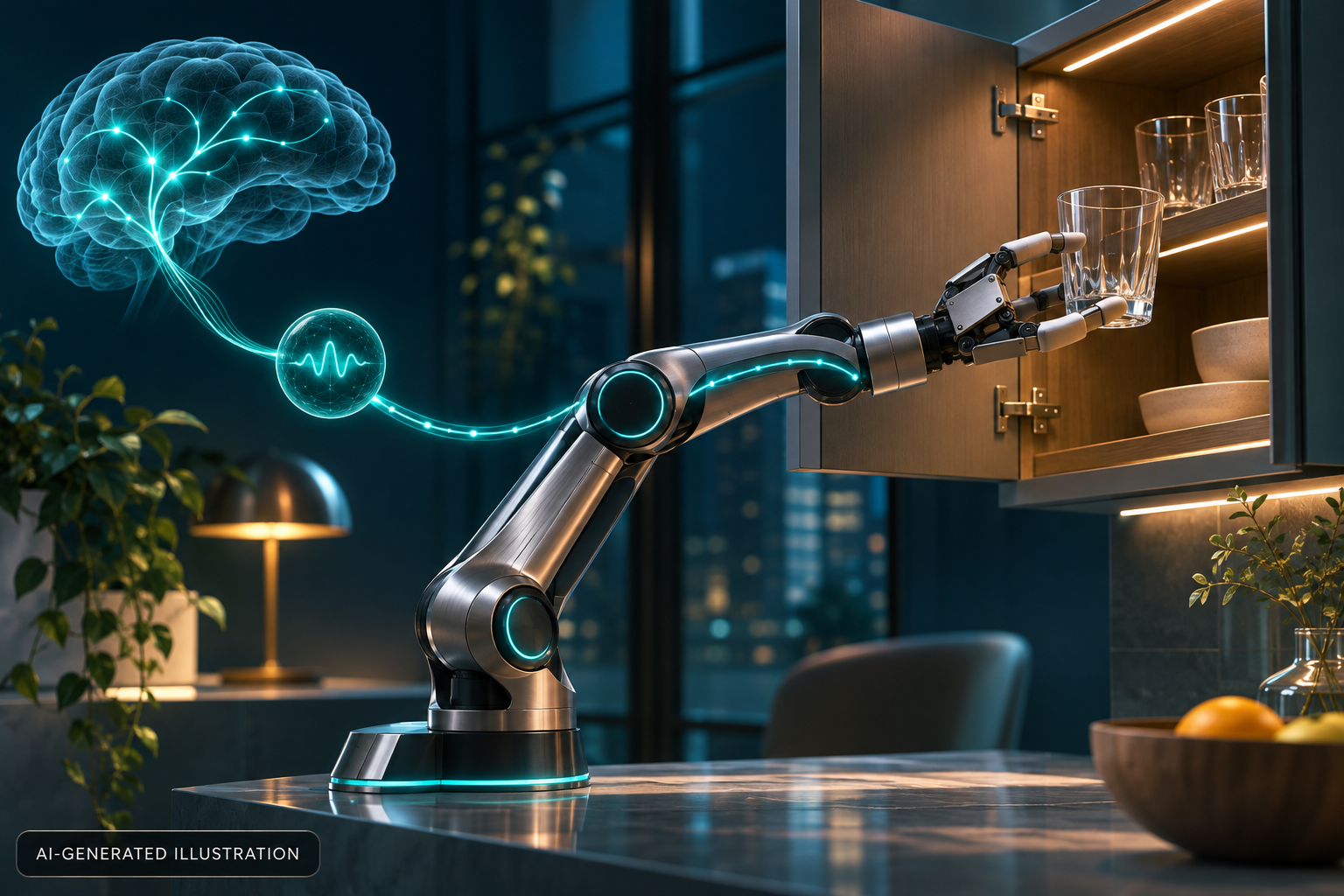
AI-generated illustration: Neural signals guide a robotic arm toward an everyday object.
Reaching for a cup starts with a brain signal. The challenge is keeping it reliable.
Accessibility & independenceTested in a study

He opened a cabinet with a robotic arm controlled by brain signals

Discover the story
Result & evidence

An AI-supported brain-computer interface let a man paralyzed after a stroke control a robotic arm, turning intended movements into practical actions such as retrieving and positioning a cup.

Documented result

The participant moved blocks, opened a cabinet and brought a cup to a dispenser; the system supported use over several months.

University of California, San Francisco
San Francisco, United States 2025

These were supervised research tasks with implanted sensors; independent home use was still a planned next step.

Reviewed 2026-11-14
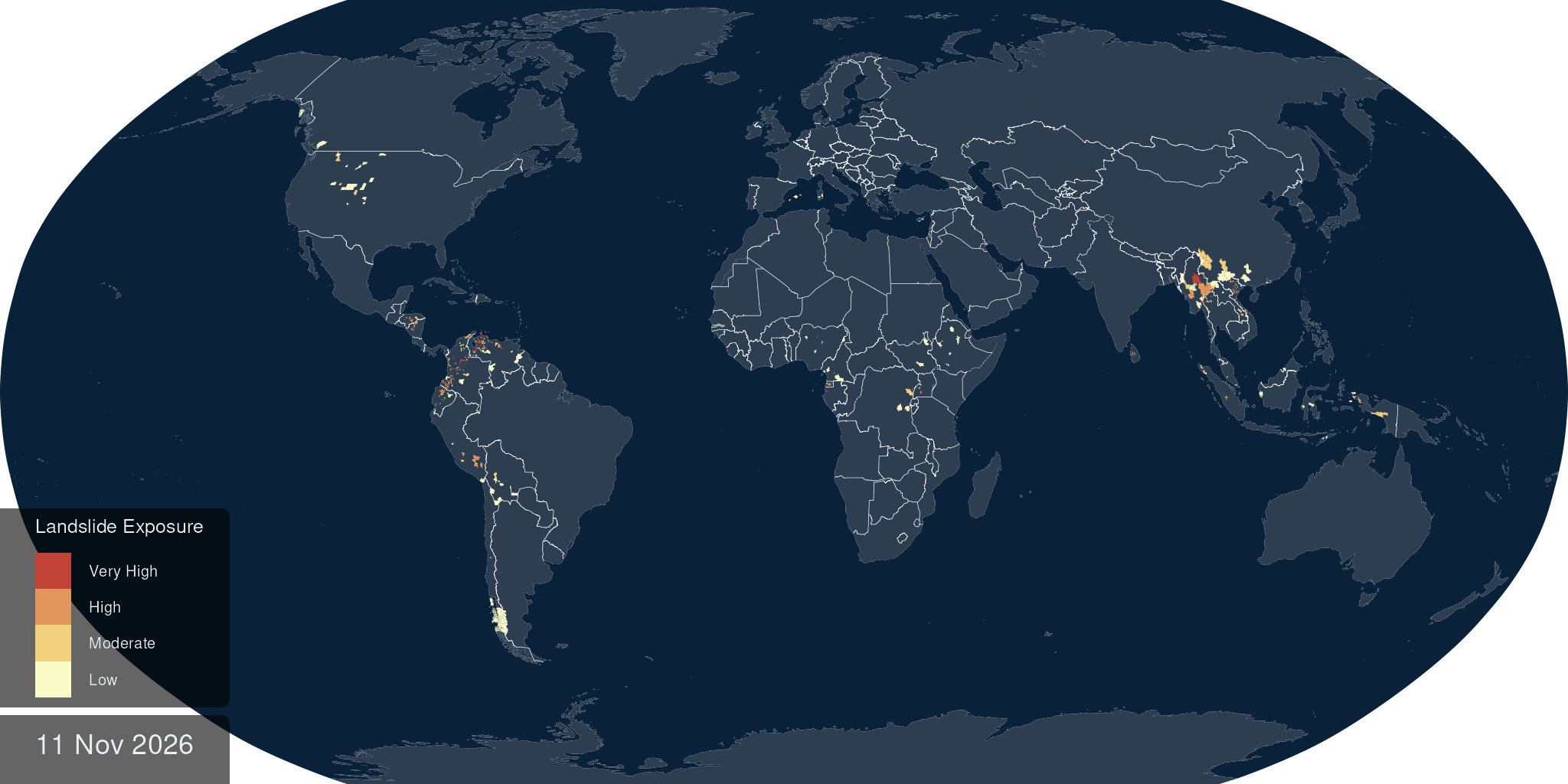
A world map from NASA’s LHASA model marks areas of landslide exposure using red, orange and yellow.Source illustration
NASA Scientific Visualization Studio / Zoey N. Armstrong and Helen-Nicole Kostis; science: Thomas A. StanleyNASA media-use guidelines
Disaster preparednessIn use

Which rain-soaked slope deserves attention first?

Discover the story
Result & evidence

NASA’s machine-learning model combines rainfall and ground conditions to flag increased landslide likelihood, giving emergency managers a consistent overview when scattered mountain hazards are difficult to assess on the ground.

Documented result

LHASA supplies kilometre-scale hazard maps every 12 hours and was integrated into the operational DisasterAWARE platform in 2023.

NASA Goddard Space Flight Center; Pacific Disaster Center
Global 2023

Regional hazard probabilities guide attention; they do not establish whether an individual hillside is safe.

Reviewed 2026-11-14
AI-generated illustration: A phone reminder connecting everyday routines with the classroom.
Before a student falls behind, a message can point to help.
Learning & workTested in a study

A text message that leads back to the classroom

Discover the story
Result & evidence

Georgia State used an academic chatbot to answer routine course questions and send timely support. This gives students another route to help with coursework and deadlines, especially when staff are unavailable.

Documented result

The June 2026 analysis found a four-percentage-point increase in earning an A or B across two undergraduate courses.

Georgia State University; National Institute for Student Success
Atlanta, Georgia, United States 2026

A working paper on two courses; effects varied by subgroup and required staff-maintained content and human follow-up.

Reviewed 2026-11-14
AI-generated illustration: A candidate molecule moves from computational selection toward clinical testing.
From a suggested molecule to a 71-person trial: how far did the idea travel?
Better careTested in a study

An AI-designed lung drug reached patients. What did the trial find?

Discover the story
Result & evidence

AI helped identify a biological target and design rentosertib, creating a new treatment candidate for people with idiopathic pulmonary fibrosis and an early human signal worth testing further.

Documented result

In a 71-person phase 2a trial, mean forced vital capacity changed by +98.4 mL with 60 mg daily versus −20.3 mL with placebo over 12 weeks.

Insilico Medicine; participating Chinese hospitals
China 2025

Small, short trial with lung function as a secondary endpoint; liver-related withdrawals occurred, and lasting clinical benefit remains unproven.

Reviewed 2026-11-14
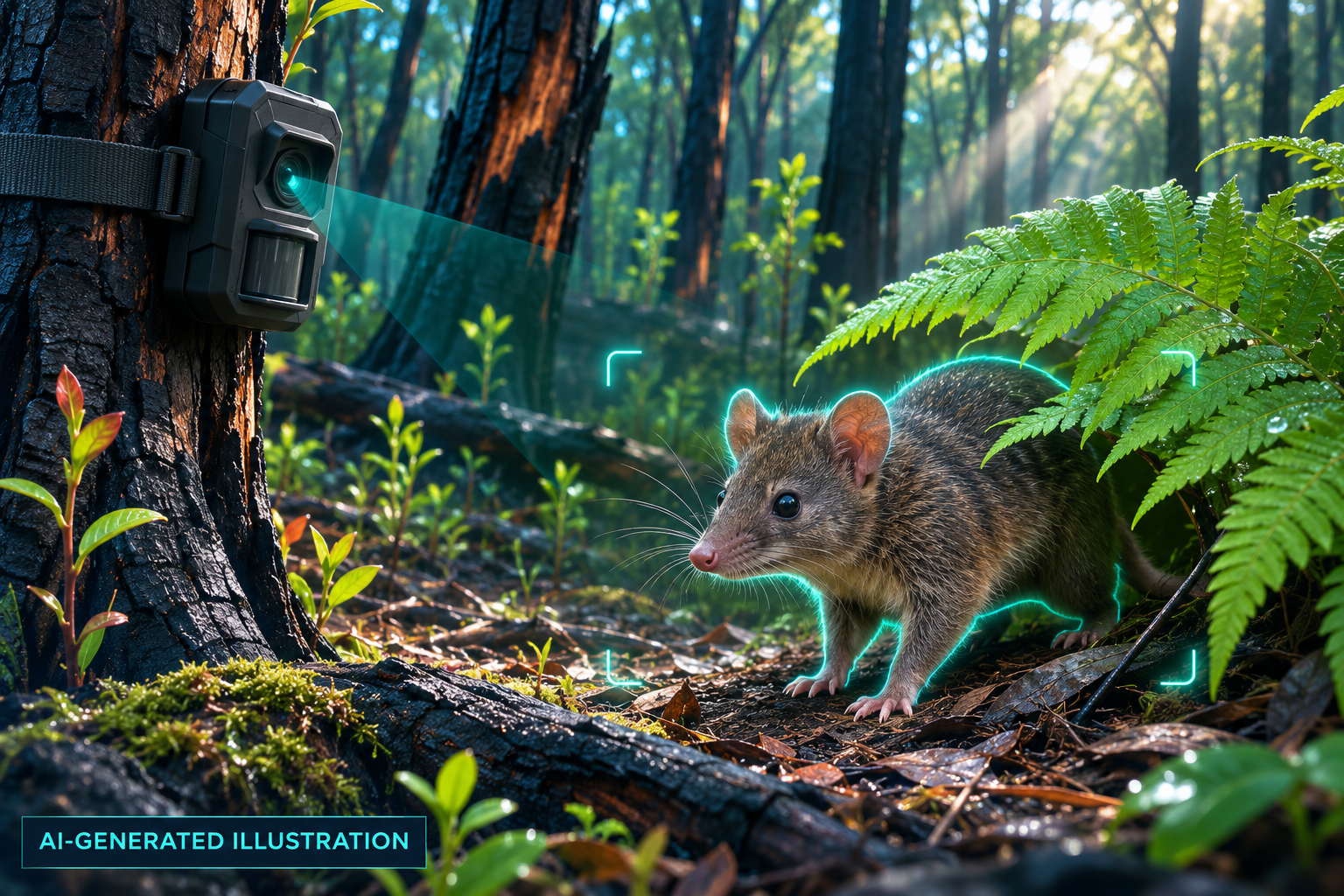
AI-generated illustration: Conceptual small marsupial near a camera trap in regenerating burned forest.
Who returned after the fire? Millions of camera-trap images hold the clues.
Nature & foodIn use

Finding a tiny survivor in millions of forest photographs

Discover the story
Result & evidence

AI sorts camera-trap photographs after Australia’s bushfires, helping land managers spend less time labelling images and use wildlife evidence to plan habitat recovery, invasive-species control and future fire management.

Documented result

Eyes on Recovery partners reported image processing five to ten times faster, with one 500-hour workload reduced to about 100 hours.

WWF; Conservation International; Google; Eyes on Recovery partners
Southern and eastern Australia 2022

Faster monitoring informs restoration; it does not prove AI caused wildlife populations to recover.

Reviewed 2026-11-14
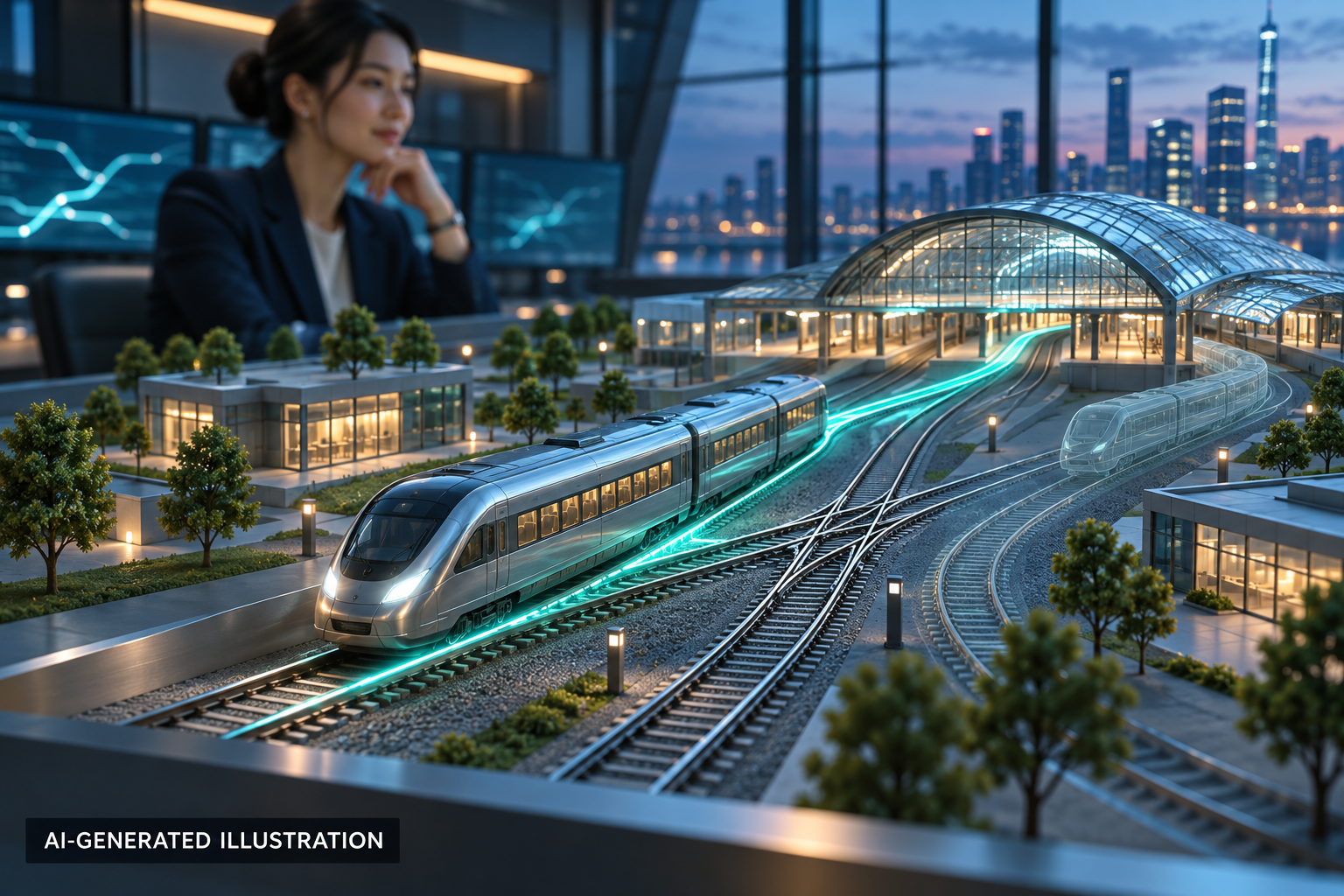
AI-generated illustration: Alternative train movements compared in a conceptual railway simulation.
One late train, several possible futures. Dispatchers can compare the consequences.
Public & everyday servicesIn use

Try the next train decision before making it

Discover the story
Result & evidence

Deutsche Bahn’s AI-Dispo simulates the live rail situation and suggests actions to dispatchers. It helps staff spot conflicts early and choose responses that limit delays for passengers on busy suburban networks.

Documented result

Deutsche Bahn reports that AI-Dispo avoided around 95,000 train-delay minutes during 2025 across its pilot operations.

Deutsche Bahn
Stuttgart, Rhine-Main, Munich and Berlin, Germany 2025

An operator-reported pilot result; saved train-delay minutes are not the same as passenger-hours saved.

Reviewed 2026-11-14
AI-generated illustration: A shorter computational path organising a sequence of blocks.
Even sorting three numbers still had a shortcut waiting to be found.
Scientific discoveryIn use

One fewer instruction, repeated across countless sorts

Discover the story
Result & evidence

AlphaDev discovered more efficient sorting routines that were incorporated into an open-source C++ library. Developers can benefit from improvements to an everyday computation without manually reinventing the low-level algorithm themselves.

Documented result

Reported sorting gains reached 70% for short sequences and around 1.7% for sequences longer than 250,000 elements.

Google DeepMind; LLVM libc++ community
Global 2023

Specific routines and benchmark conditions; these percentages are not speedups for entire applications.

Reviewed 2026-11-14
AI-generated illustration: Conceptual aircraft changing altitude beside a layer of contrail-forming air.
The atmosphere has layers where a flight leaves a different mark.
Energy & climateTested in a study

A small change in flight path can leave less cloud behind

Discover the story
Result & evidence

AI forecasts atmospheric regions where persistent contrails may form, allowing pilots to test small route adjustments that reduce a warming effect of aviation beyond its carbon-dioxide emissions.

Documented result

A 2026 randomized trial found 11.6% less contrail formation across 1,232 eligible flights; the 112 flown as planned showed 62% less.

Google Research; American Airlines; Breakthrough Energy
United States 2026

Public 2026 preprint, revised version accepted; contrail formation is not a direct measurement of net climate impact.

Reviewed 2026-11-14
A bigger picture of AI starts with concrete evidence.Back to filters ↑