BIGGER PICTURE Nature & food
Finding a tiny survivor in millions of forest photographs
After Australia’s fires, camera traps and image recognition helped conservation teams discover which animals had returned—and where help could matter.
- Photographs
- 8.5 million, collected in 2020–2023
- Species identified
- 151 across the project landscapes
- Manual workload
- Partner estimate: 500 hours reduced to about 100
How the idea works
Photograph returning wildlife
Camera traps record activity in burned habitats.
Sort species at scale
Recognition models flag animals across millions of images.
Check and target help
Teams verify sightings and assess refuges and threats.
A mouse-sized animal in a burned landscape
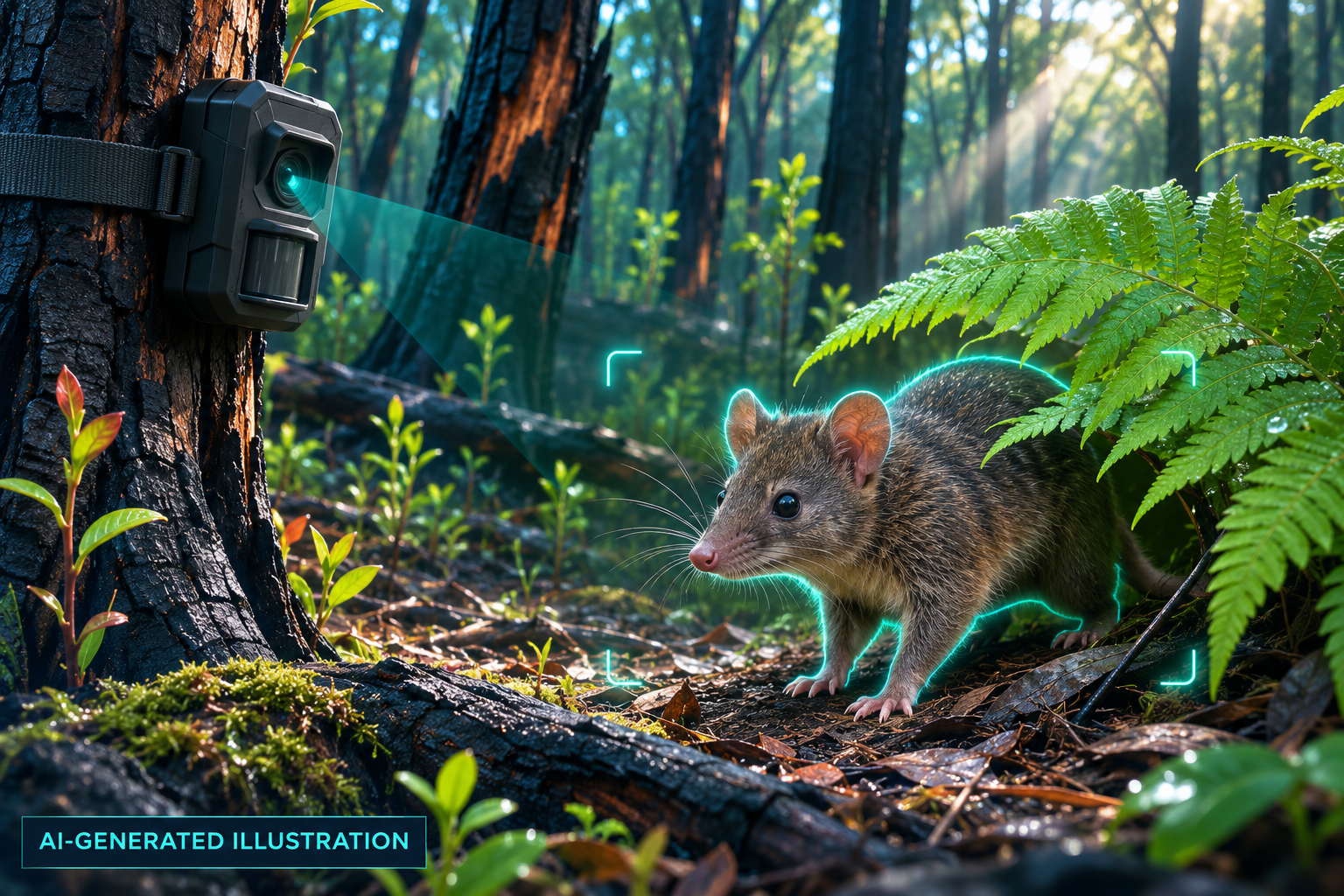
The Kangaroo Island dunnart is a tiny marsupial that can be difficult to distinguish from a rodent even in a photograph. After the 2019–20 bushfires, finding survivors mattered urgently. Eyes on Recovery placed camera sensors across affected Australian landscapes, turning uncertain questions about survival into images that researchers could inspect and compare over time.
The bottleneck was looking at the pictures
The completed surveys collected 8.5 million photographs between 2020 and 2023. Wildlife Insights applied image recognition to sort species, including Australian animals added through project training. WWF described partners reducing work that might take 500 hours to about 100. That saved attention can go toward checking difficult identifications and deciding what the observations mean.
Do the emergency shelters actually get visitors?
The cameras also answered practical questions. On Kangaroo Island, teams used artificial refuges for small animals and monitored their use. The final project account reports more than 30 management activities identified across 17 surveys, including invasive-animal control and refuge work. Previously unrecorded rock-wallaby populations were found, giving land managers specific places and species to consider.
Seeing recovery is different from causing it
WWF reports dunnarts appearing at a growing share of monitoring sites over the project. That is encouraging ecological evidence, but camera detections are not a complete population census. AI helped people process and use the observations; it did not itself restore the habitat. The benefit is better-informed conservation, with field expertise still essential.
Sources: [2]