← Back to the homepage
BIGGER PICTURE 99 AI stories

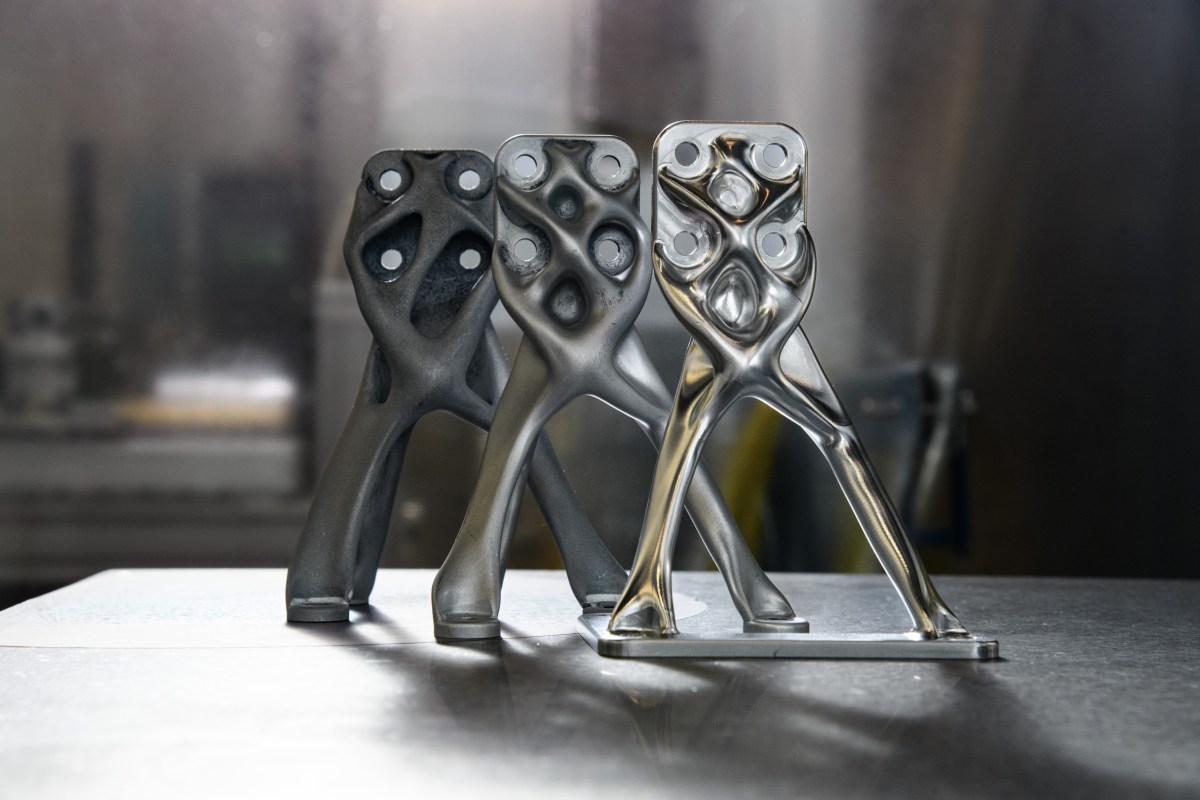
NASA parts shaped like bones.
Burnt scrolls read unopened.

Explore all 99 applications
Three metal telescope supports with branching, curved struts and bolt holes on a workbench.
NASA / Henry DennisNASA media guidelinesWhy this shape?
How this collection was selected

We selected 99 distinct applications with a traceable benefit for people or a demonstrated step towards one. Each links to an original study, a report by an involved institution, or an explicitly labelled provider report. The order starts with particularly tangible examples; it is not a ranking.

“In use” describes use in the documented project, not independent proof of effectiveness or a guarantee of current operation. Study evaluations and research are labelled separately. Better predictions, higher detection rates and saved working time do not automatically mean lives saved or a net social benefit. Each case explains its specific limit. This selection is not a statistical comparison with incidents in the register.

Sources reviewed: 14 November 2026

How did they do it?

Every example freely accessible

25–36 of 99 matches · 99 applications in total

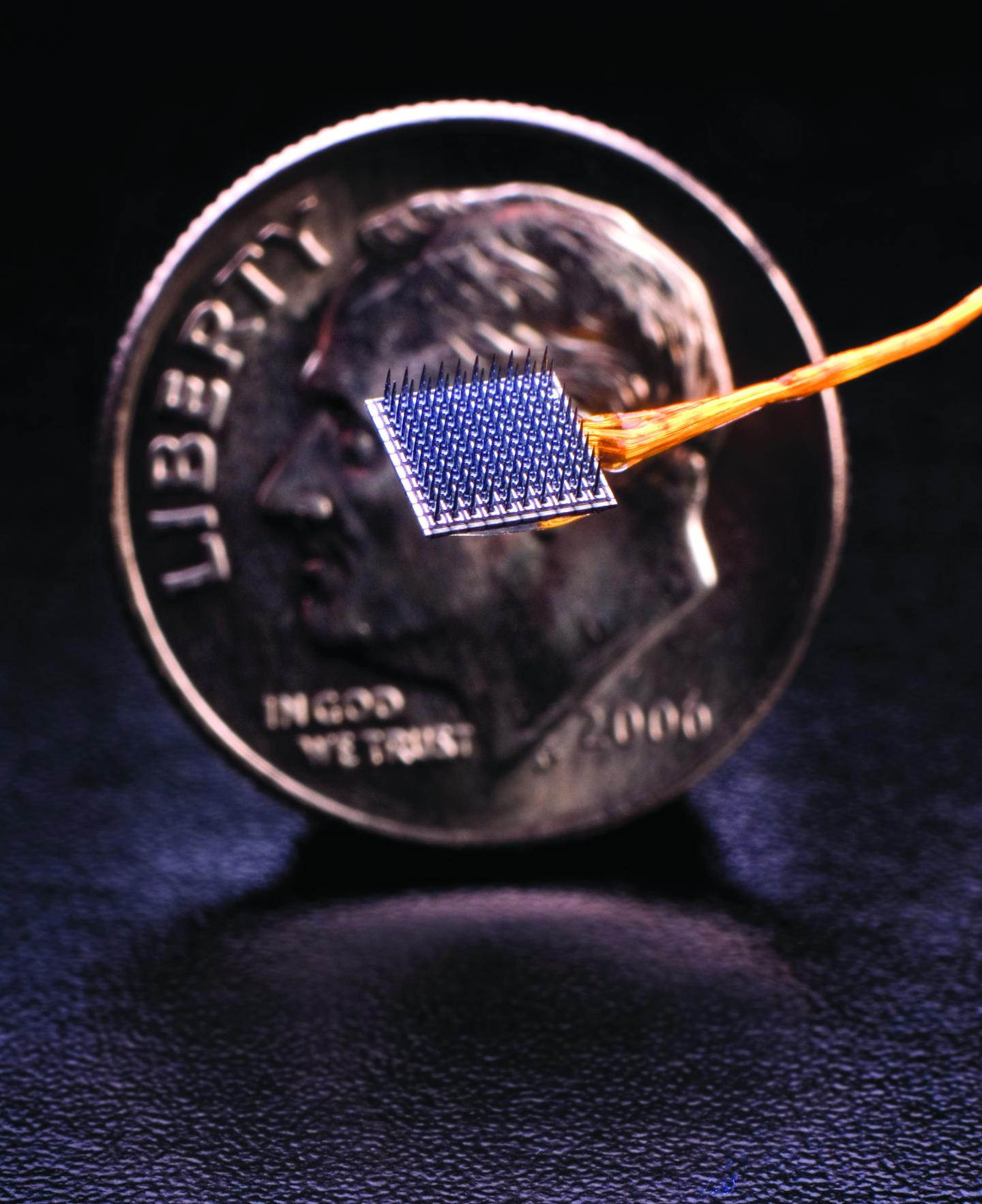
A tiny BrainGate electrode array and its fine wires in front of a US dime for scale.Original photograph
BrainGate.orgEditorial reuse with attribution
Accessibility & independenceTested in a study

Why imagining a complicated letter beat pointing at a key

Discover the story
Result & evidence

Stanford researchers decoded the brain activity associated with attempted handwriting, giving a man with paralysis a faster way to compose text when he could no longer use his hands.

Documented result

The participant copied text at 90 characters per minute and answered open questions at 73.8 characters per minute using the experimental interface.

Stanford University; BrainGate consortium
United States 2021

Tested in one participant using implanted sensors; reported autocorrect improvements were applied afterward rather than live.

Reviewed 2026-11-14
ECMWF’s visual introducing its operational Artificial Intelligence Forecasting System in February 2025; an original source illustration.Source illustration
ECMWFCC BY 4.0
Disaster preparednessIn use

A weather forecast learned from decades of weather

Discover the story
Result & evidence

ECMWF’s operational AI forecasting system gives weather services an additional global forecast, helping specialists anticipate dangerous conditions and communicate timely information to people, transport operators and emergency teams.

Documented result

At its February 2025 operational launch, ECMWF reported tropical-cyclone track improvements of up to 20% on evaluated measures.

ECMWF
Global 2025

AIFS supplements physical models and observations; better forecast scores are not measured disaster-loss reductions.

Reviewed 2026-11-14
AI-generated illustration: Teacher-guided learning with shared computers and digital practice.
A teacher, a chatbot and regular practice: what changes in six weeks?
Learning & workTested in a study

Six weeks of guided practice changed what pupils could do

Discover the story
Result & evidence

A supervised after-school programme gave secondary students conversational English practice and digital skills. Teachers structured the sessions, making individual feedback available alongside classroom teaching in a resource-constrained school setting.

Documented result

After six weeks, the trial found a 0.31-standard-deviation gain on the combined assessment and 0.23 in English.

World Bank; Edo State education partners
Nigeria 2025

A short, teacher-supported intervention; results do not establish benefits from unsupervised chatbot use.

Reviewed 2026-11-14
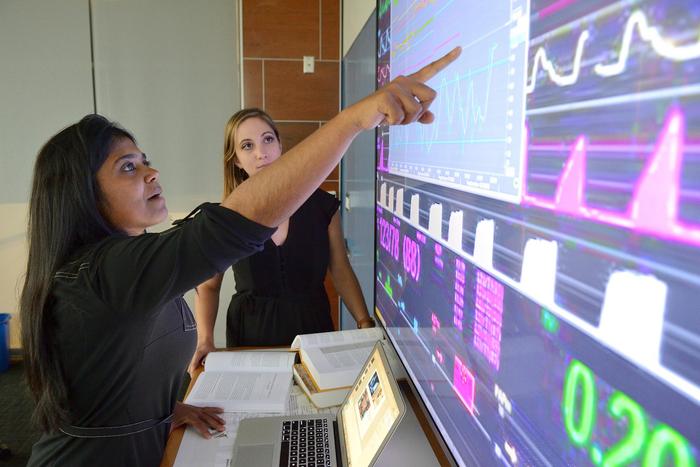
Suchi Saria points at waveforms on a wall-sized clinical-data display while another person watches.Original photograph
Will Kirk / Johns Hopkins UniversityEditorial reuse with attribution
Better careIn use

The hospital records that can raise a sepsis alarm

Discover the story
Result & evidence

TREWS continuously analyzed hospital records and alerted clinical teams to possible sepsis, supporting faster assessment and treatment of patients whose condition could deteriorate rapidly.

Documented result

In a five-hospital study, prompt clinician confirmation was associated with 3.3 percentage points lower adjusted in-hospital mortality among flagged sepsis patients.

Johns Hopkins University; Bayesian Health
United States 2022

This observational comparison cannot isolate AI's causal effect; prompt response may also reflect differences in clinical attention.

Reviewed 2026-11-14
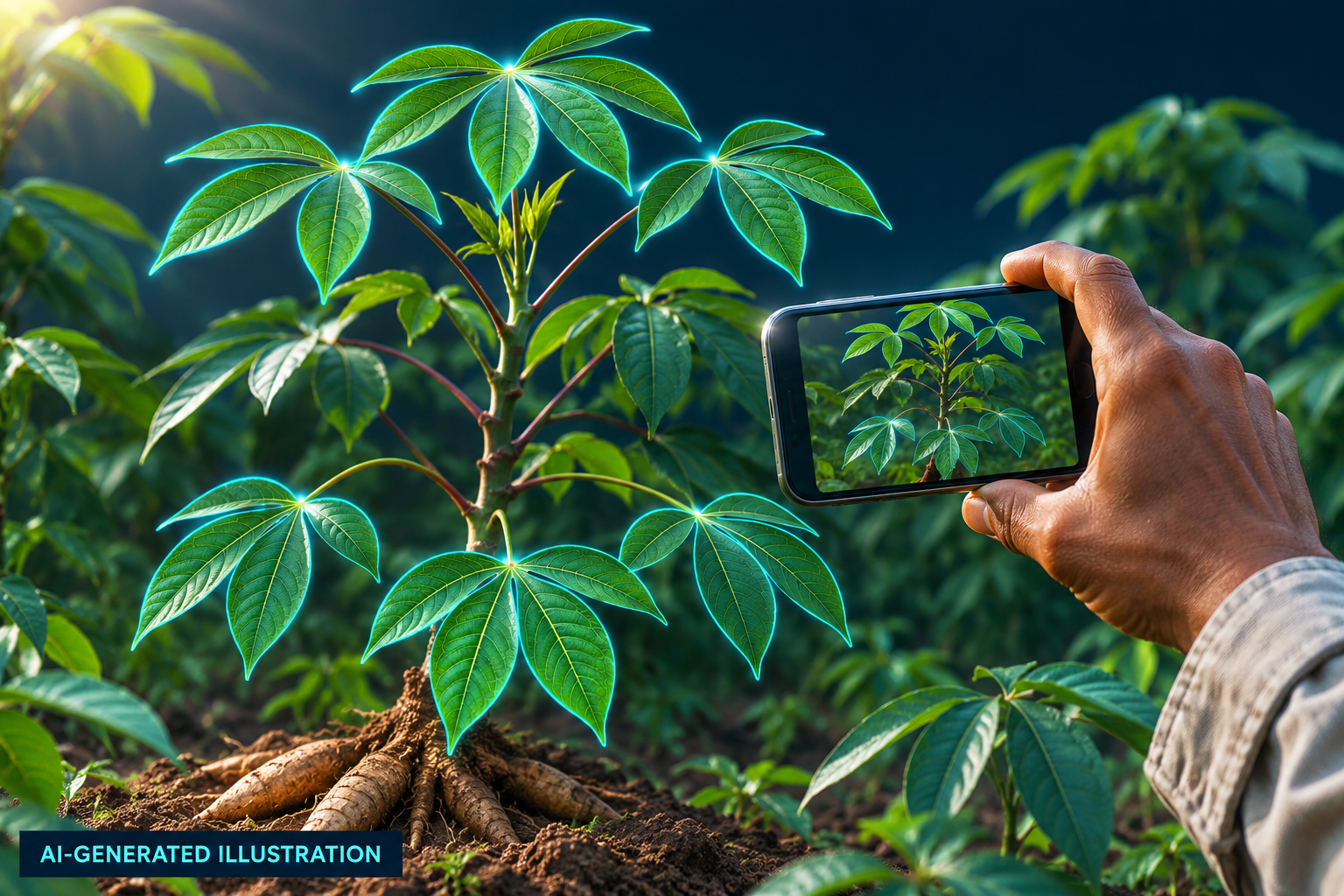
AI-generated illustration: Conceptual image of a phone inspecting leaves at different heights of a cassava plant.
A sick plant can hide its symptoms on the leaves you did not check.
Nature & foodTested in a study

Why the crop-diagnosis app asks for six leaves

Discover the story
Result & evidence

PlantVillage Nuru analyses cassava leaves on a smartphone and offers offline disease guidance, giving farmers and extension workers access to a diagnostic aid where specialist laboratories and reliable connectivity are scarce.

Documented result

A 2020 study found that examining several leaves brought recognition closer to cassava experts, substantially improving on unreliable single-leaf assessments.

International Institute of Tropical Agriculture; Penn State; PlantVillage
Tanzania 2020

Single-leaf and mild-symptom diagnoses were unreliable; the study did not establish improved crop yields.

Reviewed 2026-11-14
AI-generated illustration: Neighbouring traffic signals coordinating vehicle flows.
One junction sees cars approaching. The next gets a head start.
Public & everyday servicesTested in a study

Traffic lights that tell the next junction what is coming

Discover the story
Result & evidence

SURTRAC coordinates traffic signals using real-time traffic information and AI scheduling. Drivers can move through connected intersections with fewer interruptions, reducing the time people lose in traffic during everyday journeys.

Documented result

A nine-intersection Pittsburgh pilot measured 25.79% shorter travel times and 40.64% less waiting than the previous signal control.

Carnegie Mellon University
Pittsburgh, Pennsylvania, United States 2013

A before-and-after pilot from 2012, not a randomized citywide result; performance depends on local traffic.

Reviewed 2026-11-14
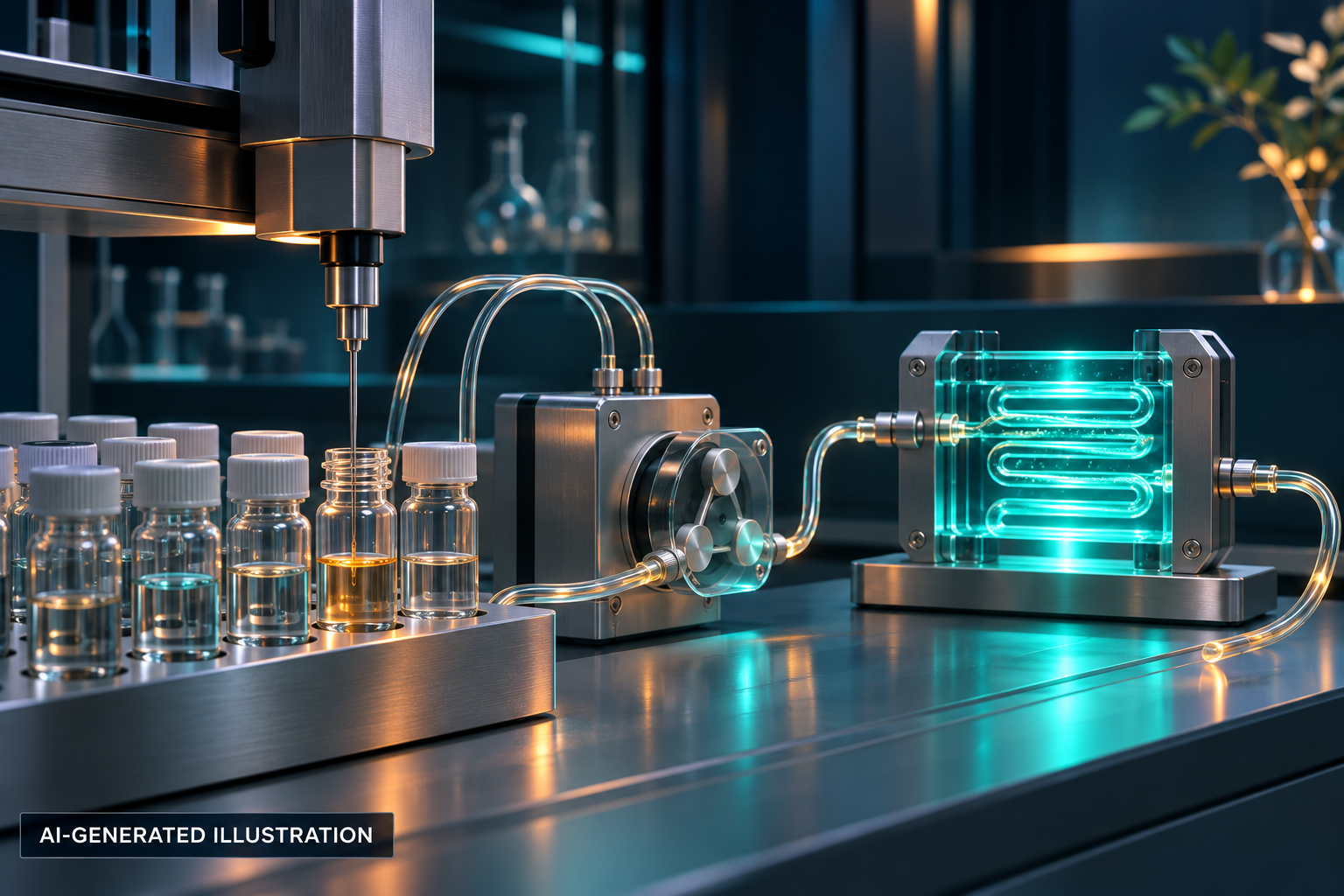
AI-generated illustration: A conceptual flow-chemistry apparatus linking small-volume reactions to optimisation.
Tiny reactions, measured light: a laboratory that chooses its next experiment.
Scientific discoveryResearch

A robot chemist discovered when less light works better

Discover the story
Result & evidence

RoboChem links an AI experiment planner to a small automated chemistry system. Researchers receive tested reaction conditions and scale-up settings, reducing repetitive optimisation work when developing ways to make useful molecules.

Documented result

In reproducing experiments from four selected papers, RoboChem achieved better yields in about 80% of cases and similar yields in the rest.

University of Amsterdam; Noël Research Group
Amsterdam, Netherlands 2024

Demonstrated in selected flow-photochemistry reactions; not proof of faster development for every chemical product.

Reviewed 2026-11-14
AI-generated illustration: Conceptual data-centre cutaway showing racks, cooling pipes and controlled airflow.
The energy saving hides in how pumps and cooling towers work together.
Energy & climateTested in a study

Why running more cooling equipment can sometimes use less energy

Discover the story
Result & evidence

Machine learning recommends cooling settings using thousands of sensor readings, helping operators keep servers within operating limits while reducing the electricity required by pumps, fans and other cooling equipment.

Documented result

Google’s 2016 live-site test reported up to 40% lower cooling-energy use after its AI recommendations were applied.

Google; Google DeepMind
Google data-centre test site; location not disclosed 2016

The figure concerns cooling, not all data-centre electricity, and comes from the system’s developer.

Reviewed 2026-11-14
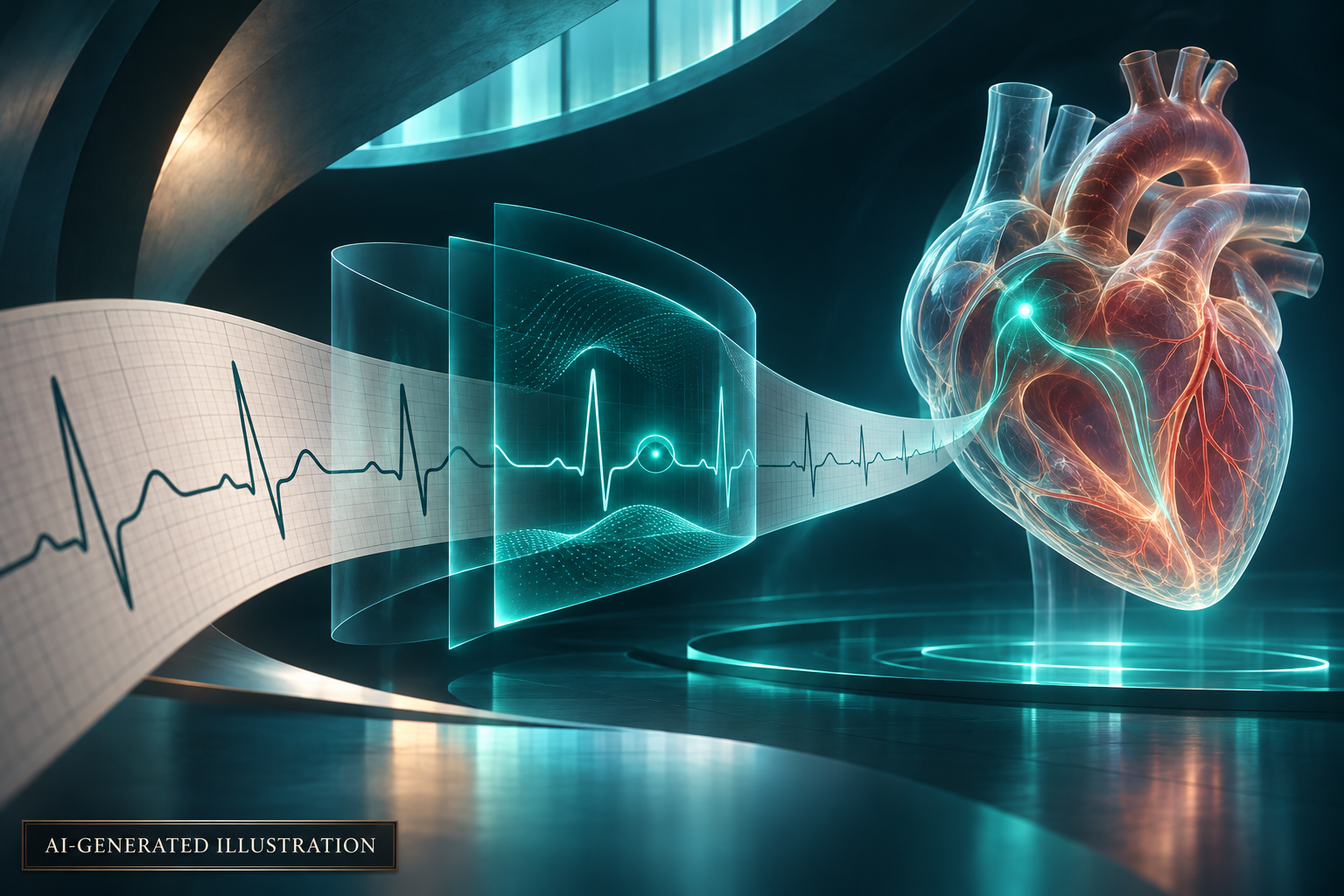
AI-generated illustration: An ECG waveform becomes a clue for further heart-function assessment.
Can the heart’s electrical trace reveal a reason to check its pumping power?
Earlier diagnosisTested in a study

A routine ECG offered a clue to heart weakness nobody had diagnosed

Discover the story
Result & evidence

Mayo Clinic's EAGLE system used routine ECGs to flag possible weak heart pumping, giving primary-care teams a practical reason to arrange a confirmatory heart ultrasound.

Documented result

Among 22,641 adults, AI alerts produced five additional low-ejection-fraction diagnoses per 1,000 patients compared with usual care.

Mayo Clinic
Minnesota and Wisconsin, United States 2021

The ECG flag required ultrasound confirmation; the trial established improved detection rather than longer survival.

Reviewed 2026-11-14
AI-generated illustration: Conceptual view of a forest camera detecting a first wisp of smoke.
A thin wisp of smoke can trigger a check before anyone calls.
Disaster preparednessIn use

The cameras watching for a wildfire's first smoke

Discover the story
Result & evidence

AI watches camera feeds for smoke and alerts fire crews to suspicious changes, supporting earlier investigation of small fires across remote terrain where continuous human observation is difficult.

Documented result

California reported that its CAL FIRE and ALERTCalifornia partnership had detected 77 wildfires during the first months of operation in 2023.

CAL FIRE; UC San Diego; DigitalPath
California, United States 2023

Crews must confirm and respond to alerts; the report does not quantify avoided burned area or deaths.

Reviewed 2026-11-14
AI-generated illustration: A learner studies a pendulum beside a laptop and an open physics notebook.
Sometimes the useful answer is another question—at exactly the right step.
Learning & workTested in a study

The physics tutor that waits for your next step

Discover the story
Result & evidence

A purpose-built AI tutor guided university students through physics problems using structured teaching practices. Learners could ask questions and work at their own pace rather than depend solely on shared classroom timing.

Documented result

In the Harvard experiment, students achieved more than twice the immediate learning gain of the active-learning comparison, in less time.

Harvard University
Cambridge, Massachusetts, United States 2025

Two lessons in one university course; immediate test gains do not establish long-term retention.

Reviewed 2026-11-14
AI-generated illustration: Layered scans and organ outlines illustrate the contouring work before radiotherapy.
Before aiming at a tumour, map the healthy organs that radiation should spare.
Better careIn use

The invisible drawing work before cancer treatment

Discover the story
Result & evidence

OSAIRIS outlined healthy organs on treatment scans before the oncologist reviewed them, reducing repetitive preparation work and helping cancer teams move patients towards radiotherapy more efficiently.

Documented result

The 2024 evaluation found 36% less contouring time for the prostate model and 67% less for head-and-neck organs, including clinician editing.

Cambridge University Hospitals; Microsoft Research
Cambridge, United Kingdom 2024

Oncologists checked every segmentation; faster planning alone does not quantify improved cure rates or actual waiting-time reductions.

Reviewed 2026-11-14
A bigger picture of AI starts with concrete evidence.Back to filters ↑