BIGGER PICTURE Nature & food
Growing Dutch cucumbers from an office in Canada
A greenhouse contest turned growing expertise into remote decisions about light, heat and water—and produced an unexpectedly strong harvest.
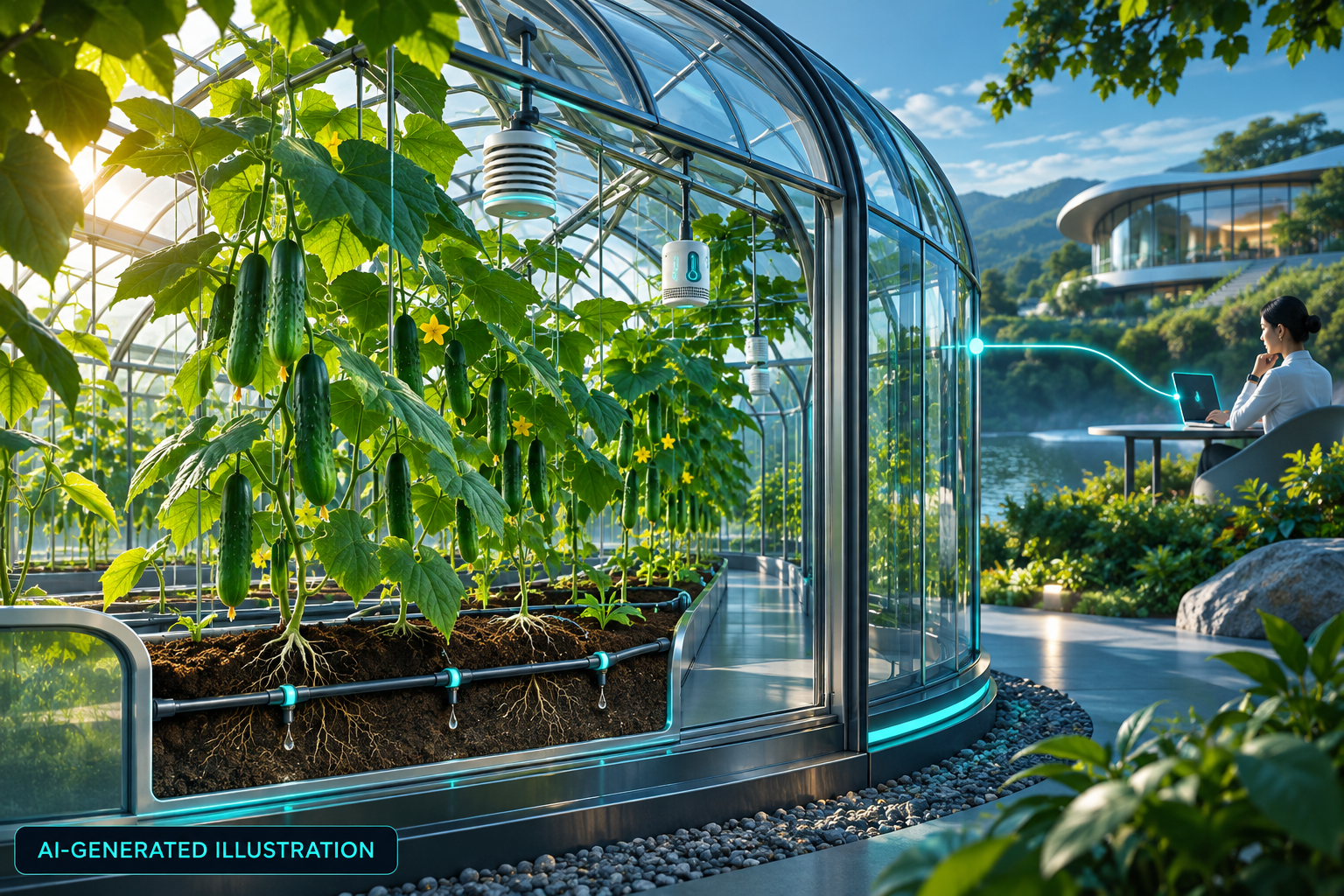
- Harvest
- 55 kg of cucumbers per m²
- Economics
- 17% higher net profit than the grower reference
- Experiment
- Four-month crop in 2018
How the idea works
Observe crop conditions
Sensors and crop observations describe the growing environment.
Choose cultivation settings
Algorithms and growers adjust climate and irrigation remotely.
Weigh the harvest
Actual cucumbers and operating costs determine performance.
The growers were an ocean away
In the first Autonomous Greenhouse Challenge, five teams controlled separate cucumber compartments at Wageningen University & Research. Team Sonoma combined Microsoft AI expertise with Canadian agricultural scientists. Researchers in Harrow, Ontario, followed a crop growing in the Netherlands, reviewing conditions and giving horticultural advice from their offices rather than walking between the plants.
An algorithm gets a greenhouse’s controls
The competition made climate settings and irrigation available remotely. Teams could regulate the growing environment and send instructions for crop work. This matters because light, temperature, water and plant density interact: pushing one variable changes both growth and resource demand. Local staff still performed physical cultivation and handled plant-health work. Remote control did not mean a greenhouse without people.
The result was weighed and costed
Canada’s agriculture department reports that Sonoma harvested 55 kilograms of cucumbers per square metre. Its net profit exceeded the local expert-grower reference by 17%. That is stronger evidence than a simulation score: real plants grew over four months, and production was assessed alongside costs. Human horticultural knowledge remained part of the winning system.
The biggest harvest is not every kind of efficiency
The research describes a tightly bounded experiment in small compartments. The winning strategy used more lighting, and did not lead on every resource-efficiency measure. The lesson for growers is to make objectives explicit: profitable output, water use and energy consumption can point to different settings. This trial showed a workable decision partnership, not a universal recipe.
The original sources
- Acta Horticulturae / Wageningen University & ResearchRemote control of greenhouse cucumber production with artificial intelligence – results from the first international autonomous challenge
- Agriculture and Agri-Food CanadaAgricultural Innovations 2020, page 23
- Wageningen University & ResearchAutonomous Greenhouse Challenge