BIGGER PICTURE Nature & food
The kitchen bin can explain tomorrow’s breakfast
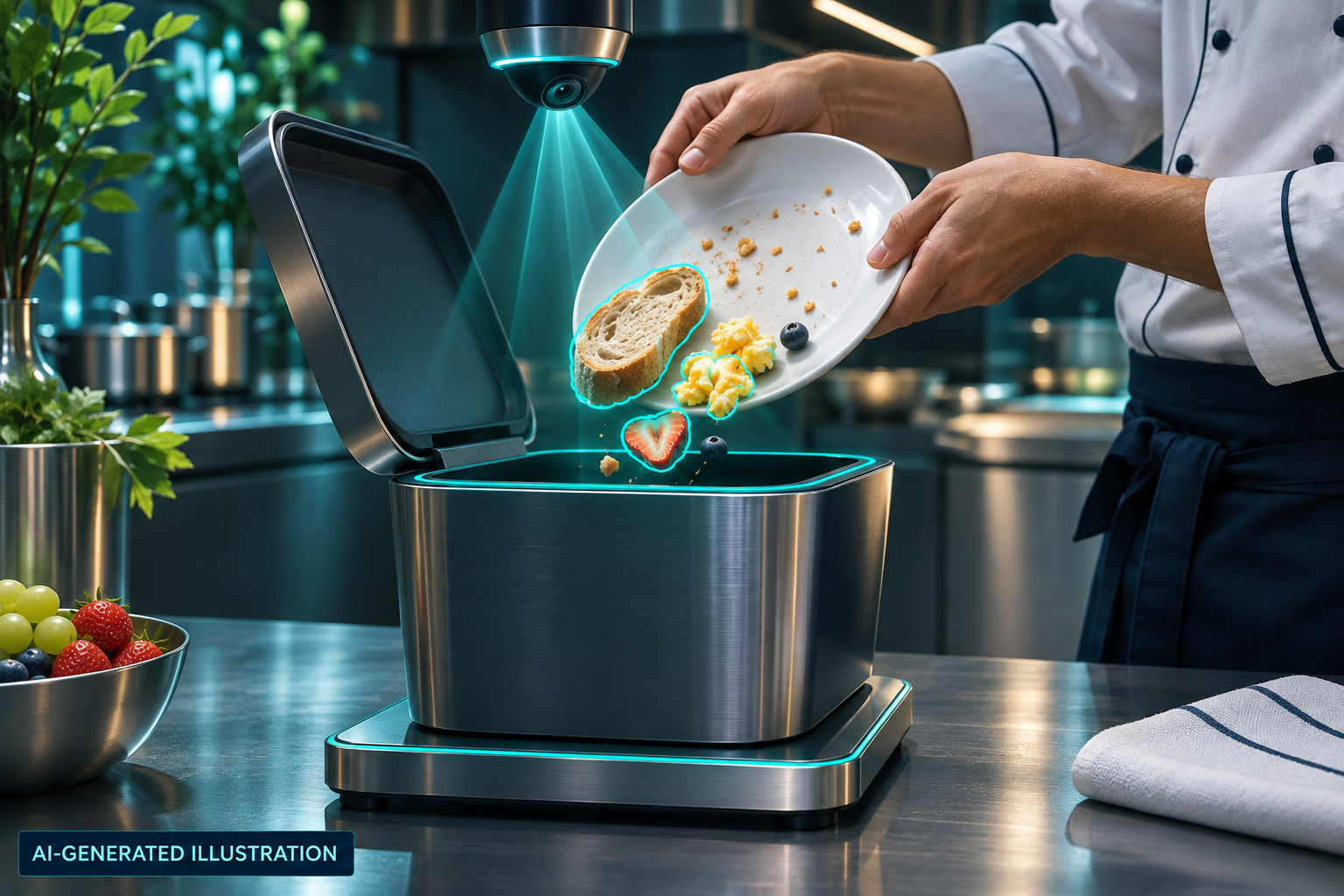
A camera and a scale make discarded food visible to chefs, who can then change what they prepare and how they serve it.
- Programme result
- 62% less breakfast food waste reported
- Pilot size
- 13 hotels in the UAE
- Intervention
- AI measurement plus coaching and guest nudges
How the idea works
Observe disposal
A camera and scale record what enters the bin.
Reveal repeated surplus
Food categories and weights expose avoidable patterns.
Change the next service
Chefs adjust production and service practices.
The answer was in the leftovers
A breakfast buffet can look generous while quietly sending good food to the bin. Hilton’s Green Breakfast programme examined both kitchen surplus and what guests left behind. The discarded items included familiar staples such as bread, pastries, eggs and porridge. Naming those losses is more actionable for a chef than knowing only the total weight of a rubbish bag.
A camera identifies; a scale weighs
Winnow’s vision system places a camera above the bin and connects it to a scale. Image recognition identifies discarded food, while weight data make the quantities measurable. Reports turn repeated disposal into a pattern a kitchen can act on. The important output is not an attractive image classification—it is a reason to reconsider preparation, portions or buffet replenishment.
Sources: [4]
The numbers changed through human habits
Across thirteen UAE hotels, Hilton reported a 62% reduction in pre- and post-consumer food waste during the pilot. Winnow provided measurement tools and weekly coaching; ne’ma added behavioural prompts in dining areas. The intervention therefore joined data with changes by staff and guests. Attributing the entire reduction to the recognition algorithm alone would miss how the programme worked.
The best outcome is food never wasted
These are operator-reported programme results, not a controlled estimate of AI’s isolated effect. The practical benefit is nevertheless concrete: the team can see which food repeatedly goes uneaten and respond before the next service. Preventing that surplus avoids buying, cooking and handling food that was never going to nourish anyone.
The original sources
- HiltonServing Up Solutions: Hilton’s Efforts in Reducing Food Waste and Reimagining a More Responsible Plate
- HiltonHilton Continues Food Waste Reduction Efforts with Launch of Green Breakfast Initiative
- HiltonHilton Green Breakfast Records 62% Reduction in Food Waste Across 13 UAE Hotels
- WinnowWinnow FAQ: How the system works