BIGGER PICTURE Nature & food
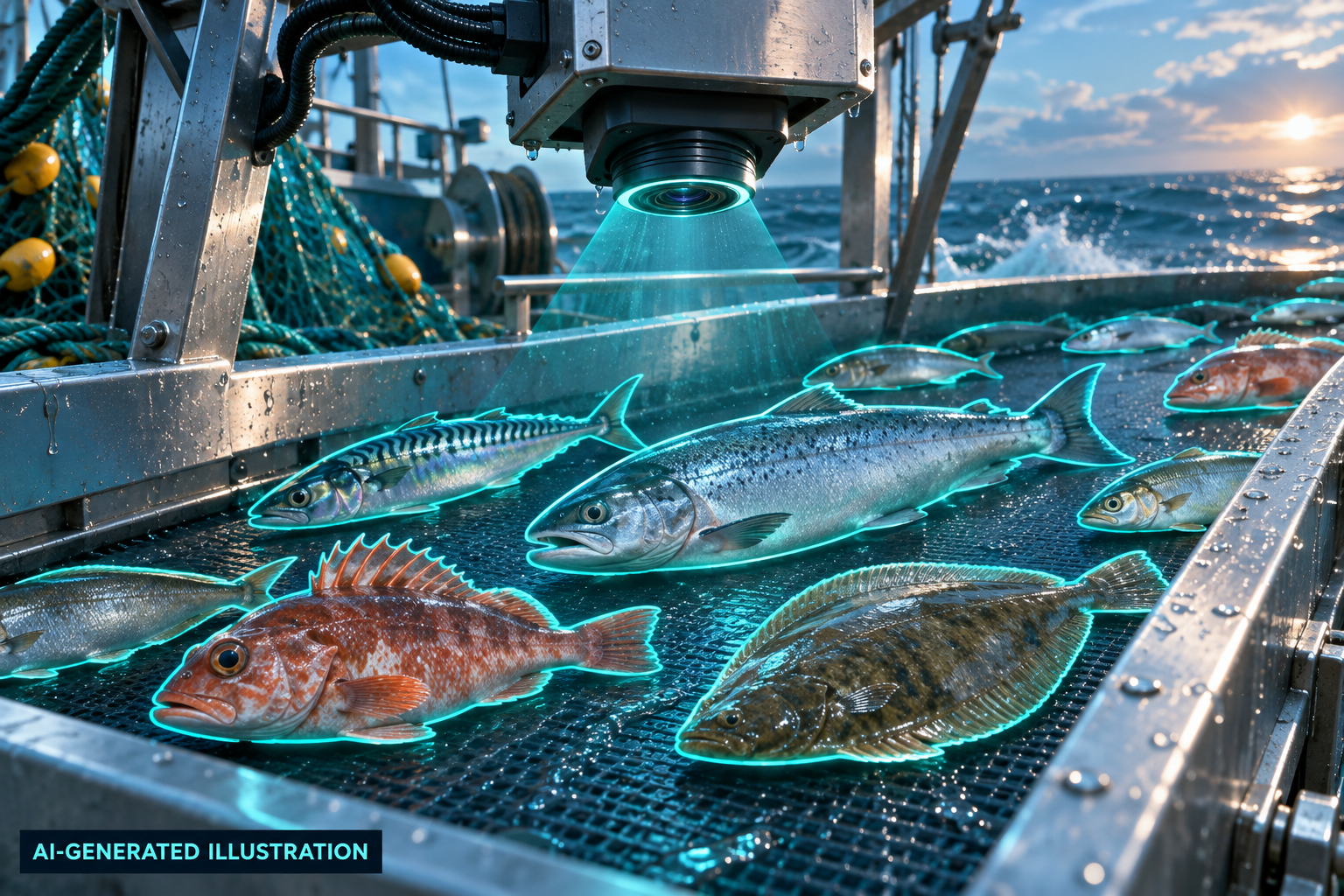
Counting fish while they move along the sorting belt
A camera over a fishing vessel’s conveyor turns a moving catch into information about species and size—without asking someone to inspect every video frame.
- What is measured
- Species and size of fish
- Where it works
- Cameras installed aboard Dutch fishing vessels
- Immediate use
- Catch records and feedback on unwanted catch
How the idea works
Film the moving catch
A camera observes fish on the sorting conveyor.
Identify and measure
Onboard image analysis estimates species and size.
Use the catch record
Crews and researchers review composition and unwanted catch.
The catch is already passing a useful observation point
On a fishing vessel, fish travel along a conveyor toward sorting. That moving belt creates an opportunity: a camera can observe the catch as part of work already happening. Wageningen researchers and Dutch fishing partners developed Fully Documented Fisheries to turn those images into records, including the small or unwanted fish that can be difficult to document consistently.
From video footage to species and size
Image-recognition algorithms analyse the fish moving through the camera’s view and estimate species and size. An onboard computer processes the footage. The camera is therefore a measuring aid, not a robot that physically sorts the catch. WUR’s later description names the CatchWam camera mounted at the conveyor’s end and stresses that the research concerns automated catch registration.
A skipper can see an unhelpful pattern sooner
The European Commission describes systems installed on participating vessels, allowing fishers to see when they are catching too many undersized fish or unwanted species and consider another fishing ground. For researchers, more complete records can inform stock assessment. For crews, the attraction is reducing repetitive recording and sorting-related work without adding another person solely to observe the catch.
Better records are the demonstrated step
The sources document a working research and vessel-trial programme, but do not establish a controlled percentage reduction in bycatch or recovery of fish stocks. Those outcomes depend on what crews and managers do with the information. The useful innovation is placing automatic measurement inside an existing workflow, making previously cumbersome observations available for practical decisions.
The original sources
- European Commission, Directorate-General for Maritime Affairs and FisheriesFisheries management: Artificial intelligence makes a difference
- European Commission, Directorate-General for Maritime Affairs and FisheriesFully documented fisheries project
- Kootstra and van Mens / Wageningen University & ResearchKunstmatige intelligentie en registratie van vis: elektronisch monitoring van visvangsten (2)