BIGGER PICTURE Nature & food
A recycled phone can hear a chainsaw inside the forest
Rainforest Connection turns sound into a location-specific alert, helping local forest guardians decide where to investigate.
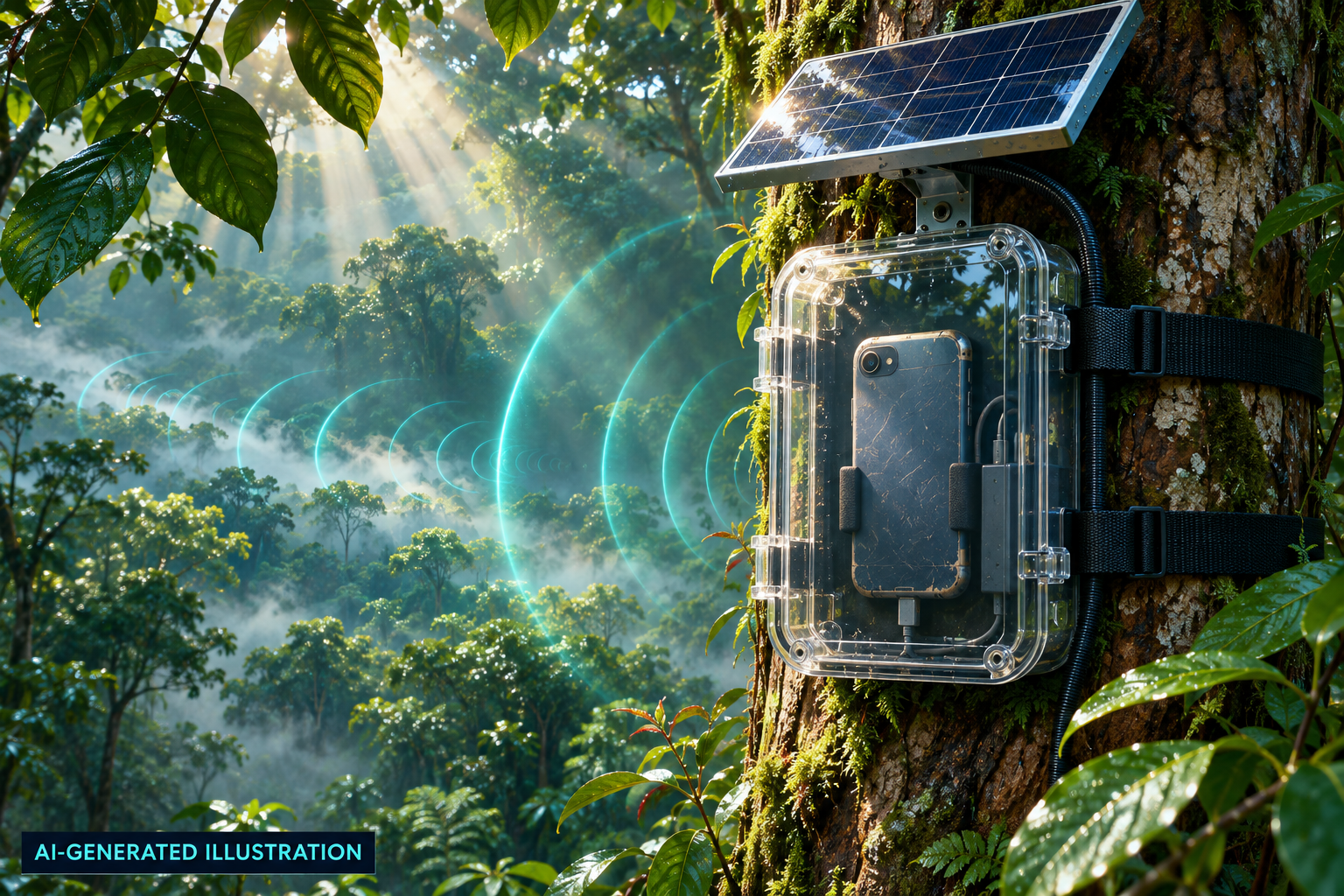
- Original hardware
- Recycled phones with solar power
- Signal
- Sound patterns such as chainsaws and vehicles
- Human link
- Alerts support local forest defenders
How the idea works
Listen from the canopy
Solar-powered microphones capture the surrounding soundscape.
Recognize a possible threat
Audio models flag suspicious machine or vehicle patterns.
Investigate locally
Local guardians review the alert and decide on a response.
You can hear an intrusion before seeing the clearing
Inside a rainforest, dense vegetation limits what a person can see. A chainsaw or vehicle leaves another kind of trace: sound. Rainforest Connection’s Guardian devices listen from selected canopy locations and flag patterns associated with potential threats. The purpose is to direct attention while an activity may still be happening, rather than waiting only for visible landscape change.
The engineering challenge includes catching sunlight
Early deployments repurposed mobile phones into solar-powered listening devices. Microphones, batteries, weather protection and connectivity made the idea usable in the canopy. The current hardware description shows how the design evolved: sensitive microphones and solar panels adapted to scattered light. AI classifies audio, but power and a functioning communications route are equally necessary to deliver an alert.
The forest’s defenders asked for better information
In Brazil, the Tembé partnership focused on helping Indigenous rangers monitor access points and document illegal activity on their land. RFCx describes old phones being installed as Guardians and reports a community leader’s account of reduced logging presence alongside patrols. The World Bank’s technology profile likewise describes alerts supporting Indigenous land monitoring and targeted ranger work.
The alert is the beginning of the response
Those accounts establish a deployed monitoring tool and local testimony, not an independently measured number of hectares saved by AI. A detected engine is not automatically illegal, and someone still has to assess the context and respond safely. The human benefit is giving communities timely evidence about threats to land and resources they already work to protect.
The original sources
- World BankRainforest Connection technology profile
- Rainforest ConnectionRainforest Connection: Guardian technology
- Rainforest ConnectionProtecting the Tembé Indigenous Reserves