BIGGER PICTURE Public & everyday services
Twenty million parcels a day meet the postal service's machine vision
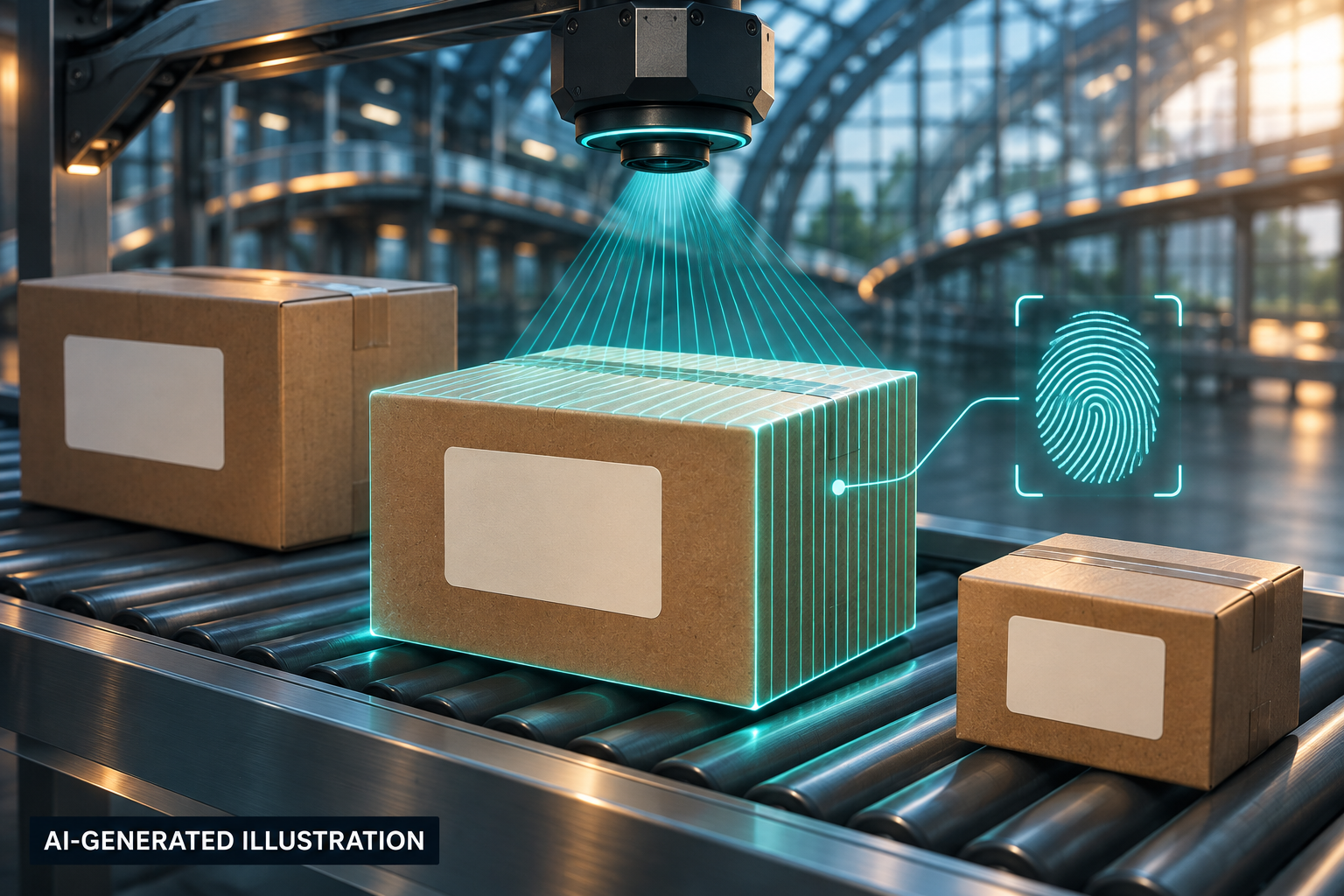
Postal sorting machines generate enormous streams of images. USPS added AI processing close to those machines so staff could turn the pictures into useful clues about packages moving through the network.
- Reported processing scale
- Features extracted from about 20 million parcels daily
- Reported infrastructure
- 192 package-sorting sites in NVIDIA’s case study
- Important distinction
- Faster package-data processing, not 10× faster delivery
How the idea works
Capture parcels during sorting
Existing machines produce package images.
Extract features locally
AI and character recognition analyse images near the machines.
Investigate exceptions
Staff use searchable package information to support tracing.
A picture becomes a useful search clue
A parcel may pass through many machines before a customer receives it. Images captured during that journey contain information that is difficult to search manually at postal scale. The USPS Inspector General’s 2021 review described AI and optical character recognition analysing facility images to help identify missing packages more quickly.
Sources: [1]
Move the analysis close to the conveyor
The architecture trained models centrally and deployed them to computing systems at processing facilities. Local inference meant the useful analysis could happen near the stream of package images. This is the practical reason for edge computing here: make a high-volume physical operation readable without treating every image as a separate human investigation.
Sources: [3]
The scale is real; the delivery claim must stay narrow
NVIDIA’s case study reports feature extraction for approximately 20 million packages per day and deployment at 192 sorting sites. It also reports tenfold faster package-data processing. These are supplier figures for processing infrastructure. They do not establish tenfold faster parcel delivery, a particular reduction in lost mail or independently measured customer satisfaction.
Sources: [2]
Reuse the evidence your operation already creates
The human value is the possibility of resolving exceptions with better information instead of asking staff to search blindly. USPS’s oversight report also stresses practical barriers to adopting technology in a very large service. The transferable idea is specific: identify a costly search task, make existing images machine-searchable and verify whether staff resolve real cases more effectively.
Sources: [1]