BIGGER PICTURE Disaster preparedness
The fourth opinion at the avalanche forecast meeting
Swiss forecasters added a model that can disagree with them—and explain enough of that disagreement to make the discussion better.
- Training history
- About 20 years of weather and snow simulations
- Live-test agreement
- About 70% with published danger levels
- Role
- Additional assessment for human forecasters
How the idea works
Simulate the snow layers
Weather observations drive a physical snowpack model.
Estimate regional danger
Learned patterns translate snow conditions into danger levels.
Discuss discrepancies
Forecasters compare the model with field evidence.
Three forecasters arrive with their own views
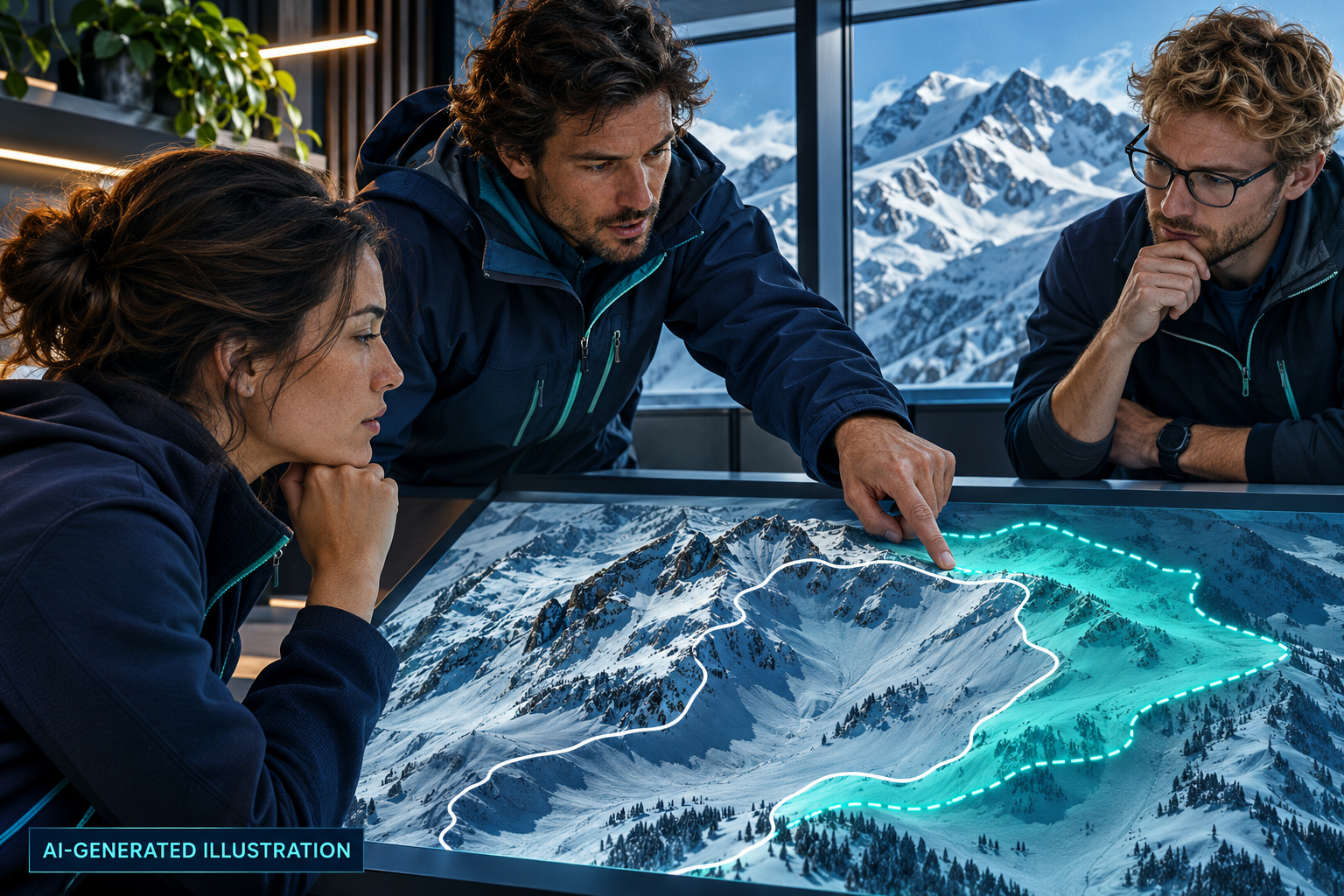
At the Swiss SLF, forecasters gather weather information, field reports and snow observations before agreeing on the avalanche bulletin. The AI contribution is an additional assessment, sometimes arriving at a different regional danger level. Staff described using those differences to re-examine their judgment, particularly where the boundary between two danger regions should be drawn.
Sources: [1]
Learning to read a simulated snow cover
The model does not watch skiers or photograph every slope. It learns from weather measurements and the output of SNOWPACK, a physical simulation of how the snow cover develops. Around twenty years of records supported training. This combines two kinds of knowledge: physical modelling of snow and statistical patterns connecting those conditions to avalanche danger assessments.
Agreement is useful; disagreement can be useful too
A peer-reviewed 2025 study of initial live testing in winter 2020–21 found about 70% agreement with published danger levels for dry-snow conditions. That is agreement with a human-produced assessment, not perfect ground truth. Later operational descriptions show the model becoming part of the regular process, while experts still add current observations the model does not receive.
The rarest danger is hardest to learn
SLF researchers point out that high danger levels occur infrequently, leaving fewer examples for learning. The original model also addressed dry-snow avalanches, so its findings should not be stretched to every avalanche type. Its demonstrated value is a structured second opinion in a consequential public-service decision, not a replacement for local assessment of an individual slope.
The original sources
- WSL Institute for Snow and Avalanche Research SLFArtificial intelligence and avalanche warning
- WSL / SLFAI – Avalanche Intelligence at the SLF
- SLFResources for the avalanche bulletin
- Pérez-Guillén et al., Natural Hazards and Earth System SciencesAssessing the performance and explainability of an avalanche danger forecast model