BIGGER PICTURE Earlier diagnosis
From a genome’s thousands of possibilities to a few genes to inspect
For a critically ill child, sequencing DNA can be faster than interpreting what it means. GEM combines genetic variation with the child’s clinical features to bring plausible causes near the top of a review list.
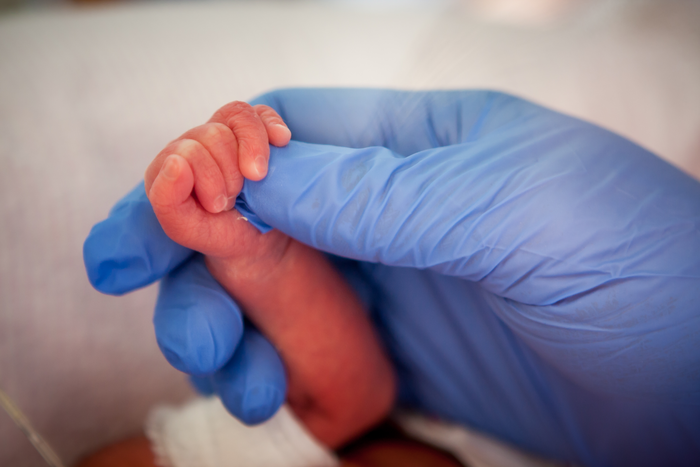 Original photograph
- Previously diagnosed cases
- 179 in two cohorts
- Cause near the top
- Causal gene among top two in 92%
- Review shortlist
- Median of three candidate genes per case
How the idea works
Combine DNA and symptoms
Sequencing and clinical descriptions supply complementary clues.
Compare with disease knowledge
The model weighs variants, inheritance and phenotype together.
Review a short list
Specialists investigate the highest-ranked gene and disease candidates.
Reading the letters is not the same as understanding them
A genome contains many differences that do not explain a child’s illness. The diagnostic challenge is to connect a plausible variant, its inheritance and the observed symptoms. GEM integrates these clues with existing disease knowledge to nominate genes and disorders for expert review.
Clinical notes become part of the search
The study tested both manually prepared symptom descriptions and descriptions extracted from medical notes by clinical language processing. GEM also considered larger structural DNA changes, not just single-letter variants. This broadens the search while reducing the need to inspect every possible gene equally.
Sources: [2]
Ask whether the known answer rises to the top
The researchers benchmarked 119 previously diagnosed cases and validated the method in sixty more from five centres. Across these 179 cases, the causative gene appeared among the first two candidates in 92%. A median of three genes was prioritised for review, giving specialists a compact starting point.
Known diagnoses and new discoveries are different tests
The 92% figure is not a diagnosis rate for unselected sick children. When the team separately revisited fourteen unsolved cases, it reported one new finding. The achievement is stronger prioritisation with traceable clinical context; final interpretation and the link to treatment remain specialist work.
Sources: [2]