BIGGER PICTURE Energy & climate
Two valves, less steam, steadier chemical production
At a Japanese chemical plant, an AI controller learned to use available waste heat while keeping a difficult distillation process stable.
- Reported steam saving
- 40% for liquid-level control
- First extended test
- 35 consecutive days in 2022
- Physical task
- Adjust two valves in a distillation process
How the idea works
Simulate the column
A process model lets the controller learn valve adjustments.
Balance level and heat
Two valves coordinate liquid level, waste heat and steam.
Verify real production
Operators check stability, quality and steam consumption.
A difficult job for two ordinary valves
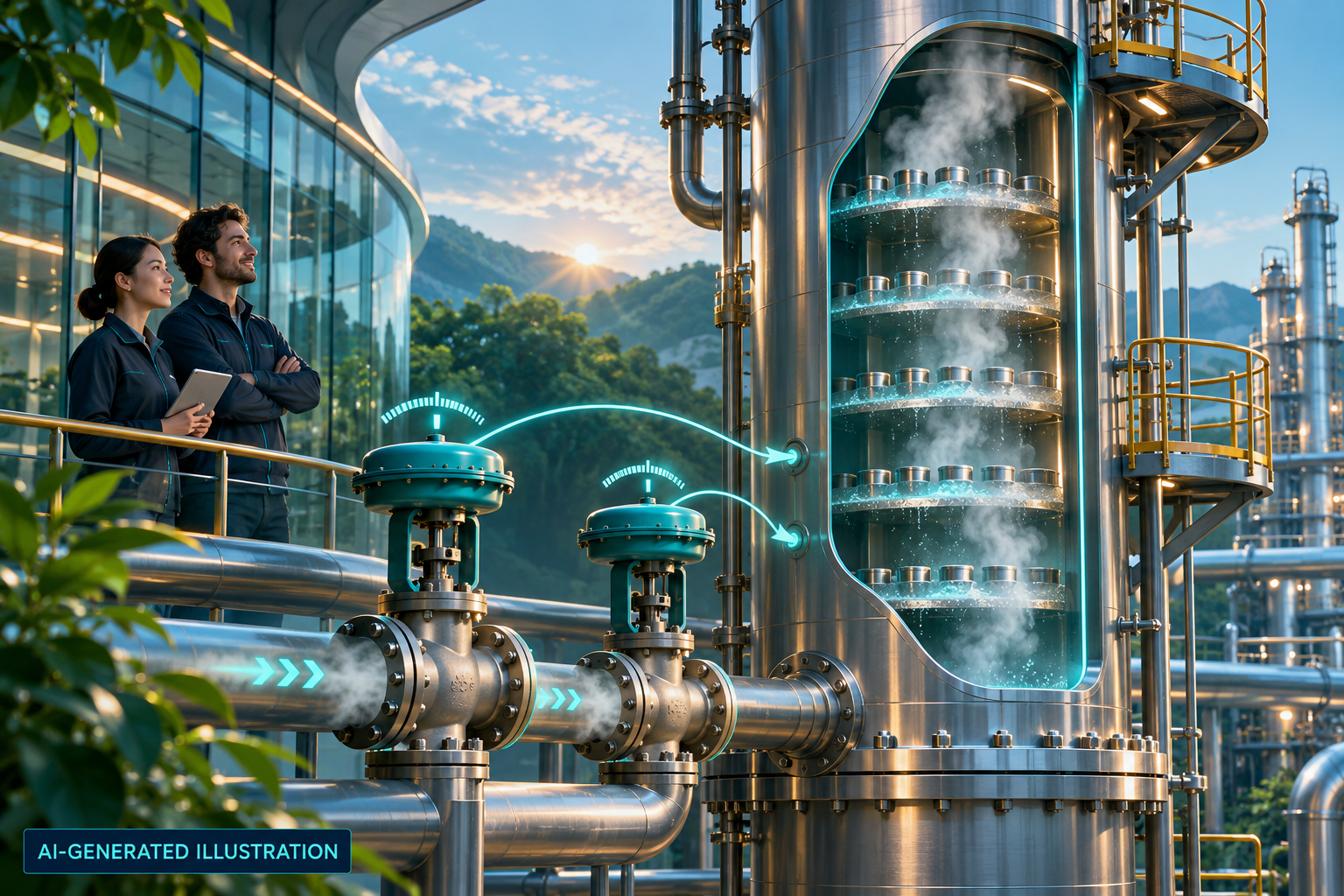
ENEOS Materials’ Yokkaichi plant produces butadiene, a raw material for synthetic rubber. Separating it from substances with similar boiling points requires tight control of a distillation column. Two valves help balance liquid level and heat supply. Changing outdoor temperatures complicated that balance, so experienced operators had been adjusting the valves manually.
Sources: [2]
Practice in a simulated plant first
Yokogawa and the plant team built a simulator of the process. Reinforcement learning explored control choices there, producing a model that could be checked against operating data and staff knowledge. Operators first entered its proposed settings themselves. Only after those checks did the system directly control the real valves, within the plant’s existing control and safety arrangements.
Use waste heat before demanding more steam
The controller aimed to keep product quality and liquid level stable while using as much available waste heat as possible. A 35-day test in early 2022 was followed by verification across seasons. The partners’ March 2023 account reports 40% less steam than previous manual control for maintaining the liquid level, with product quality meeting shipment requirements.
The saving belongs to a specific control task
The 40% figure is not a reduction in the entire factory’s energy use; the release’s footnote defines the narrower steam baseline. Results come from the participating companies. What makes the case useful is the sequence: learn in simulation, incorporate operators’ knowledge, then test a physical process over changing conditions before adopting the controller.
The original sources
- Yokogawa; ENEOS MaterialsYokogawa’s Autonomous Control AI Is Officially Adopted for Use at an ENEOS Materials Chemical Plant
- Yokogawa / ENEOS MaterialsA world's first is now routine: ENEOS Materials autonomous control case study
- Yokogawa / JSRYokogawa and JSR use AI to autonomously control a chemical plant for 35 consecutive days