BIGGER PICTURE Accessibility & independence
A photograph becomes a conversation you can steer
A fixed image description cannot anticipate every question a blind person might have. Be My AI lets someone ask for the particular detail that matters to them, then ask again.
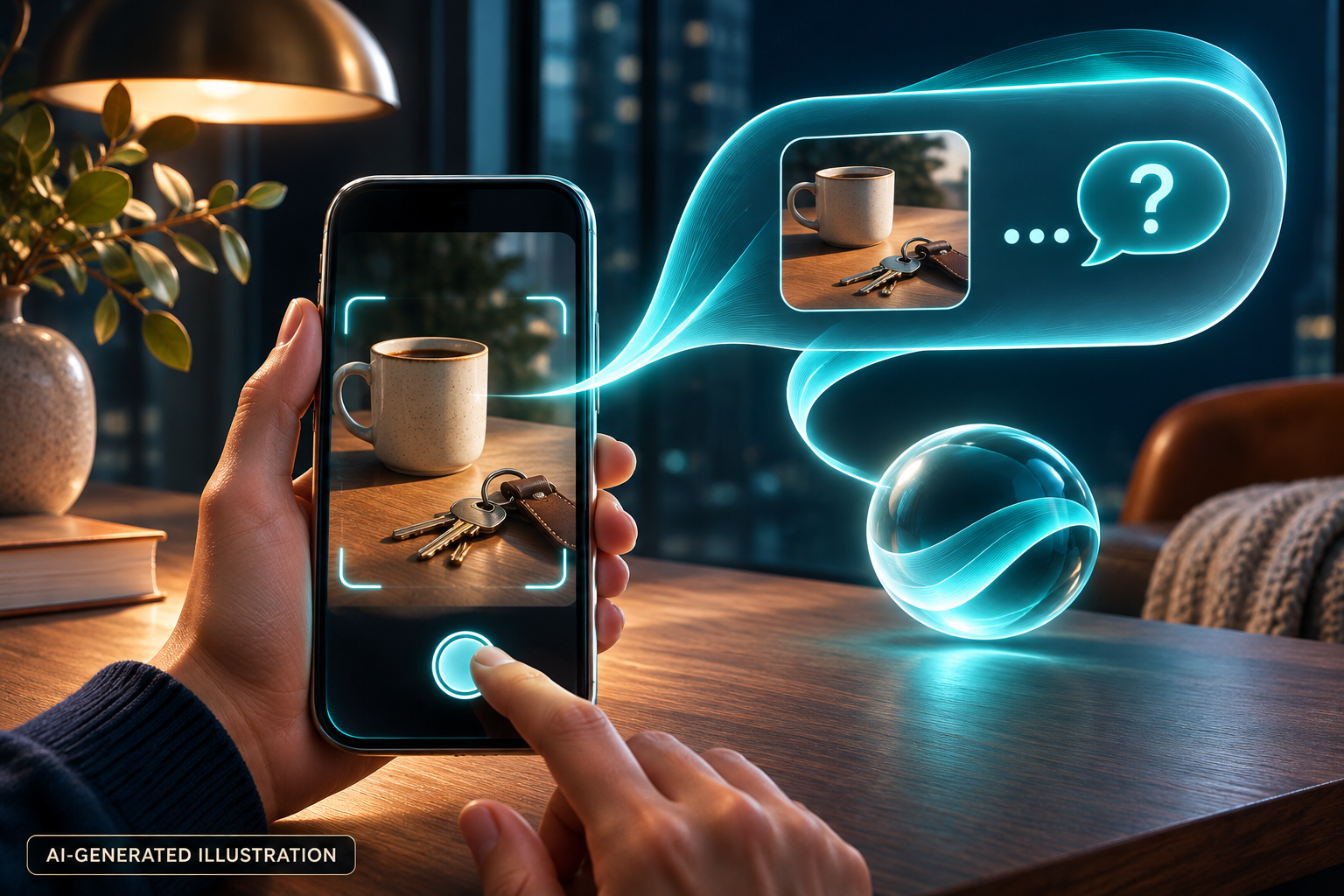
- Interaction
- Photo, description, follow-up questions
- User research
- 14 visually impaired interview participants
- Human fallback
- A volunteer remains reachable
How the idea works
Share a view
A phone photo or shared image supplies visual context.
Ask about a detail
The user directs the description with follow-up questions.
Read, listen or verify
Accessible text conveys the response; human help can resolve doubts.
Access includes ordinary curiosity
Understanding an outfit, a room or a shared photograph can matter as much as reading a label. A study of fourteen visually impaired users documented such everyday uses of Be My AI. Participants valued being able to explore a picture without always requesting another person’s description.
Sources: [1]
The useful part is the second question
The app sends a photo to a vision-language model and returns a description compatible with screen readers. Its follow-up function accepts a specific question or another picture. Someone can move from a broad overview to a clothing colour or a detail in a personal photograph.
Sources: [2]
The user supplies the purpose
The interview study found that users actively directed the system when general descriptions missed their goal. That interaction is the benefit: control over which visual information to explore. It is also work, especially when the system must be repeatedly redirected or checked against familiar surroundings.
Sources: [1]
A shorter answer can be the better assistance
A separate Maryland study analysed 418 interactions and found that lengthy replies often buried the useful detail. Human volunteers remain available in the app. These findings point to a concrete next improvement: prioritise the person’s question and make uncertainty easy to resolve, instead of merely describing more.
The original sources
- CHI 2025 / author manuscriptBeyond Visual Perception: Insights from Smartphone Interaction of Visually Impaired Users with Large Multimodal Models
- Be My Eyes Help CenterUsing Be My AI
- University of MarylandApp’s AI ‘Eyes’ for Blind Users Fall Short, UMD Researchers Find