BIGGER PICTURE Earlier diagnosis
The eye check that patients no longer had to book separately
Sometimes the breakthrough is not a more exotic test. It is completing a necessary examination before a family leaves the clinic. ACCESS tested that idea in young people with diabetes.
- AI group screened
- 81 of 81
- Standard referral completed
- 22% within six months
- Examination time
- 5–10 minutes
How the idea works
Photograph the retina
Acquire four non-dilated eye images.
Return a same-visit result
AI checks for diabetic retinal disease.
Complete or refer
Finish screening and arrange specialist review when indicated.
A referral still asks a family to do more
Diabetic eye screening often means arranging another visit with an eye specialist. Transport, time away from school or work and uncertainty about its importance can prevent completion. Researchers at Johns Hopkins therefore studied a service problem: could screening happen during a diabetes appointment the patient was already attending?
Sources: [1]
Four photographs, a result during the visit
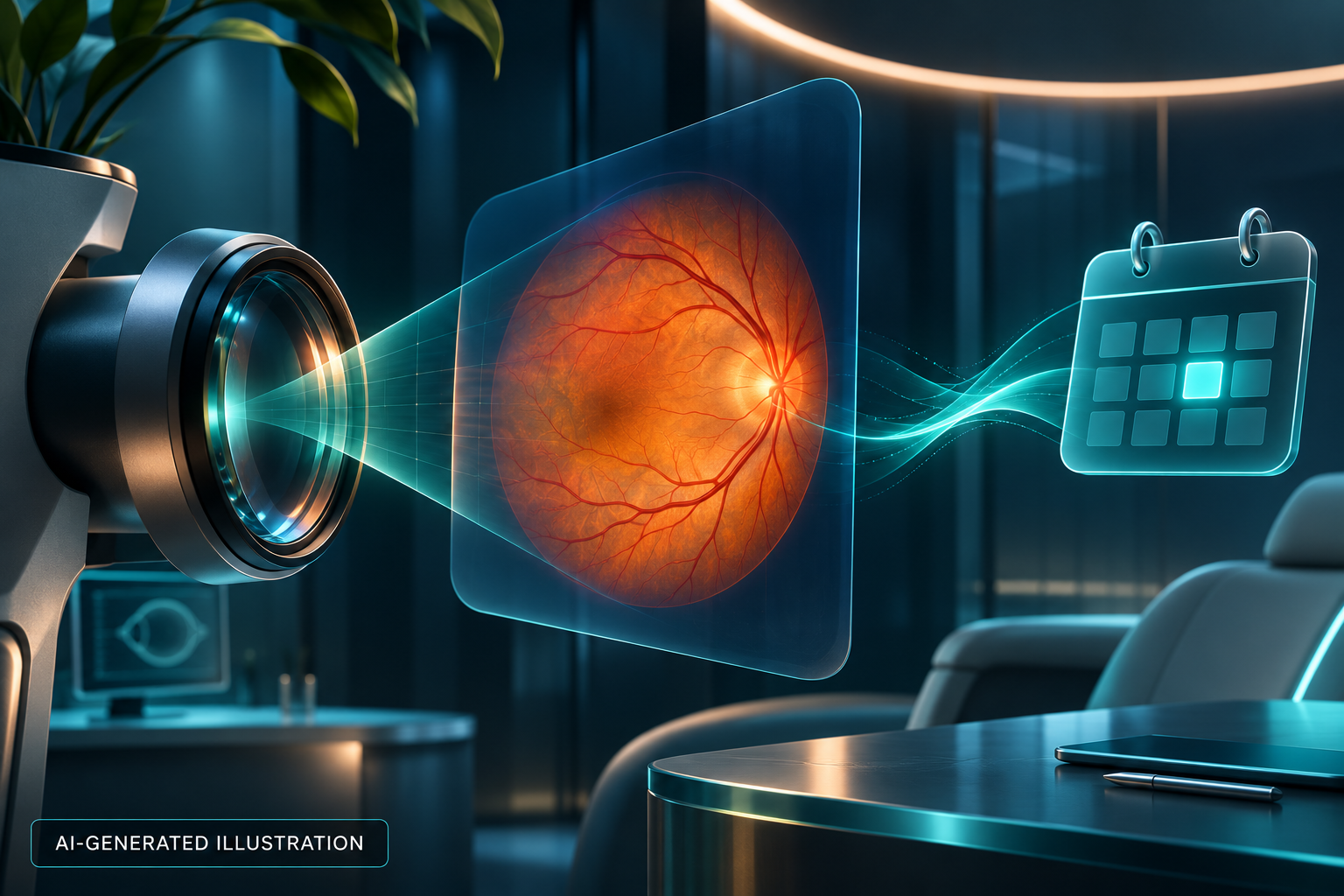
The system photographed the backs of the eyes without dilating drops. An algorithm analysed the images for diabetic retinal disease and returned a result during the visit. A positive finding triggered referral for further eye care. The camera therefore replaced an initial screening journey, not the specialist treatment that an abnormal finding might require.
Completion is the outcome
The randomised trial enrolled 164 young people aged eight to 21. All 81 offered the on-site AI examination completed it that day. In the standard-referral group, 22% obtained an eye examination within six months. This measures whether care actually happened, rather than merely whether a classifier could recognise an image.
Sources: [2]
Screening opens a door; follow-up still matters
Twenty-five AI examinations produced a positive result requiring follow-up. Such results are not equivalent to 25 confirmed cases of sight-threatening disease. The study also did not measure prevented blindness. At the time, this pediatric use was investigational. Its convincing lesson concerns access: a completed first step is more useful than an unfulfilled instruction.